Background
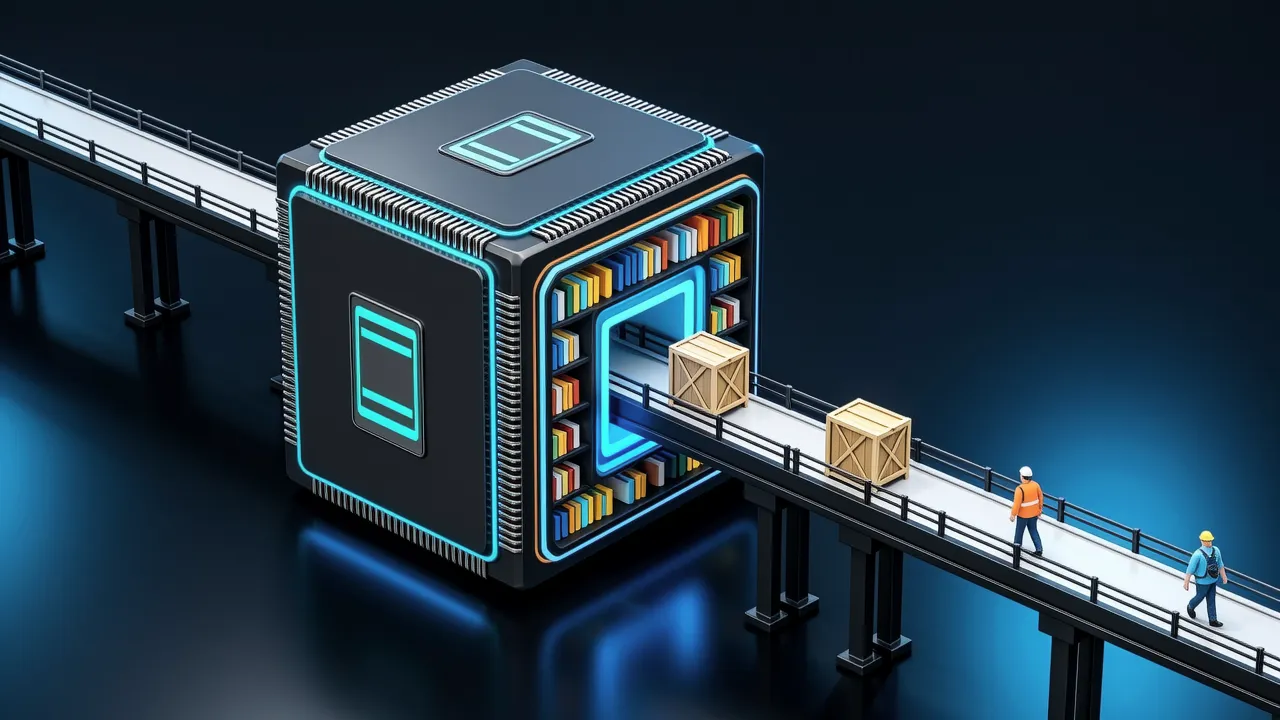
Fal is a San Francisco company that hosts and runs AI models for video, image and audio generation. Customers do not train these models themselves; they send requests to Fal, which runs the models and returns the output. This kind of service is usually called inference: the stage where a trained model is actually put to work. Fal was co-founded in 2021 by Burkay Gur, who had previously led machine learning work at Coinbase and worked as an engineer at Oracle, and by Gorkem Yurtseven, who had earlier been a developer at Amazon[1].
The funding comes as demand for inference has surged, particularly from customers who rely on open-source models rather than building or licensing proprietary ones[1].
What happened
Fal raised 1.3 billion dollars in a round led by Bessemer Venture Partners. Nvidia, Sound Ventures and T. Rowe Price also participated[1].
The deal valued the company at 16 billion dollars, double the 8 billion dollar valuation it had reached in April[1].
The company announced two rounds at once: its Series E and its Series F. Across both, it raised 1.65 billion dollars, and Sequoia led the earlier of the two rounds[1].
Key details
The revenue figures help explain the size of the round. Earlier in 2026, Fal surpassed 800 million dollars in annualised revenue, according to a Bloomberg report cited by TechCrunch[1]. Annualised revenue is a running rate: it takes revenue over some recent period and scales it to a full year, so it is a snapshot of pace rather than a completed year of sales.
The list of investors spans very different kinds of money. Bessemer Venture Partners is a long-established venture firm and led the round; Sequoia led the earlier one; Nvidia is a chip company whose hardware underlies much AI computing; Sound Ventures is an investment firm; and T. Rowe Price is an asset manager better known for public-market investing. Nvidia's participation in particular connects a supplier of the computing that inference depends on to a company that sells inference itself[1].
Why it matters
Much of the public discussion of AI money has focused on training: building ever larger models from scratch. Fal's business sits on the other side of that divide. Once a model exists, someone has to run it cheaply and reliably for every user request, and that is what Fal sells. The company's stated growth is tied to demand from customers using open-source models, which anyone can download and run, and which therefore need a hosting service rather than a vendor's own API[1].
A valuation that doubled in a matter of months is also a signal about how investors were pricing that layer of the market at the time, independent of whether the models themselves were improving quickly[1].
Sources
- 1
Cite this page: Fal doubles its valuation to $16B on $1.3B round. TellWorld, https://www.tellworld.net/news/fal-funding-2026. Updated 2026-11-08