Background
Alphabet's self-driving car project had been on the road since 2009. By the time it was reorganised, its prototypes had spent the equivalent of 300 years of driving time on the road, according to John Krafcik, chief executive of the project [2]. He offered the figure as a measure of how much testing sat behind the announcement that followed [2].
The announcement
On Tuesday 13 December 2016, Alphabet announced that the self-driving car project was being spun out into a separate company called Waymo [2]. The news was made in a blog post by Krafcik [2]. He wrote that the team was "taking our next big step by becoming Waymo, a new Alphabet business" [2].
A spin-out changes what a piece of work is. Until then the driving programme was a project inside a larger company; afterwards it was an organisation with a name of its own, and with its own account of what it was for.
The name, and where it sits
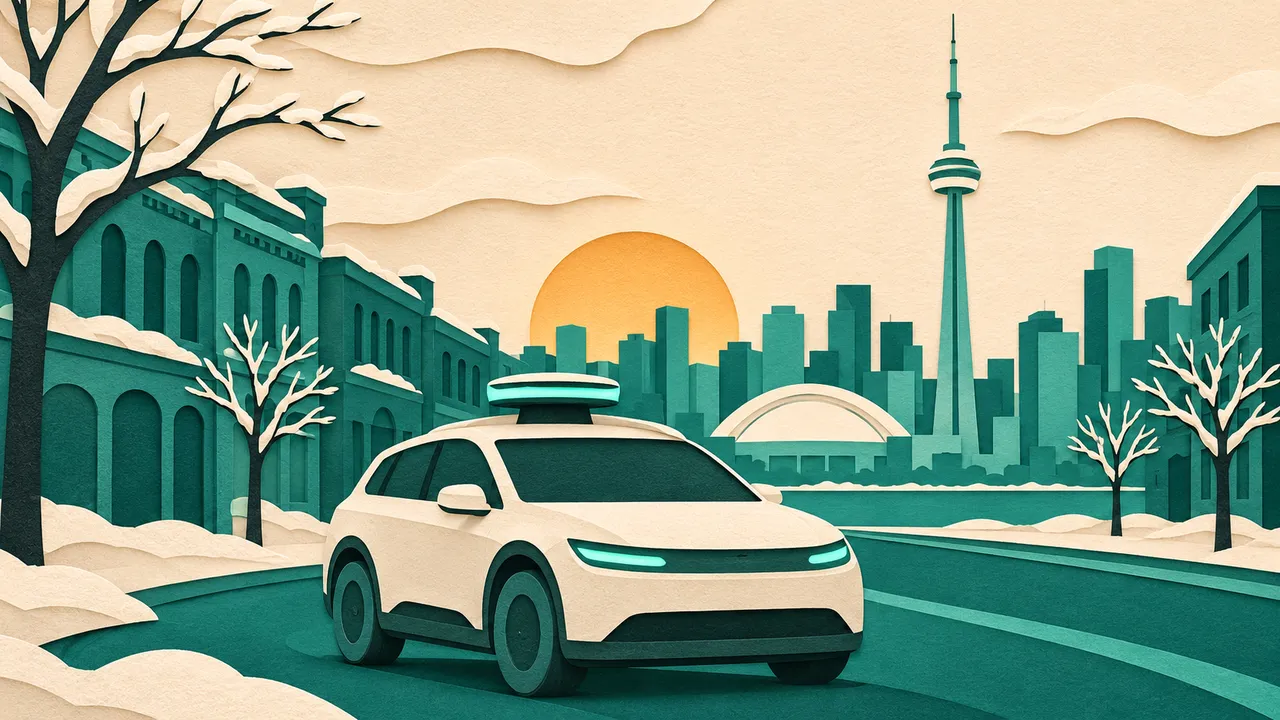
Waymo stands for a new way forward in mobility [2]. It sits under the Alphabet umbrella alongside Google, Nest Labs and Google Fiber [2]. The company describes itself as a self-driving technology company with a mission to make it safe and easy for people and things to move around [2].
Fleet and miles
At the time, Waymo was running a Lexus RX450h and its own small prototype in four US states [1]. Those vehicles had covered more than two million real-world miles and over a billion simulated miles [1]. The two numbers measure different things: real-world miles record what the cars actually met on public roads, while simulated miles are driven inside a computer model, where a scene can be reset and replayed so that rare situations are rehearsed far more often than ordinary driving would allow.
What kind of business it would be
At a press event, Krafcik said ridesharing, trucking, transportation and personal-use vehicles were among the likely uses [1]. He also said Waymo need not build its own cars [1]. The list points in several directions at once — a ride-hailing fleet, long-haul freight, transport more generally, and cars people own — and the second remark means the company did not have to be a carmaker as well.
A passenger in Austin
Waymo also revealed that in 2015 its car had taken a legally blind passenger, Steve Mahan, on a fully autonomous trip in Austin, with no one trained to take the wheel aboard [1]. That is a different sort of demonstration from a test drive with an engineer ready to intervene: on this trip there was nobody in that role.
Why it matters
The spin-out changed the status of the work. A research effort inside a larger company became a business with a name of its own and a stated mission [2]. The uses Krafcik named, and his remark that Waymo need not build its own cars, sketched out a company that would supply driving technology rather than vehicles [1]. The accumulated miles and the Austin ride were presented as the evidence that the technology was ready for that step [1][2].
Sources
- 1
- 2
Cite this page: Alphabet spins its self-driving car project out as Waymo. TellWorld, https://www.tellworld.net/news/waymo-launch-2016. Updated 2026-11-07