Background
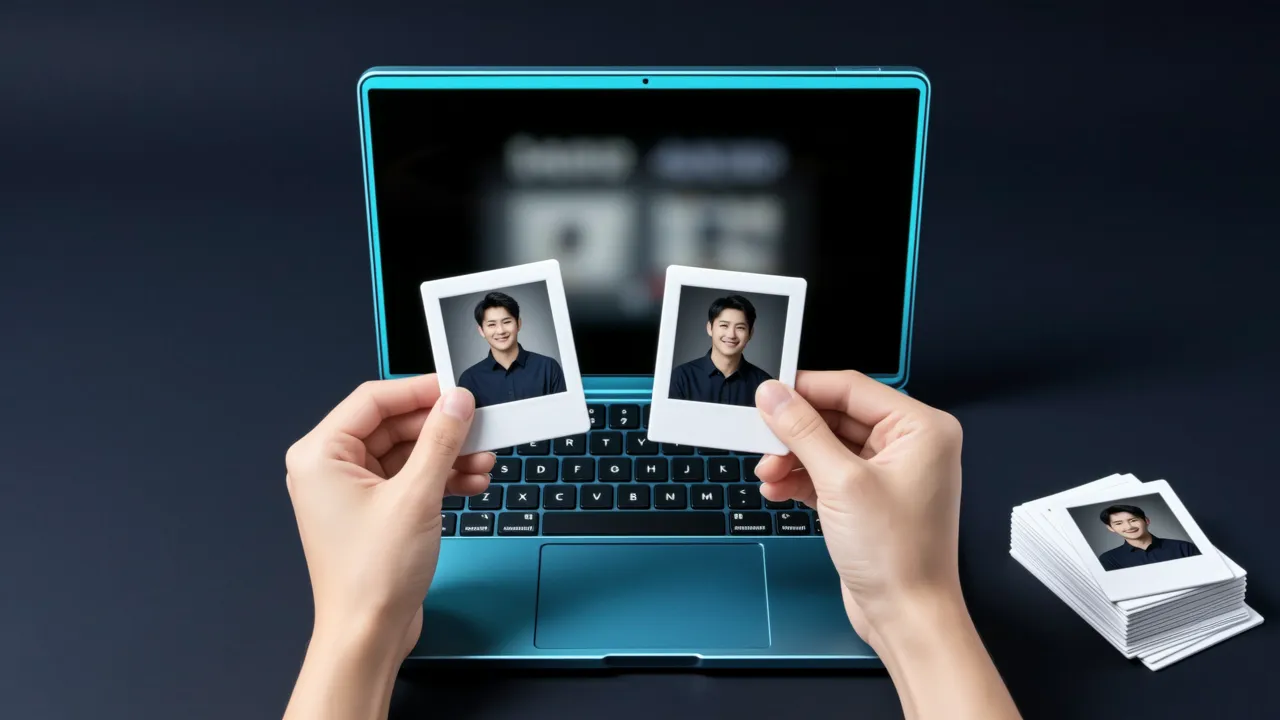
Making a believable face swap by hand has always been slow work: someone has to line up two faces frame by frame and match lighting, skin tone and movement. Deep learning changed the economics of that job. A generative model is trained on many examples — in this case images of two different people — and learns the statistical patterns that make a face look like a particular face. Once trained, it can paste one person's features onto another person's head across a whole video, with the model filling in the seams.
What happened
The word for this kind of video came from a username. In late 2017 a Reddit user called "deepfakes" shared face-swapped videos with other members of the subreddit r/deepfakes[1][2]. The name is a portmanteau of "deep learning" and "fake"[1].
The earliest wave of material was pornographic. Deepfake pornography surfaced prominently on the internet in 2017, particularly on Reddit[1][2]. The Verge later wrote that the technology was first reported by Motherboard at the end of 2017, and that Motherboard's initial story concerned a Reddit user pasting the actor Gal Gadot's face onto a porn actress's body[2].
Key details
What turned an obscure subreddit into a widely discussed phenomenon was the arrival of tools that did the work for the user. In January 2018 a proprietary desktop application called FakeApp was launched so that users could create and share face-swapped videos[1].
Political uses followed quickly. In February 2018 videos appeared that replaced the face of the Argentine president Mauricio Macri with Adolf Hitler's, and the face of Angela Merkel with Donald Trump's[1].
A more widely watched demonstration came on 17 April 2018, when the filmmaker Jordan Peele, BuzzFeed and Monkeypaw Productions posted a deepfake of Barack Obama to YouTube[1][2]. The clip was made to warn viewers about the format rather than to deceive them, but it put the technique in front of a mass audience that had never visited a face-swapping forum.
By 2019 the barrier to entry had fallen again. Freely available tools such as FakeApp, FaceSwap and DeepFaceLab let users without formal computer science education assemble deepfake videos on consumer hardware[1]. Making one no longer required a research lab or a cluster of machines — an ordinary desktop computer was enough.
Why it matters
The episode is short and specific: a username, a subreddit, a handful of videos, and then a general-purpose tool. But it marks the point where a research technique for generating realistic imagery left the laboratory and became something a curious person could try at home. The name a single Reddit user chose in late 2017 became the ordinary word for the whole category of synthetic video[1][2], which is itself a sign of how quickly the output spread.
The same three-year stretch also set the shape of the debate that followed. The first widely reported examples were sexual and non-consensual[2]; the next were political, using the faces of sitting presidents and heads of government[1]; and the demonstration that reached the largest audience was made by professional filmmakers explicitly as a warning[1][2]. Every later argument about consent, evidence and public trust was already present in that sequence.
Sources
- 1DeepfakeWikipedia
- 2
Cite this page: The term 'deepfake' appears on Reddit. TellWorld, https://www.tellworld.net/news/deepfake-2017. Updated 2026-11-08