Google reveals the Tensor Processing Unit
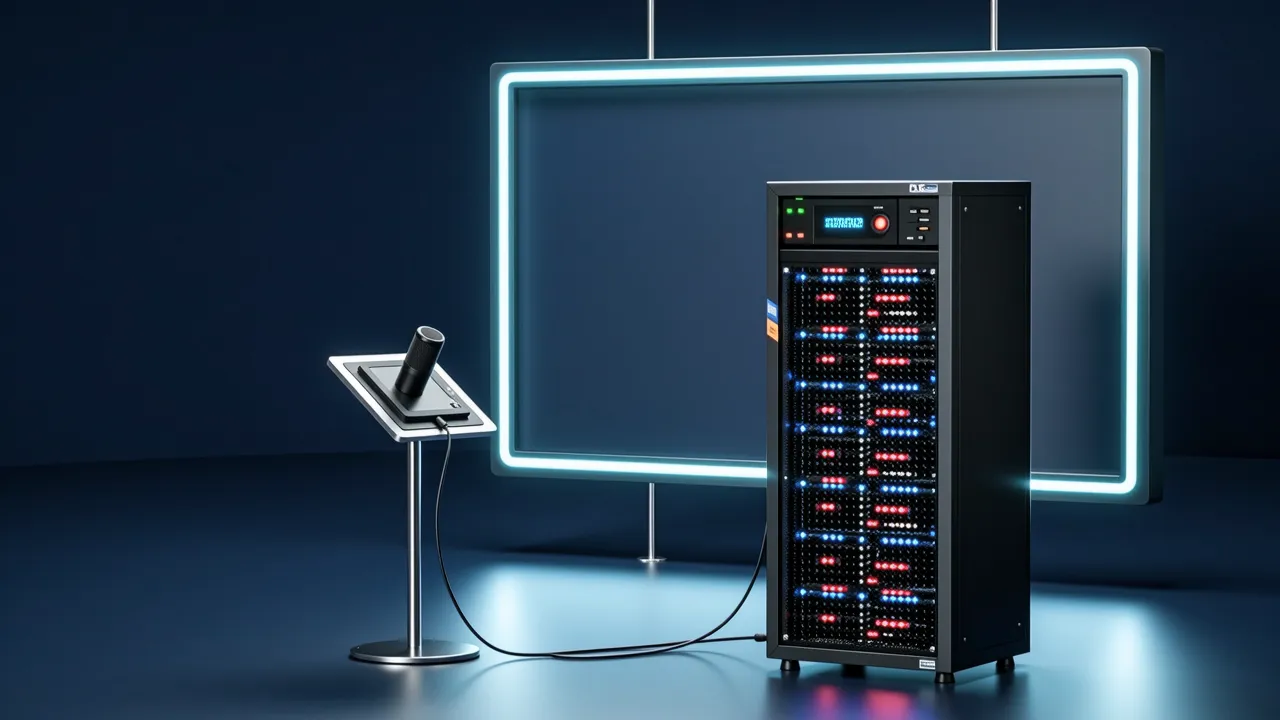
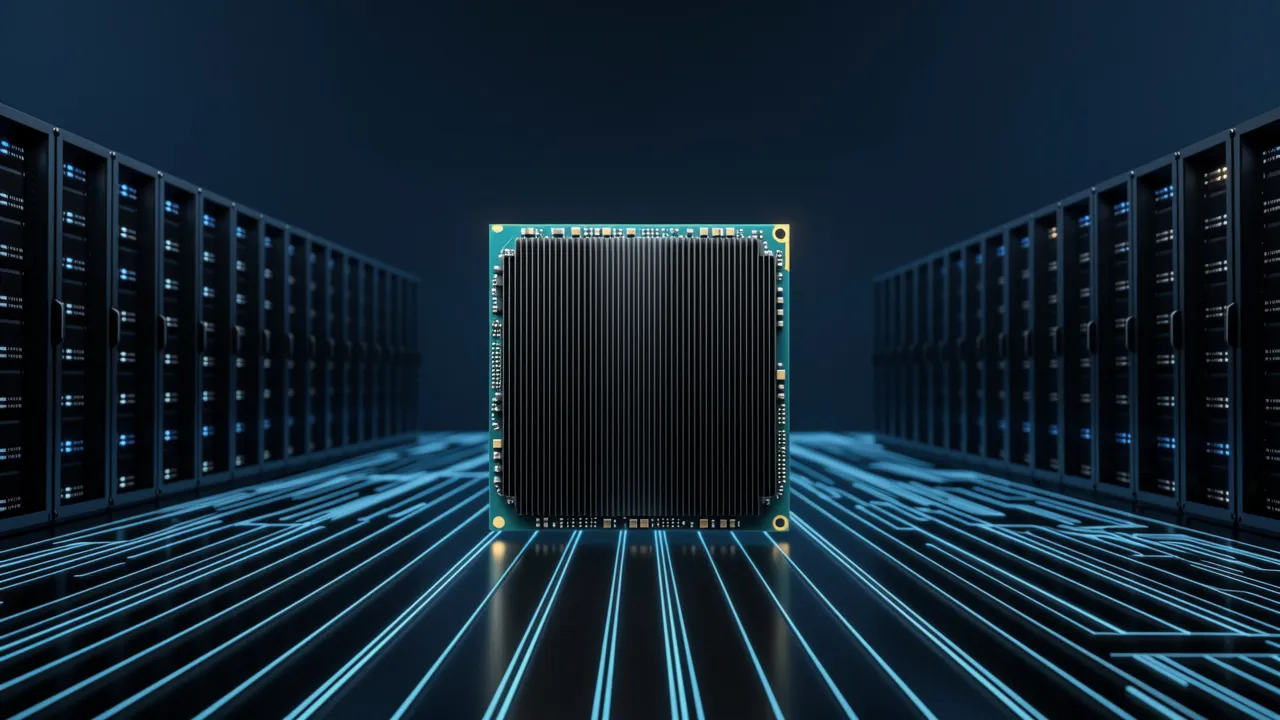
In May 2016 Google disclosed the Tensor Processing Unit, a custom chip built for machine learning that had already run in its data centers for over a year and powered RankBrain, Street View and AlphaGo.
Total 248 · Clear filters
In May 2016 Google disclosed the Tensor Processing Unit, a custom chip built for machine learning that had already run in its data centers for over a year and powered RankBrain, Street View and AlphaGo.
A multi-stakeholder organisation formally established in late 2016 by researchers from six of the world's largest technology companies to study and share best practices in AI, advance public understanding and provide an open platform for discussion of AI's effects on society.
In October 2012 AlexNet, a deep neural network built by a University of Toronto team, won the ImageNet image-classification challenge by a wide margin. Its result showed that large neural networks trained on GPUs could outperform hand-designed vision methods.
On 16 May 2012 Google announced the Knowledge Graph, an attempt to move search from matching strings to identifying entities; at launch it held more than 500 million objects.
In 2011 Microsoft Research reported that modelling thousands of senones with deep neural networks, trained on GPUs, sharply cut word errors compared with conventional Gaussian-mixture systems in large-vocabulary speech recognition.
In 2011 ACM gave Judea Pearl the A.M. Turing Award for a calculus of probabilistic and causal reasoning, work that began with his invention of Bayesian networks and later produced the do-calculus for causal inference.
The 2011 ILSVRC saw XRCE, the 2010 runner-up, win classification with compressed high-dimensional signatures and linear SVMs, while the new single-object localization task was won by UvA's selective search approach.
The spring 2010 release of ImageNet, announced by Fei-Fei Li on 11 May 2010, totalled more than 11 million images in 15,500 categories and added bounding boxes, SIFT features and a MATLAB toolbox, alongside a call to join ILSVRC2010.
On 13 April 2010, Fei-Fei Li announced the first ImageNet Large Scale Visual Recognition Challenge, a 1,000-category image categorization benchmark. It ran for eight editions, from 2010 to 2017.
On 28 May 2009 Microsoft unveiled Bing, a search engine it presented as a decision engine that organizes results around tasks such as shopping, travel and health, and the first internet service it gave a Chinese brand. It marked a renewed attempt to challenge Google's search dominance.
Wolfram|Alpha went live on the evening of 15 May 2009 and was declared officially launched on 18 May 2009, after a weekend of load testing, bug fixes and more than 22,000 pieces of user feedback.
In 2007 IBM Research began building a computer that could take on Jeopardy! champions. The project produced the DeepQA architecture and Watson, which beat the show's two top-ranked players in 2011.
An open competition run by Netflix from 2006 to 2009 that offered $1,000,000 to any team able to improve its movie recommendation algorithm by 10%, and released 100 million anonymous ratings for contestants to work with.
Geoffrey Hinton dated the current popularity of "deep learning" to a 2006 paper on deep belief nets, but the same words had earlier uses, including Rina Dechter's work in 1986.
Amazon's crowdsourcing marketplace, launched in 2005, lets requesters post small jobs called HITs that workers around the world complete for a fee. ImageNet's builders used it to verify images.
On 10 February 2004 the W3C approved RDF and OWL as Recommendations, making the two Semantic Web specifications official Web standards for machine-readable data.
On 1 November 2001 the W3C started the Web Ontology Working Group, which developed OWL and saw it become a W3C Recommendation on 10 February 2004, before closing in May 2004 having completed its charter.