Background
A self-driving car is a vehicle that uses sensors to build a picture of its surroundings and software to steer, accelerate and brake without a person continuously working the controls. The difficult part is not any single component but making perception, mapping and control work together reliably in ordinary traffic, where pedestrians, cyclists, parked cars and weather change what the right action is from one second to the next. Building such a system also takes a great deal of road data, which is why testing on public streets in everyday conditions became central to the work.
The launch
Google's development of self-driving technology began on 17 January 2009, at the Google X lab run by co-founder Sergey Brin [1]. The project was launched by Sebastian Thrun, former director of the Stanford Artificial Intelligence Laboratory, together with Anthony Levandowski [1].
The team spent almost two years testing on the road with seven vehicles before the work became public. The New York Times revealed the project on 9 October 2010, and Google announced the initiative itself later the same day, in an official blog post written by Thrun [1][2].
What Google described
In that post, Google said its self-driving cars had logged over 140,000 miles [2]. The cars had driven from the company's Mountain View campus to its Santa Monica office and on to Hollywood Boulevard, down Lombard Street, across the Golden Gate Bridge and around Lake Tahoe [2]. Together those routes cover freeway stretches, dense city streets and steep, winding roads, so the testing was not limited to one easy kind of environment.
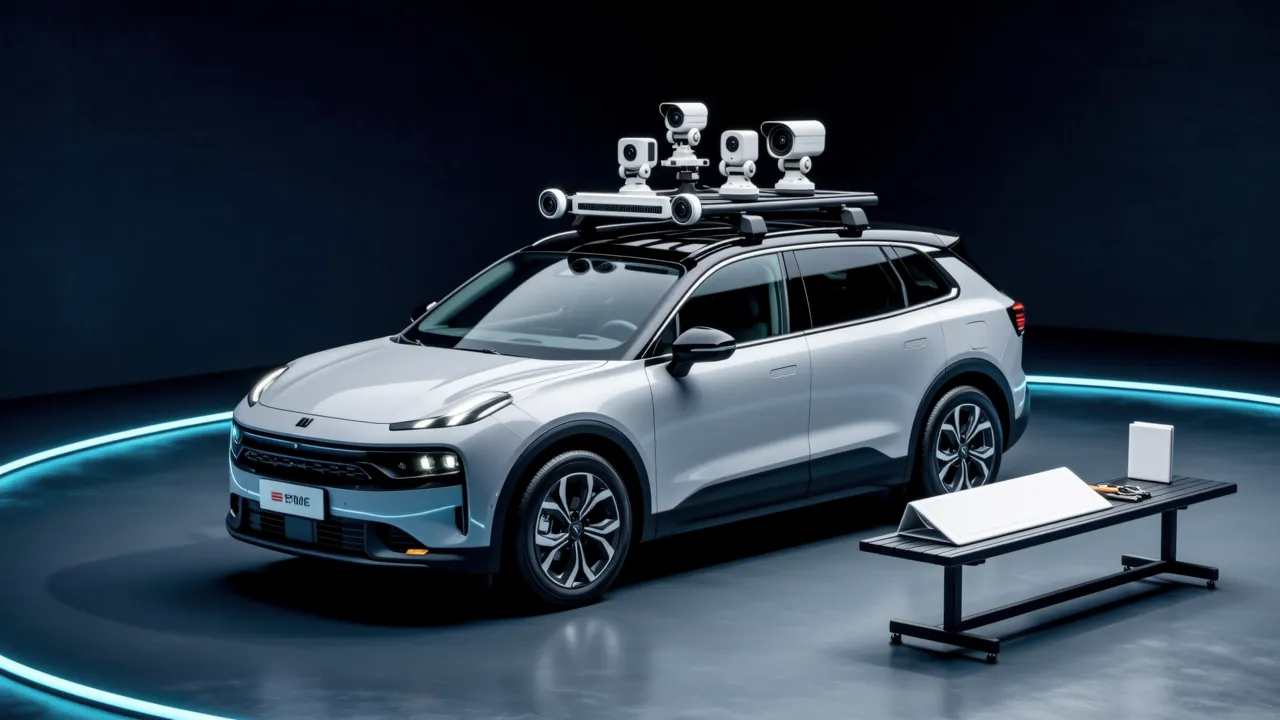
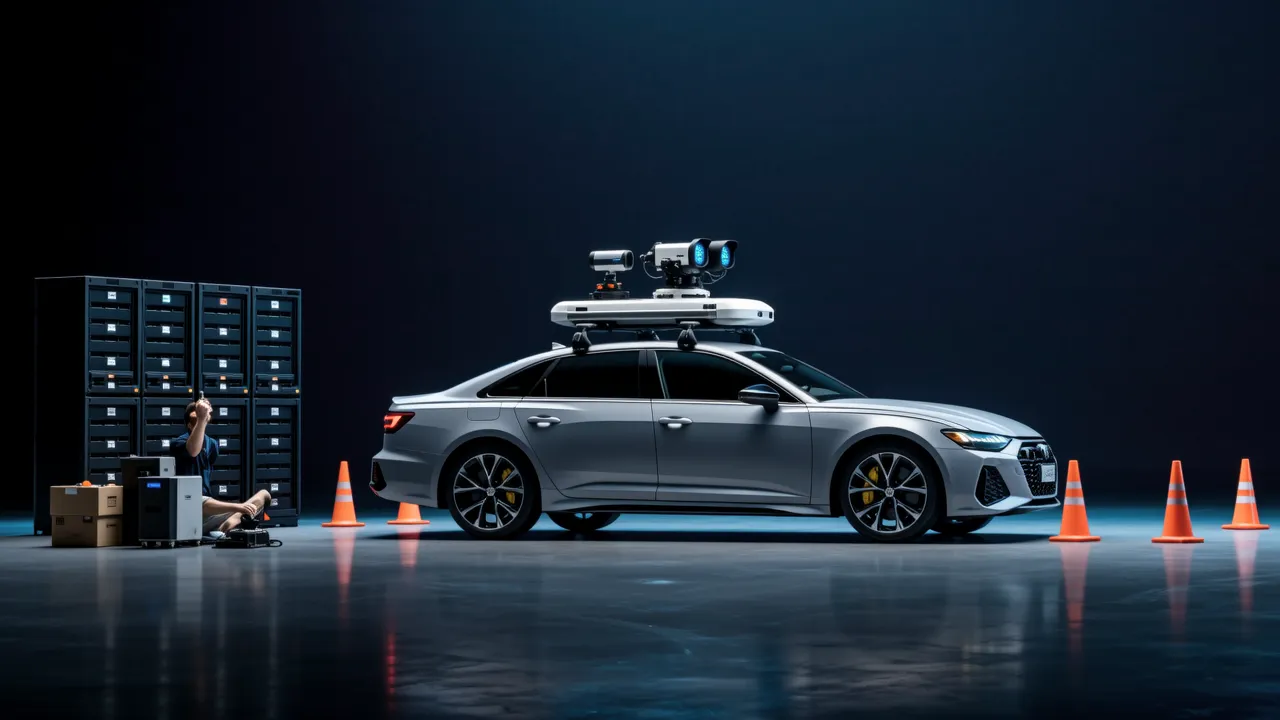
On equipment, Google said the cars used video cameras, radar sensors and a laser range finder, plus detailed maps collected by manually driven vehicles [2]. Maps recorded in advance give the software a prior picture of the road, and the sensors then report what is actually around the car and where it differs from that picture.
Google also said its cars were never unmanned: a trained safety driver sat behind the wheel and a trained software operator rode in the passenger seat [2]. The detail set expectations for what the announcement was — a testing programme rather than a product, with people able to take over at any moment.
The post also named the kind of background the team had. Google said it recruited engineers from the DARPA Challenges, including Chris Urmson, Mike Montemerlo and Anthony Levandowski [2]. The DARPA Challenges were a series of prize competitions for autonomous vehicles, so the project started with people who had already built and raced driverless cars.
Why it mattered
Google framed the project around safety. It cited World Health Organization figures of more than 1.2 million road deaths a year and said the technology could cut that number perhaps by half [2]. That is a large, countable public harm, and presenting a software system as a way to reduce it became a common way of arguing for work of this kind.
Later
In December 2016 the project was renamed Waymo and spun out of Google as part of Alphabet [1]. What had started in 2009 as an experiment inside Google X thus continued as a separate company.
Sources
- 1WaymoWikipedia
- 2What we're driving atOfficial Google Blog
Cite this page: Google starts its self-driving car project. TellWorld, https://www.tellworld.net/news/google-self-driving-2009. Updated 2026-11-07