Background
PROMETHEUS was a European research programme on autonomous vehicles that ran from 1987 to 1995, with a budget of 800 million ECU [1]. Its subject was the car that could sense the road and steer itself, and its closing years were dominated by two research vehicles built for it.
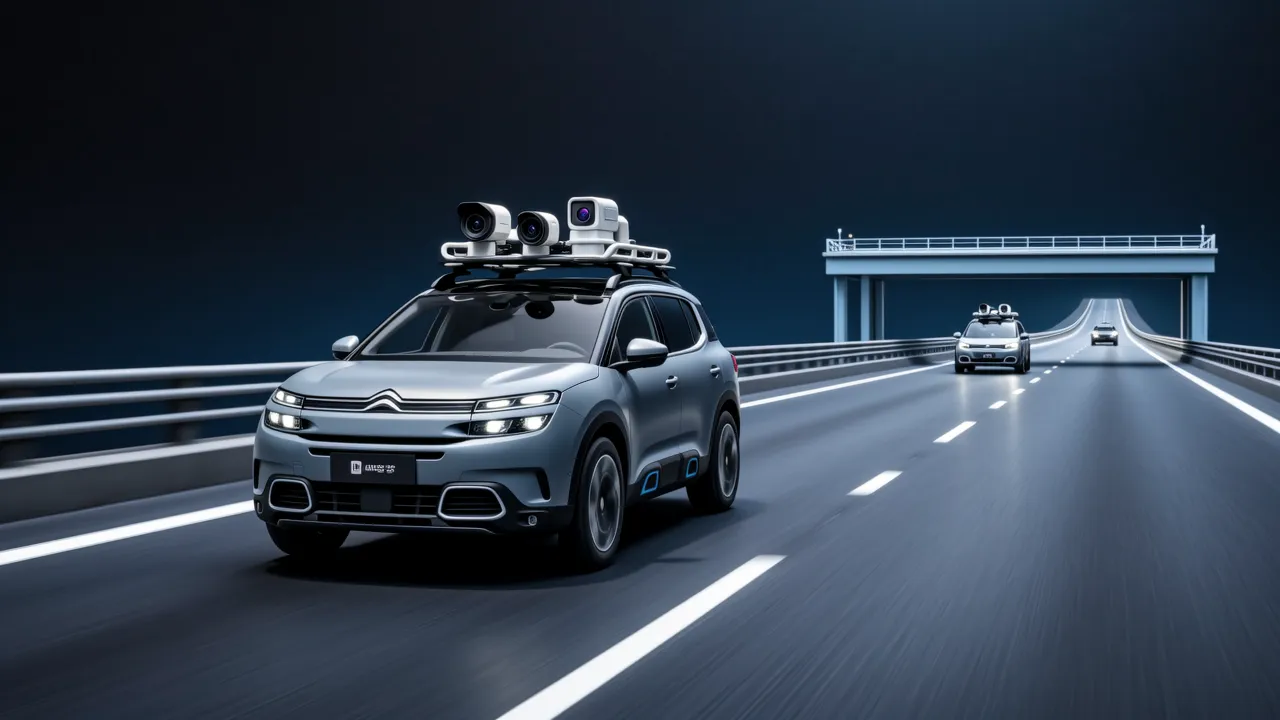
The cars came from Ernst Dickmanns' team at the University of the Bundeswehr Munich, working together with Mercedes-Benz [1]. The pair were the VaMP and its twin, VITA-2 — two vehicles of the same design, used to show that what one car could do was not a one-off.
The demonstration
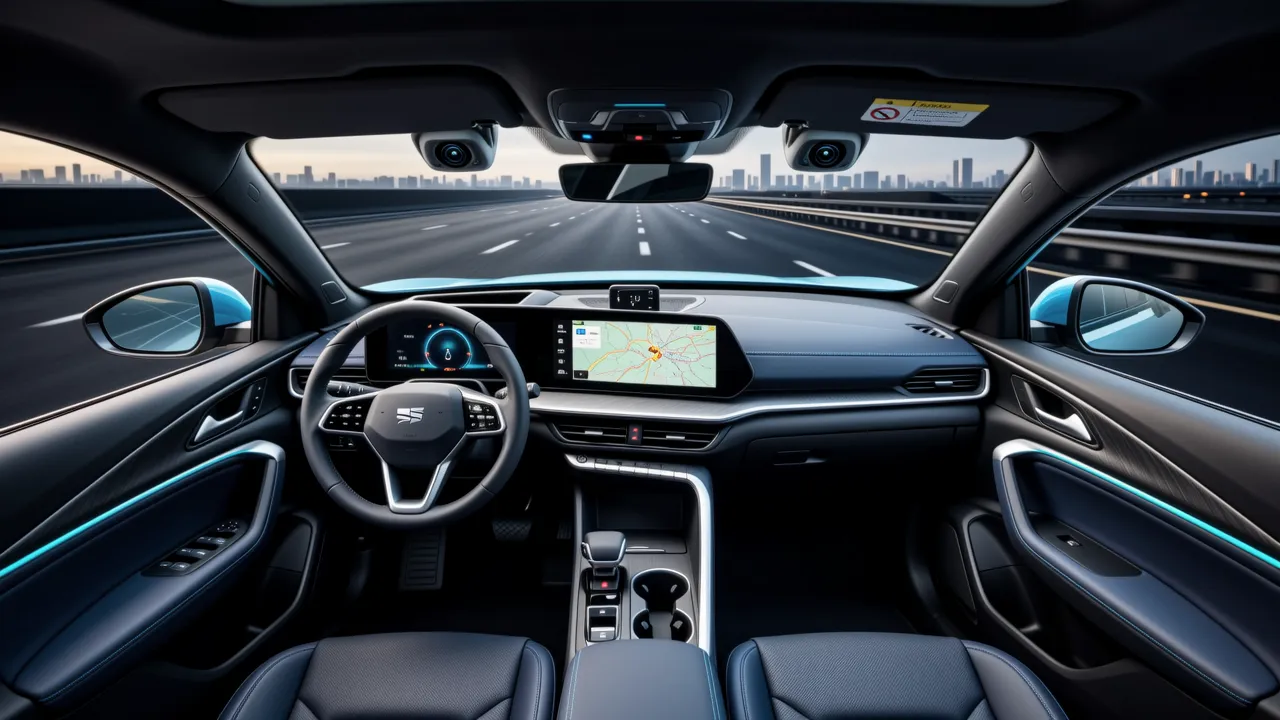
In October 1994 the two cars were the centrepiece of the final international presentation of the EUREKA PROMETHEUS project [1]. Rather than a scripted run on a closed track, the demonstration took place in ordinary road conditions: with a safety driver and guests aboard, the two cars drove more than 1,000 km in normal traffic on a three-lane highway [1].
Speed was not held down to a cautious crawl. The cars reached up to 130 km/h during the demonstration [1]. Driving at highway speed in traffic means the vehicle has to see other cars early, judge their distance and closing speed, and hold a lane — all in real time, with passengers in the seats.
Key details
The manoeuvres were not limited to following a lane. The cars changed lanes to the left and to the right, and passed other cars autonomously [1]. That autonomy had a boundary: the safety driver had to approve each manoeuvre before it was carried out [1]. The arrangement is worth noting precisely, because it defines what was being shown. The vehicle perceived the scene and produced the decision — change lane, overtake — and a human supervisor confirmed it. The research question was whether the machine's judgement was good enough to be worth following, not whether a human could be removed from the car.
The distance covered matters as much as the top speed. A single impressive manoeuvre can be luck; more than 1,000 km of ordinary traffic tests a perception and control system against the ordinary variety of the road — slower cars, gaps that open and close, a lane that is not free when you want it.
The record
Fabian Kröger's 2024 history of European vehicle automation research describes the PROMETHEUS programme and the performances of the VITA-II and VaMP research vehicles [2]. The chapter's account of the programme cites a 1994 PROMETHEUS research contract final report running to 177 pages [2] — the kind of internal documentation that lets later historians reconstruct what was actually driven and measured, rather than what was remembered.
Why it matters
PROMETHEUS was a large, publicly funded European effort, and this run was its public finale [1]. It put a concrete number and a concrete speed on autonomous driving: two cars, over 1,000 km, up to 130 km/h, in traffic, on a highway [1]. The highway is the easiest part of driving to automate — lanes are marked, other vehicles move in predictable directions, and there are no pedestrians — and the demonstration stayed honestly inside that setting, with a supervisor approving each move [1]. That is what makes it a useful reference point: a clear statement of what camera-based perception and control could do at the time, and of how much human oversight it still assumed.
Sources
- 1VaMPWikipedia
- 2History of the Research on Vehicle Automation in EuropeSpringer (Archimedes vol. 70), Fabian Kröger
Cite this page: VaMP and VITA-2 demonstrate autonomous highway driving for PROMETHEUS. TellWorld, https://www.tellworld.net/news/prometheus-final-1994. Updated 2026-11-08