Background
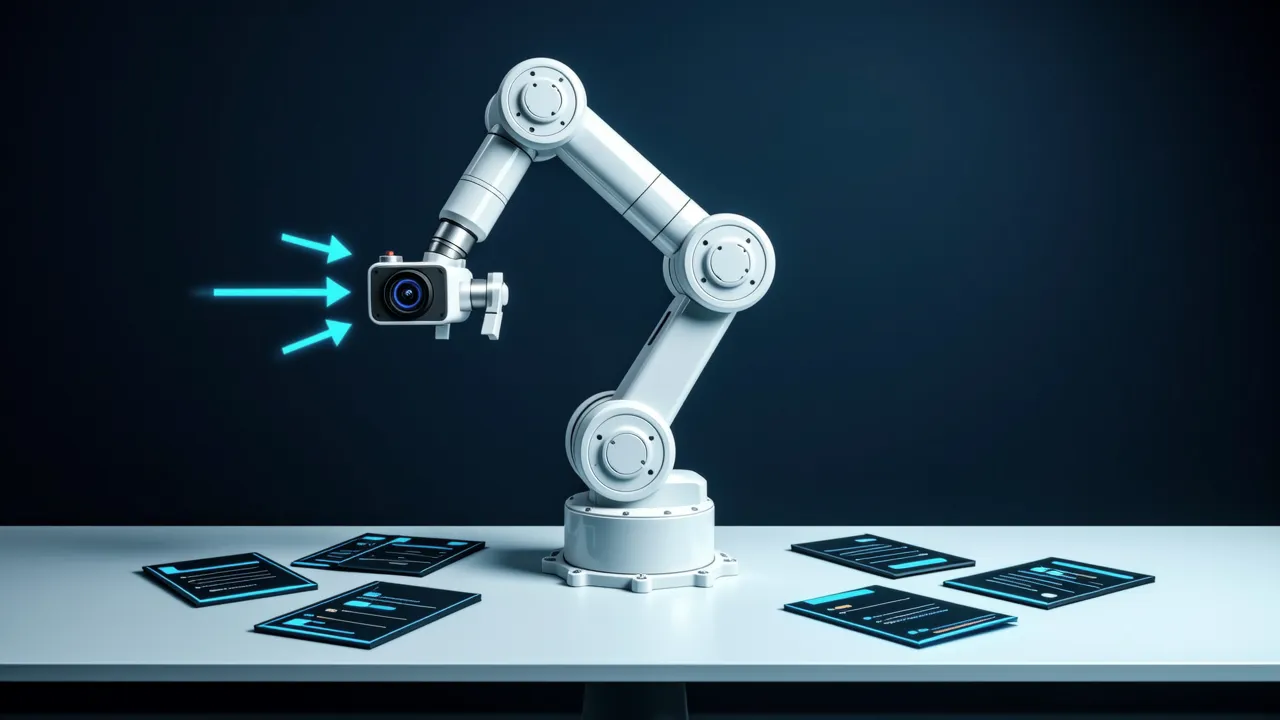
Robots that perform well in a laboratory often struggle the moment they are placed somewhere new. Physical Intelligence argued that the hardest problem in robotics is not agility or dexterity — moving quickly and precisely — but generalization: the ability to do useful work in places and situations the robot has not already experienced [1]. A robot that only works in the room where it was tested has limited use, because homes, kitchens and offices differ from one another in layout, objects and lighting.
What was released
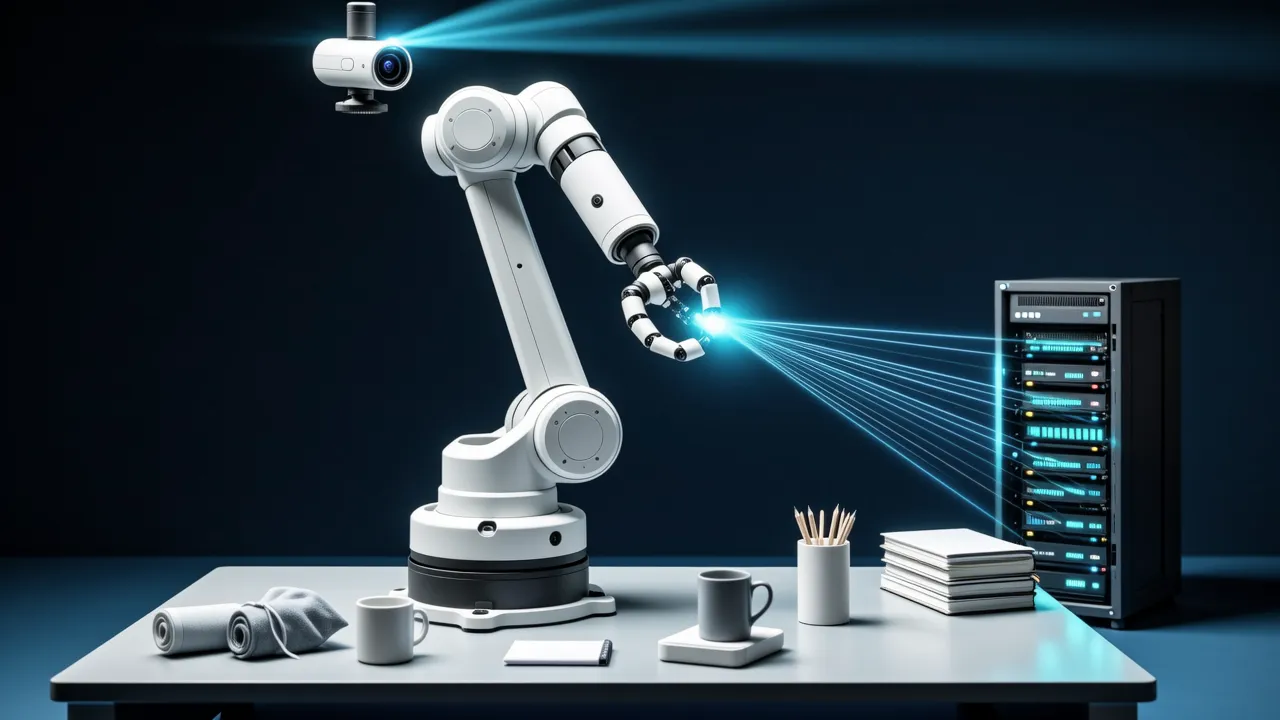
On 22 April 2025, Physical Intelligence published π0.5 [1]. The model belongs to a class called vision-language-action models (VLA): systems that take in camera images and a written instruction and produce motor commands as output, rather than only answering questions about an image. π0.5 was built on π0, the company's earlier vision-language-action model [1], so it extends an existing line of work rather than starting from scratch.
How it was trained and tested
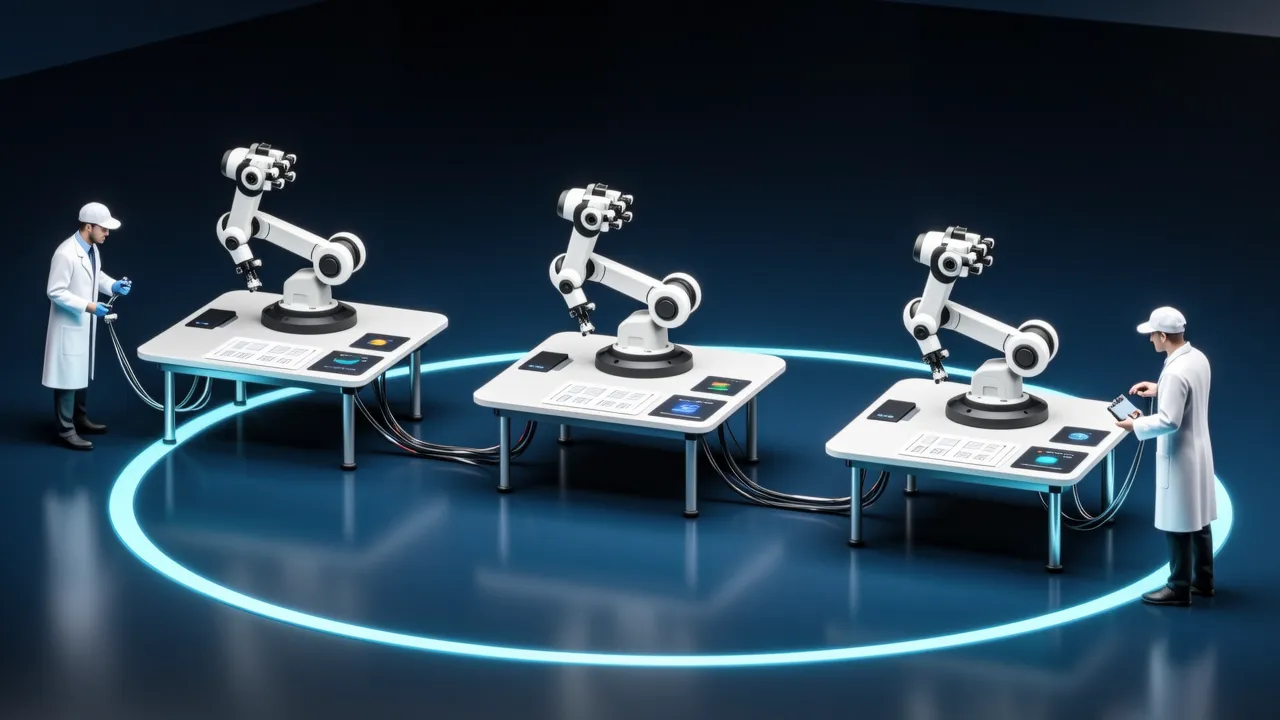
The company said the model was trained on combinations of actions, images, text and other multimodal annotations [1]. Mixing these sources means the model sees not only what a scene looked like but also what the robot did in it and how that behaviour was described in language.
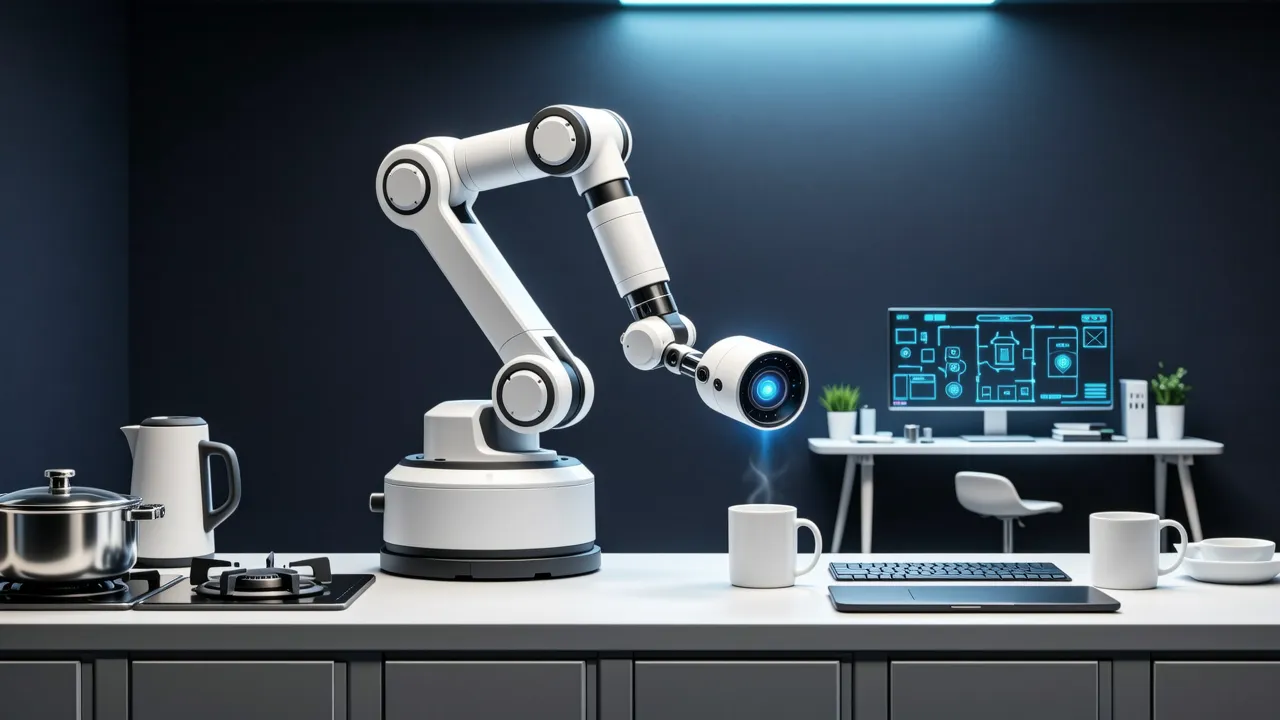
The claim the company emphasised was about where the model was evaluated: Physical Intelligence said π0.5 was tested in entirely new homes that were not seen in the training data [1]. Those were ordinary domestic settings, not staged laboratory mock-ups, and the tasks were everyday ones — rearranging objects, such as putting dishes in the sink, and using a sponge to wipe down a spill [1]. Wiping a surface is a good example of why such tasks are hard: the robot has to locate the spill, hold and move a soft tool, and keep pressure on a surface it cannot see clearly.
Why it matters
Much of the progress in robot learning has been demonstrated in controlled environments, where the objects and the layout are known in advance. Testing in homes the model never encountered during training shifts the question from "can the robot do this here?" to "can the robot do this somewhere it has never been?" That is the question that decides whether a general-purpose robot can be sold to households rather than programmed for a single factory cell.
By treating generalization as the field's central challenge, Physical Intelligence set the yardstick for its own model: performance in unfamiliar homes, not agility or dexterity in a demonstration video [1]. π0.5, built on π0 and trained on mixed multimodal data, is a step in that direction [1].
Sources
- 1π0.5: a VLA with Open-World GeneralizationPhysical Intelligence
Cite this page: Physical Intelligence releases pi-0.5. TellWorld, https://www.tellworld.net/news/pi0-5-2025. Updated 2026-11-08