Background
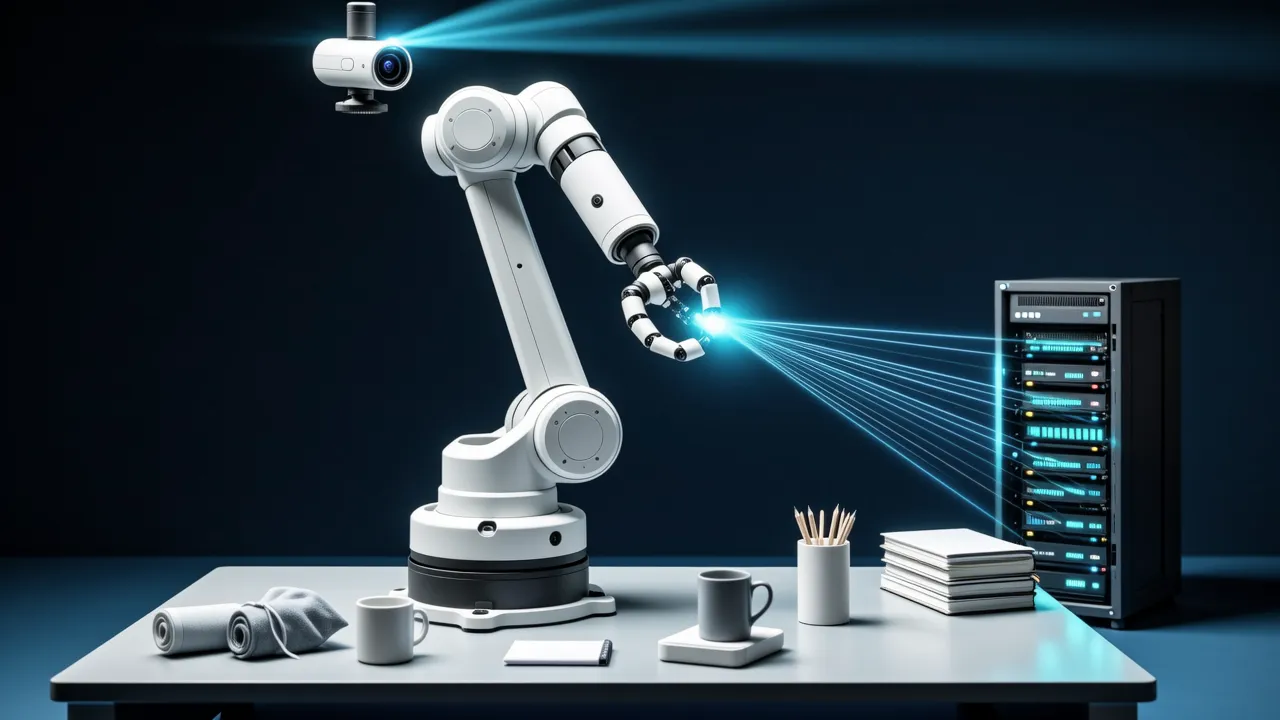
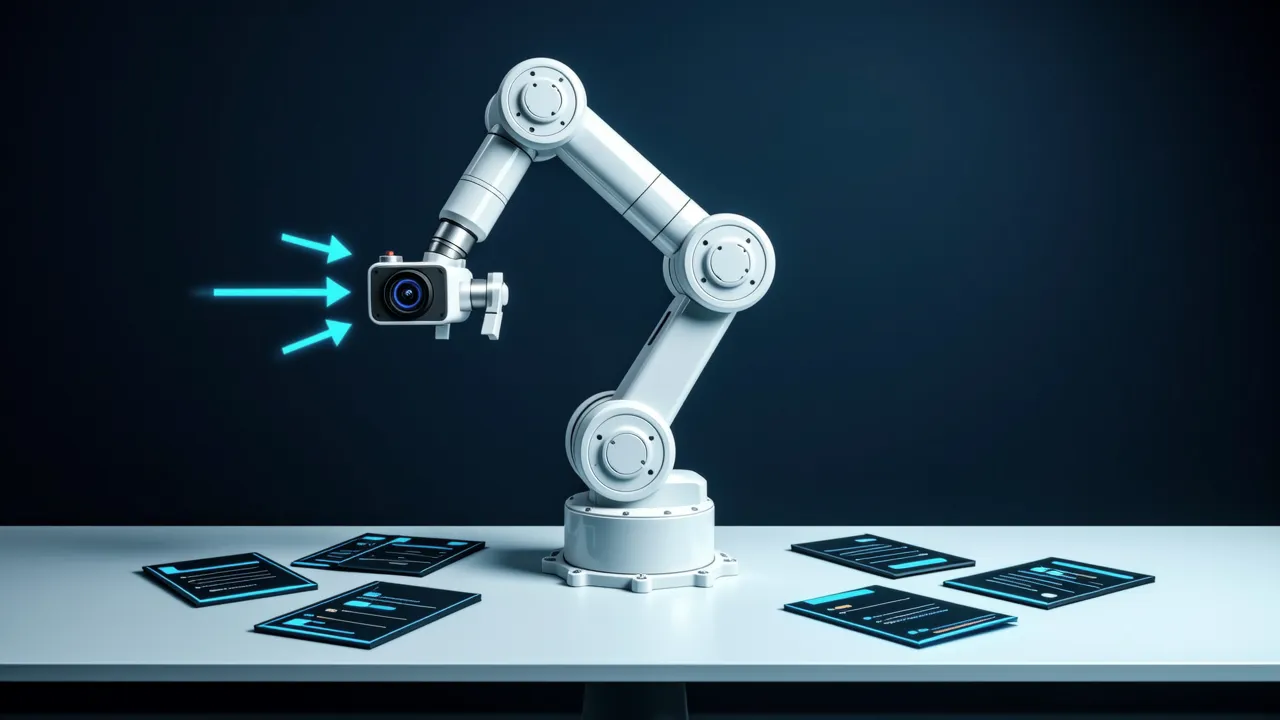
A vision-language-action (VLA) model takes in camera images together with a written instruction and outputs robot actions. Instead of writing a separate controller for every motion, you can ask the same network, in words, to pick something up or move something aside. Such models existed before OpenVLA, but the authors wrote that the existing ones were largely closed and inaccessible to the public [1]. For anyone outside the labs that built them, that meant no trained weights to run, no code to read, and no way to fine-tune a model on their own robot or to compare against it on equal terms.
What was released
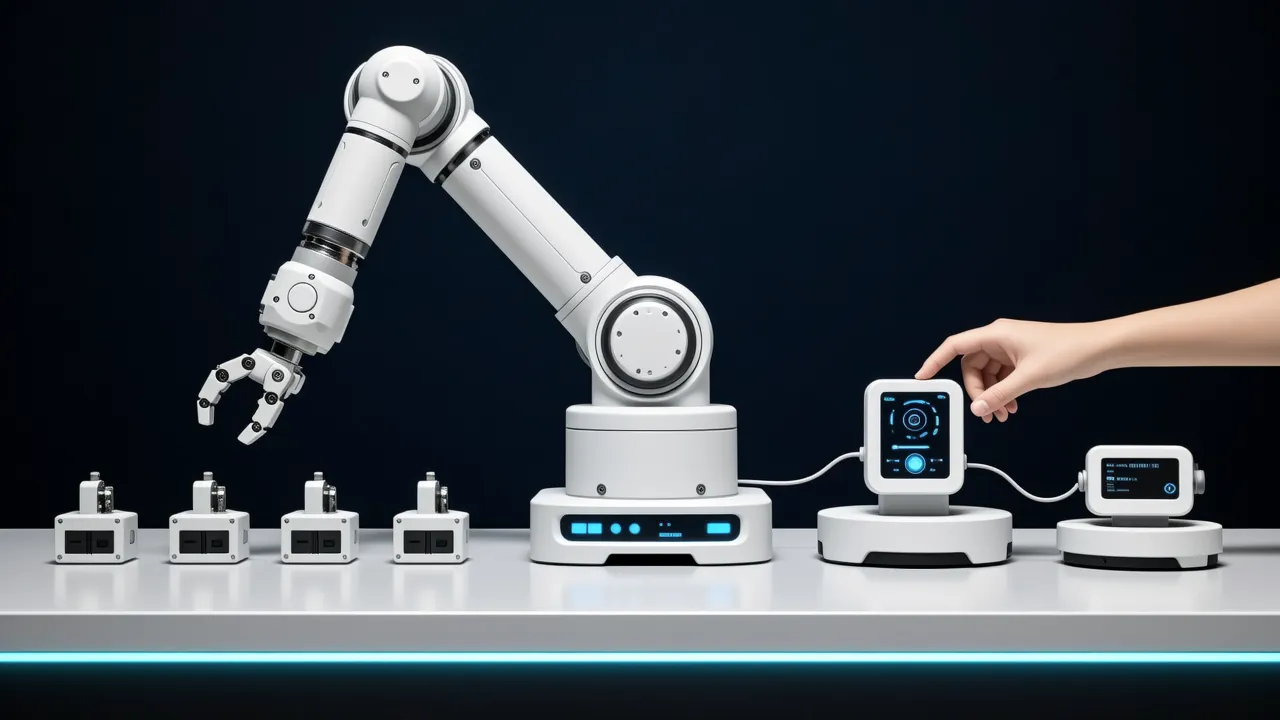
On 13 June 2024 the team posted the OpenVLA paper to arXiv [1]. The release was deliberately packaged as a usable toolkit rather than a paper alone: the authors published model checkpoints, fine-tuning notebooks and the PyTorch codebase [1]. A checkpoint is the saved set of trained parameters that lets someone load the model and run it without repeating the training; a notebook is a step-by-step script that walks a user through adapting the model to their own data. Publishing both together is what turns a result into something other groups can actually work with.
Training data and results
The model was trained on 970,000 robot manipulation trajectories drawn from the Open X-Embodiment dataset [1][2]. A trajectory here is a recorded episode: what the robot's cameras saw, what command was given, and what the robot did. Collecting and pooling that many episodes is what gives a model like this broad enough experience to handle varied objects, scenes and instructions.
The authors evaluated the model across 29 tasks and reported a 16.5% absolute improvement in task success rate over RT-2-X, a model with 55 billion parameters [1]. The comparison matters because it places a public model directly against a much larger prior system on the same set of tasks, so the gap is stated in the same units rather than in vague terms.
Who built it
The project page lists Stanford University, UC Berkeley, Toyota Research Institute, Google DeepMind, Physical Intelligence and MIT among the authors' affiliations [2] — a mix of university robotics groups and industrial research labs.
Why it matters
Open weights and open code change what a result can be used for. A lab with its own robot arm can start from the released checkpoint, follow the fine-tuning notebooks and adapt the model to its hardware instead of training a VLA system from scratch [1]. A research group that wants to test an idea about robot learning has a public baseline to compare against, rather than only numbers quoted from a closed system [1]. And the reported comparison with a 55-billion-parameter model gives the field a stated reference point on the 29 tasks that were measured [1].
What the release does not settle is everything beyond those measurements. The model was trained on manipulation trajectories from a shared dataset and evaluated on a fixed set of tasks; how well it carries over to other robots, other kinds of motion or unfamiliar environments is a question that only follow-up work using the released code and checkpoints can answer. The main contribution described in the paper is narrower and more concrete: an openly available vision-language-action model, its training recipe, and an evaluation that puts it next to a much larger predecessor [1][2].
Sources
- 1
- 2OpenVLA: An Open-Source Vision-Language-Action ModelOpenVLA project page
Cite this page: OpenVLA released as open-source VLA. TellWorld, https://www.tellworld.net/news/openvla-2024. Updated 2026-11-08