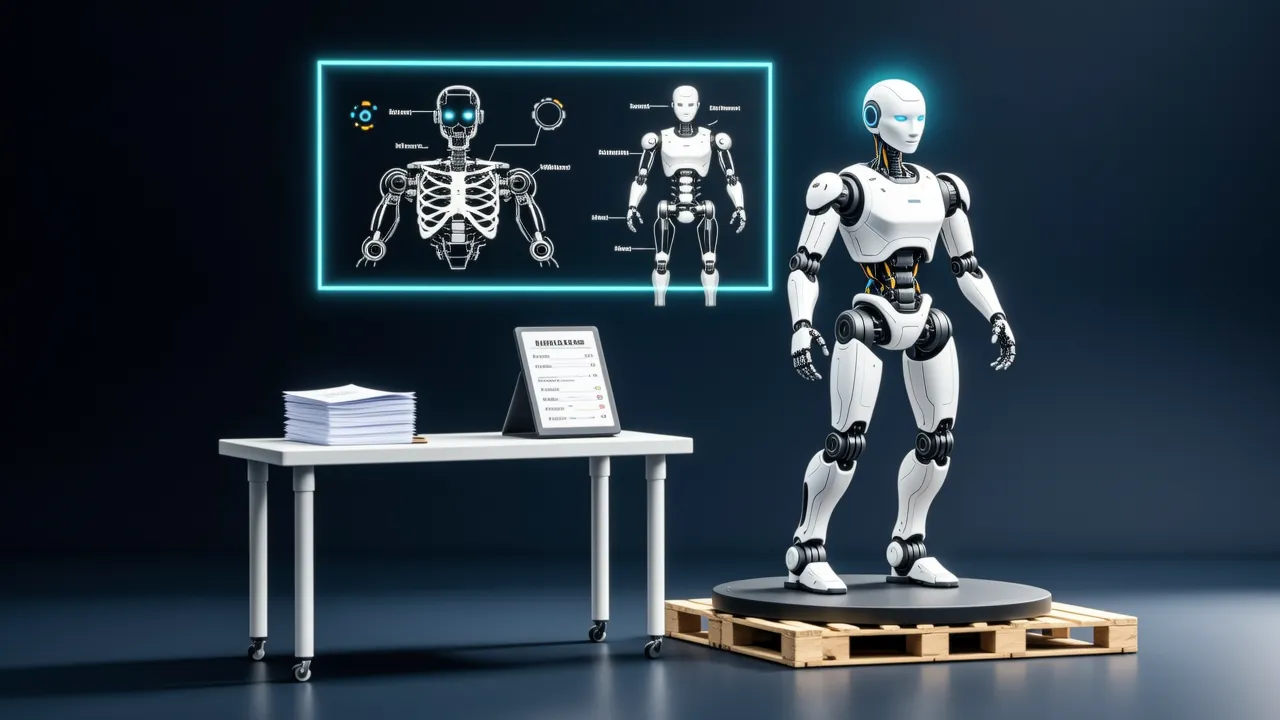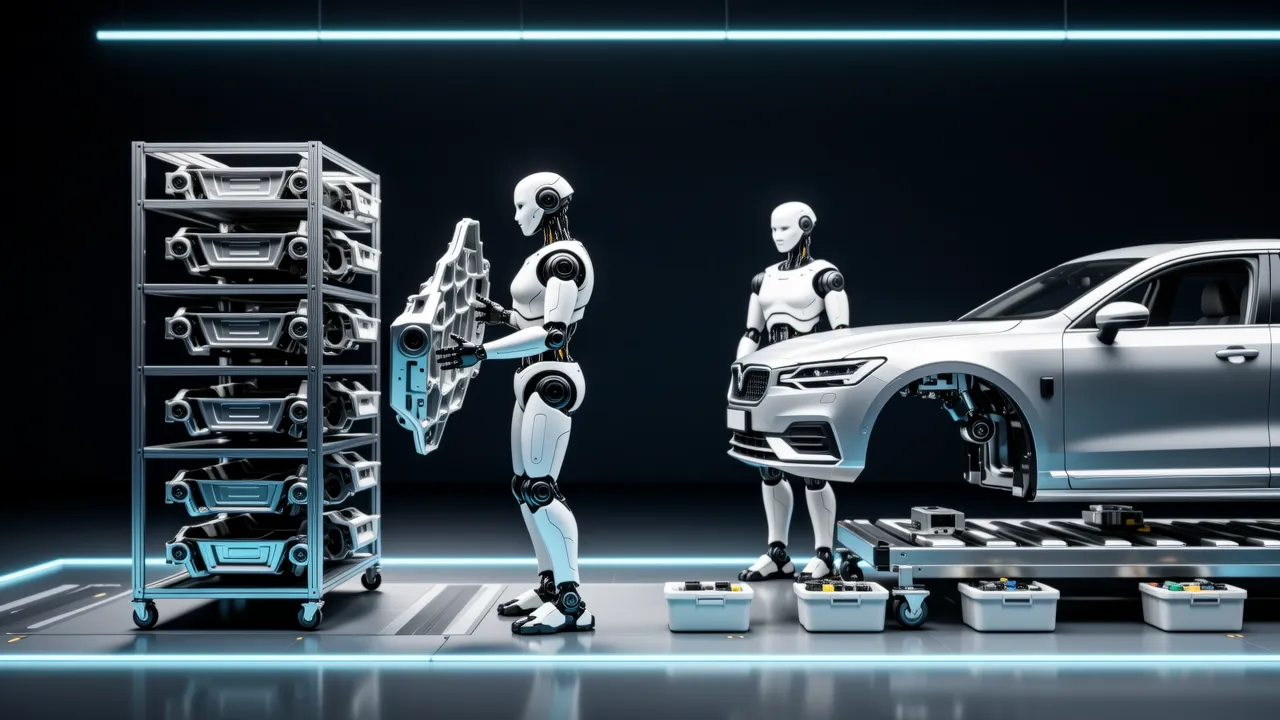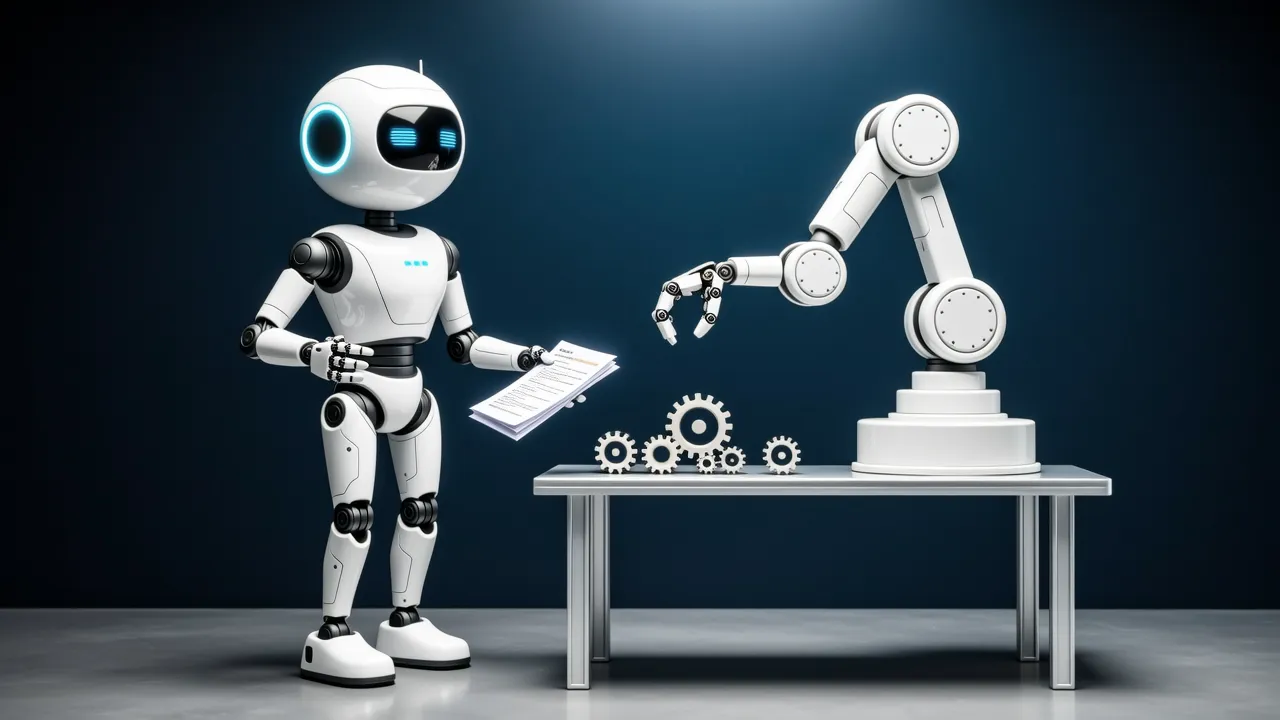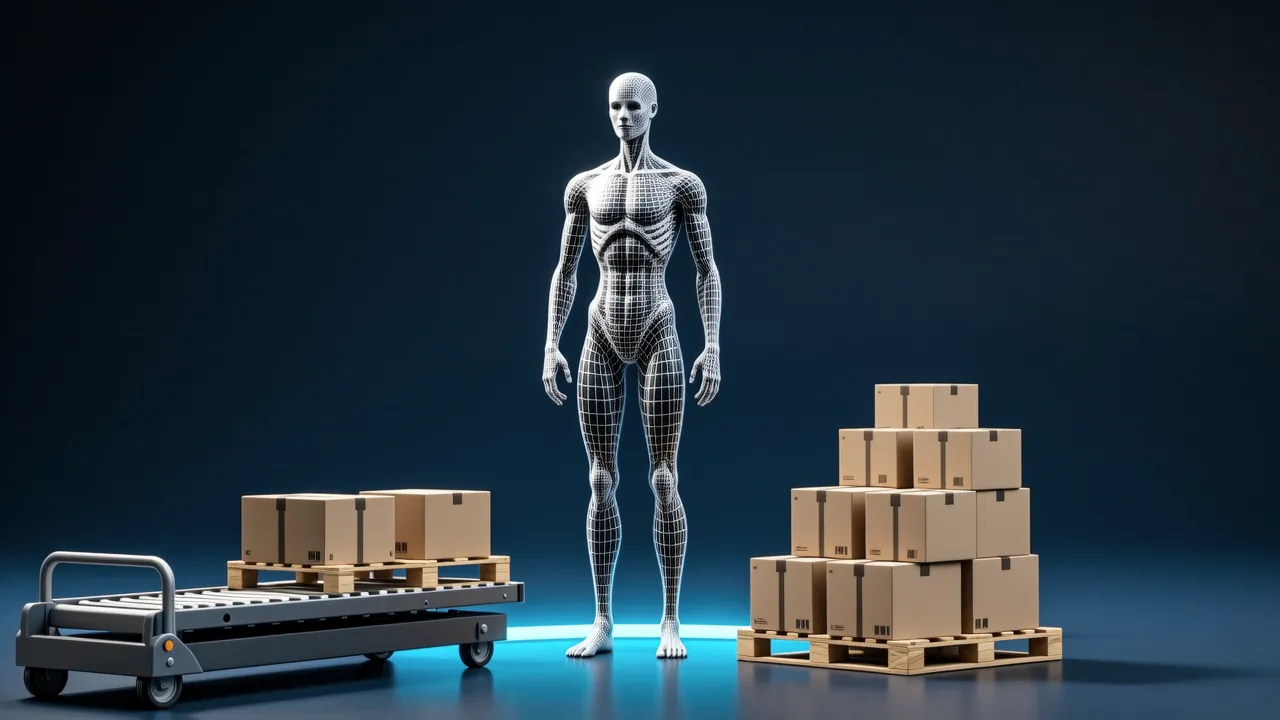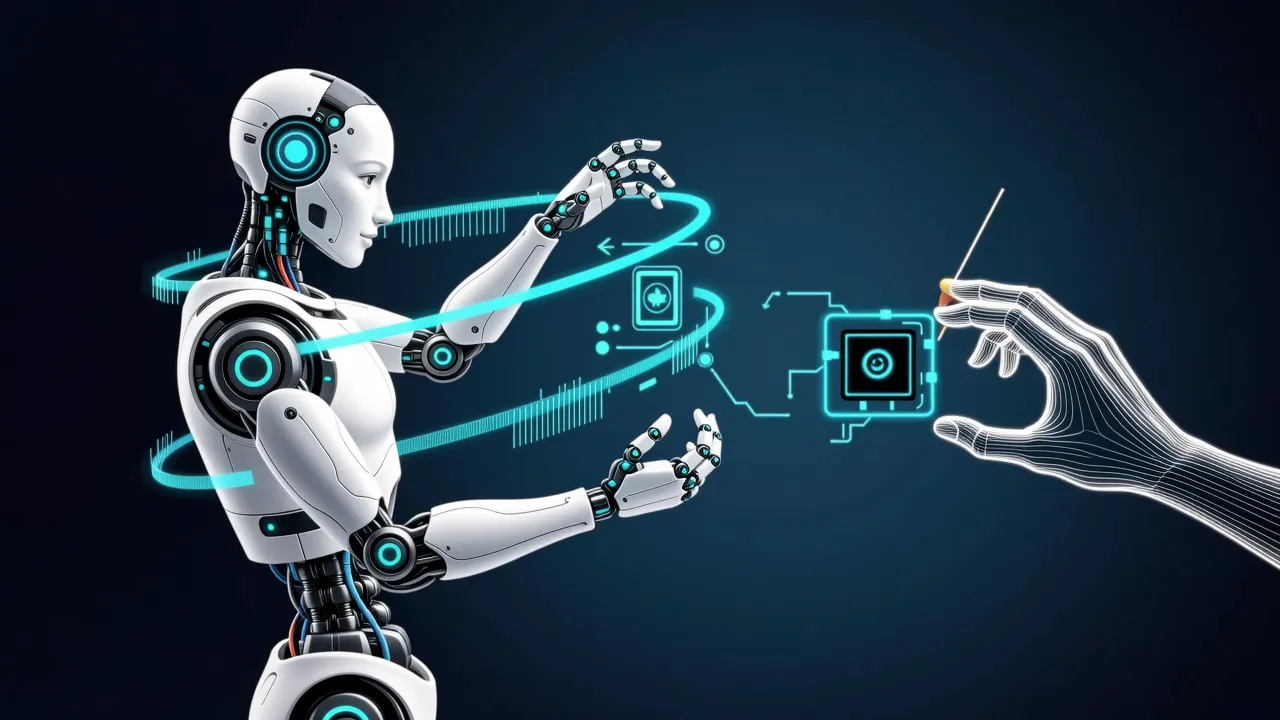
Background A vision-language-action model, or VLA, connects what a robot sees and what it is told with the motor commands it produces. For a humanoid, the hard part is not only recognizing an object but turning a sentence into continuous motion across many joints while responding quickly. A model that runs on a remote server must send commands over a network; a model that runs onboard must fit within the robot's power and computing limits. These are general engineering constraints for such systems.
What happened On 20 February 2025, Figure published its Helix announcement. [1] Figure described Helix as a vision-language-action model. According to Figure, Helix was the first VLA model to directly control an entire humanoid upper body from natural language. [1] Figure also said Helix was the first VLA model to output high-rate continuous control of the entire humanoid upper body. [1]
Key details Figure made several capability claims for Helix. It said Helix was the first VLA model to operate simultaneously on two robots for a shared manipulation task, which requires the robots to coordinate rather than follow unrelated commands. [1] It said robots equipped with Helix could pick up thousands of small household items they had never encountered, following natural language prompts. [1] Figure also said Helix was the first VLA model to run entirely onboard embedded low-power GPUs. [1] Running onboard places the model inside the robot's own power and computing envelope; compared with relying on external computing, real-time control becomes a tighter engineering constraint.
Figure stated that all items handled during training were excluded from evaluations to prevent contamination. [1] This detail concerns how generalization was tested. If a test item had appeared in training, success on that item would not show that the model could handle something new. Excluding such items makes the evaluation closer to a test on unfamiliar objects.
Why it matters The Helix announcement brings several requirements together: following natural language, controlling the whole upper body, producing high-rate continuous actions, coordinating two robots, running onboard, and handling unseen household items. [1] Each requirement is difficult on its own. Recognizing objects in images is not enough for manipulation; the model must map language and perception to actions that remain stable over time. Controlling one arm in a fixed setting is not enough for a multi-joint humanoid upper body. A system that depends on a large external computer is a different engineering choice from one intended to run on the robot. Figure's claims therefore concern integration as much as any single capability.
Impact As an announcement, Helix is presented as moving humanoid upper-body control toward a general instruction interface: a person gives natural language, and the model processes visual information and outputs continuous actions. [1] Figure also emphasizes two-robot coordination and onboard low-power execution, which move the problem beyond single-robot, single-task action generation toward multi-robot collaboration and embedded deployment. [1] The announcement adds the exclusion of training items from evaluation as a contamination safeguard, so the capability claims need to be read together with the evaluation method. [1] These are the claims Figure made in the announcement; they form the core of the Helix release.
Sources
- 1
Cite this page: Figure unveils Helix. TellWorld, https://www.tellworld.net/news/helix-2025. Updated 2026-11-08