Background
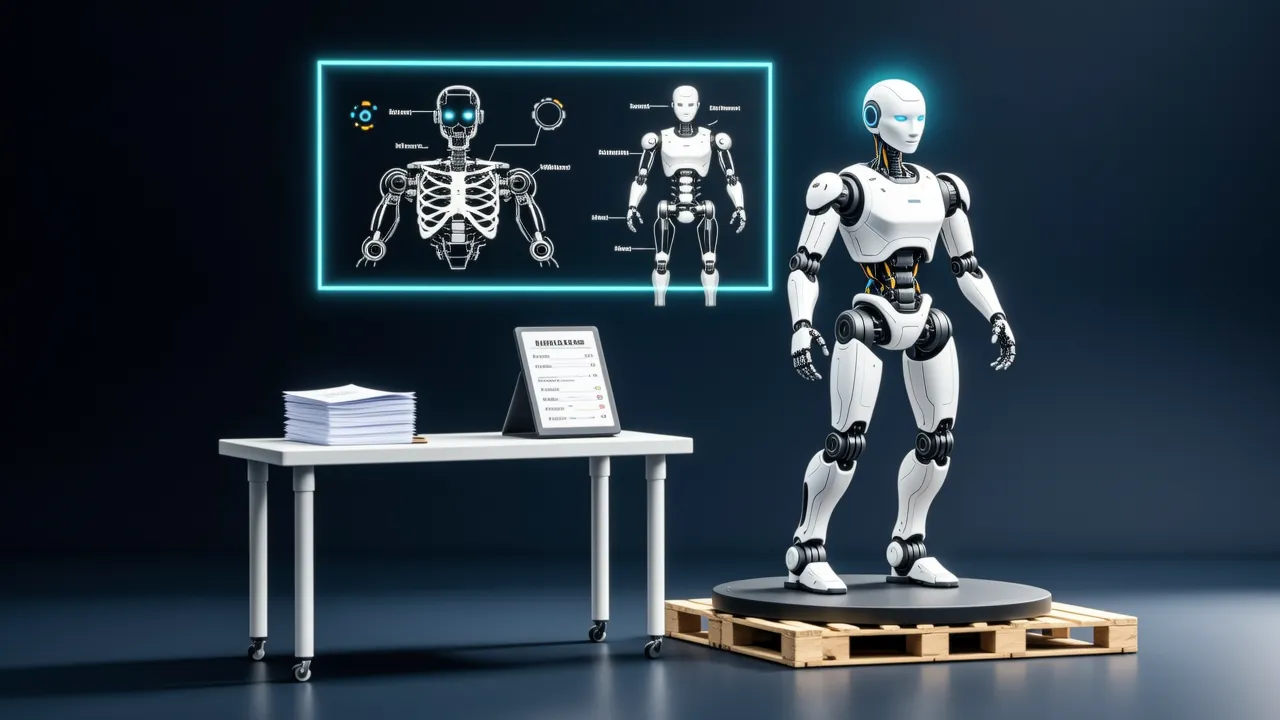
Assembly lines have used robots for decades, but most of those machines are bolted in place and repeat one programmed motion. The pitch for a humanoid robot is different: it stands and moves, it can be assigned to a station originally laid out for human hands, and it can in principle be retrained for a different job. Figure 02 was the machine Figure put on a real production line to test that pitch outside a lab.
What happened
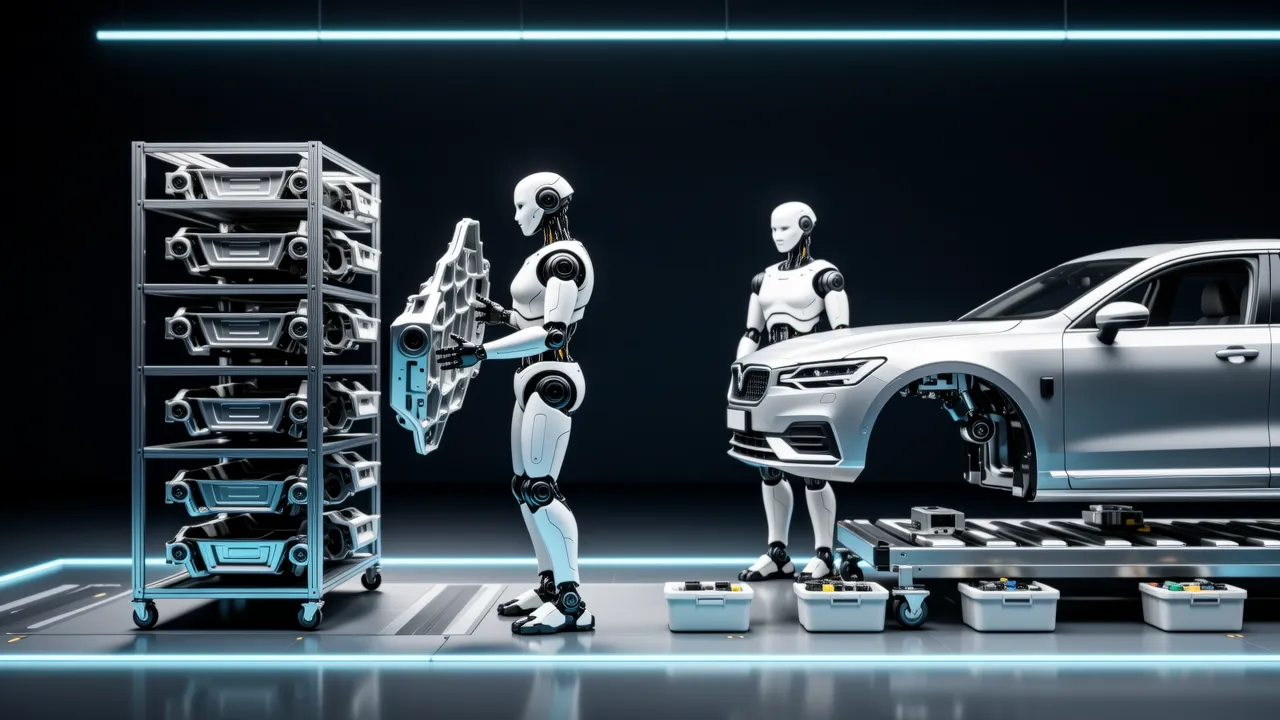
Figure reported the results of an 11-month deployment of Figure 02 at BMW Group Plant Spartanburg[1]. According to the company, it delivered robots to the plant and began testing within six months, and launched full deployment on an active assembly line within ten months[1]. The wording matters: the robots worked on a line that was running production, not in a separate trial area set aside for experiments.
The operating numbers
Work was scheduled in 10-hour shifts, Monday to Friday[1]. Over the deployment Figure reported more than 90,000 parts loaded and more than 1,250 hours of runtime[1]. The company said the robots contributed to the production of more than 30,000 X3 vehicles[1], and it estimated more than 1.2 million robot steps in total, or more than 200 miles[1]. Steps and miles sound like an odd metric for factory work, but they measure wear: every one of those steps is a loaded joint movement the hardware had to survive.
The first job: sheet-metal loading
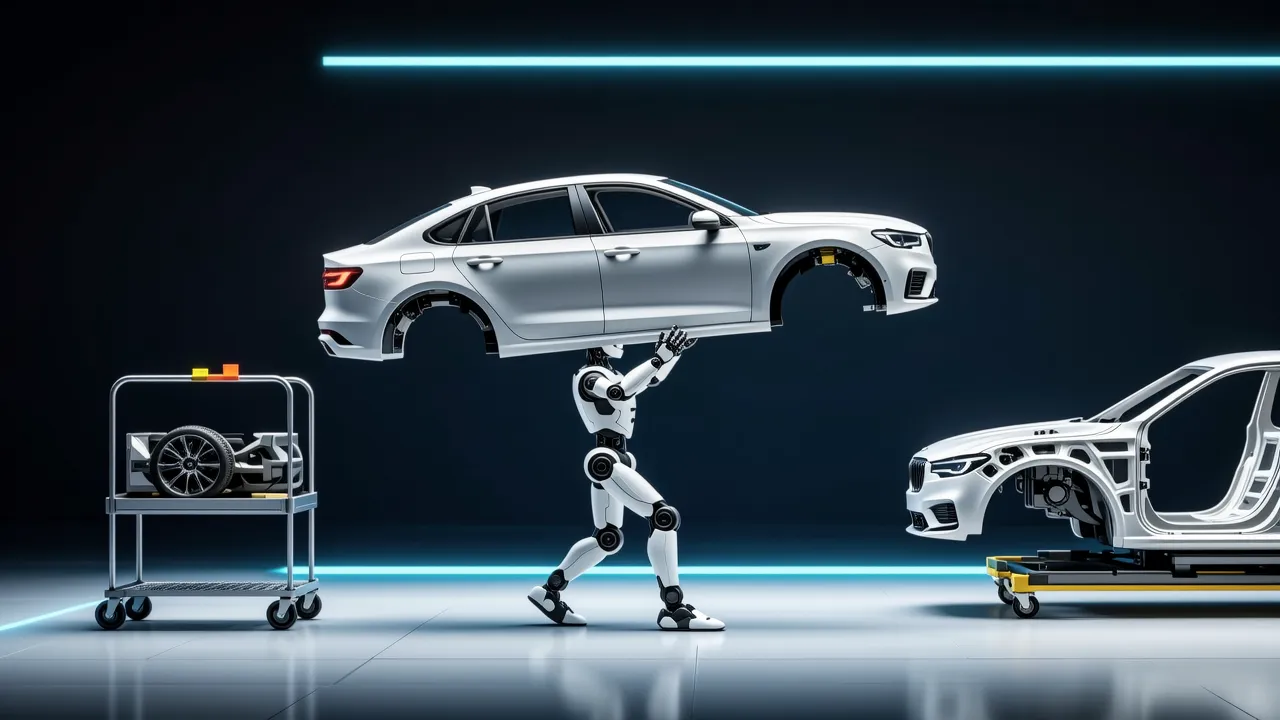
The first use case was sheet-metal loading[1]. In that task a robot has to pick up a piece of sheet metal, carry it to a position, place it accurately enough for the next operation, and repeat. Figure stated the requirement in production terms: 84 seconds for the total cycle with 37 seconds of load time, a placement accuracy target above 99% per shift, and a goal of zero interventions[1]. The last target is the hardest. Cycle time says whether the robot is fast enough; zero interventions says whether anyone had to walk over and clear a failure during a shift.
What broke
Long deployments are useful mostly for the failures they expose. Figure said the forearm was the top hardware failure point, and that it re-architected the wrist electronics for Figure 03 as a result[1]. That is the loop such a deployment is meant to close: a part fails repeatedly in the field, and the next version of the robot is designed around that failure.
Retirement and reading the numbers
Figure said it was officially starting the fleet-wide retirement of Figure 02 following the release of Figure 03[1]. The figures in the report are the company's own; they describe what Figure says the robots did, not what an outside auditor measured. Read that way, the report is still one of the more concrete public accounts of a humanoid robot doing scheduled production work: fixed shifts, a cycle-time requirement, counted parts and counted vehicles.
Sources
- 1
Cite this page: Figure reports results of its Figure 02 deployment at BMW. TellWorld, https://www.tellworld.net/news/figure-bmw-production-2025. Updated 2026-11-08