Background
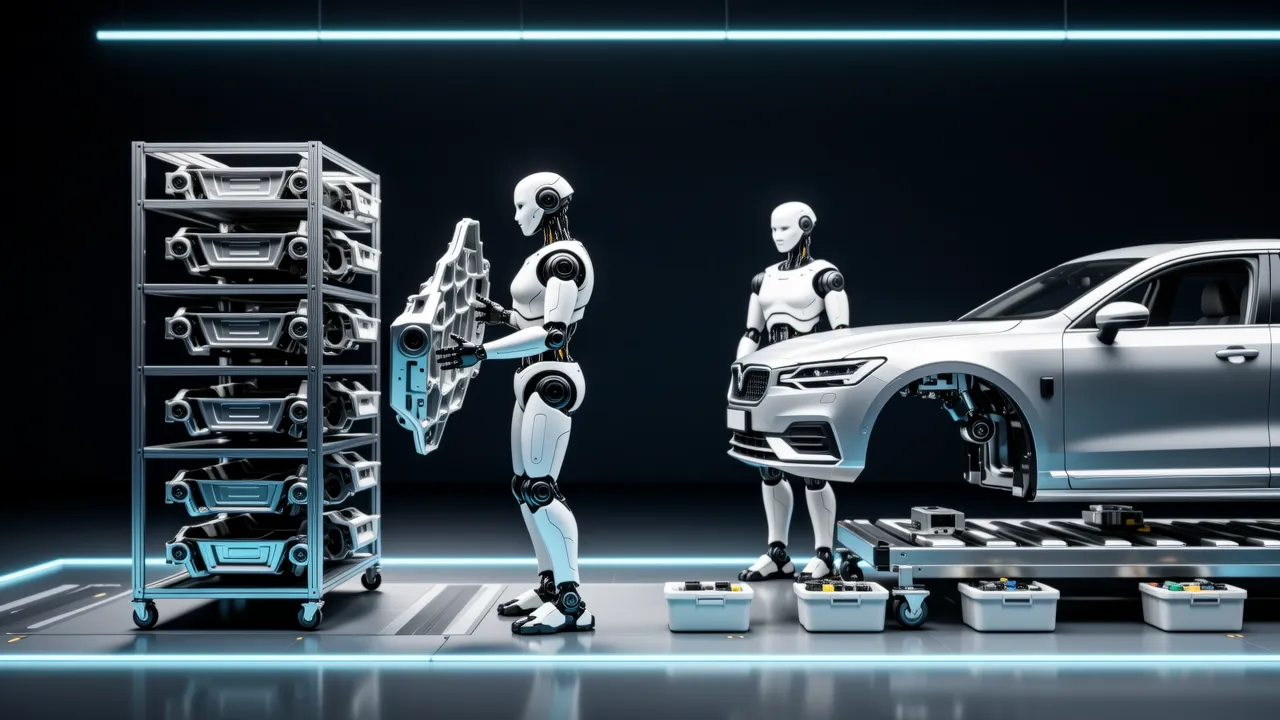
Humanoid robots are machines built around a human-like body plan — a torso, two arms, two legs and a head — so that they can, in principle, use tools and move through spaces designed for people. Two different problems sit inside such a machine: making the body move reliably, and making it understand what a person has asked for. Figure, a company building humanoid robots, announced progress on both on 29 February 2024.[1]
The funding round
Figure said it had raised US$675 million in a Series B round at a US$2.6 billion valuation.[1] The investors the company named were Microsoft, the OpenAI Startup Fund, NVIDIA, Jeff Bezos through Bezos Expeditions, Parkway Venture Capital, Intel Capital, Align Ventures and ARK Invest.[1] The Robot Report reported that the round took Figure's disclosed funding to US$754 million, and that the company had about 80 employees at the time.[2]
The agreement with OpenAI
Alongside the investment, Figure and OpenAI entered into a collaboration agreement to develop next generation AI models for humanoid robots. The work combines OpenAI's research with Figure's understanding of robotics hardware and software, with the stated aim of improving robots' ability to process and reason from language.[1] Figure also said it would use Microsoft Azure for AI infrastructure, training and storage.[1]
Peter Welinder, OpenAI's vice president of product and partnerships, said OpenAI had always planned to come back to robotics and was blown away by Figure's progress to date.[1]
What the money was for
Figure said the new capital would be used to scale AI training, manufacture more robots, expand engineering headcount and advance commercial deployment.[1][2] Brett Adcock, Figure's founder and CEO, said the company would use the money to develop large language models for robots, expand production and hire more staff, 澎湃新闻 reported.[3]
The Figure 01 video
On the night of 13 March 2024 a video of Figure 01 was posted showing the robot describing what it saw and handing a person an apple — 13 days after the OpenAI cooperation was announced, according to 证券时报网.[4] The report said Adcock and Figure AI lead Corey Lynch credited OpenAI with the visual reasoning and language understanding, while Figure's own neural networks supplied the fast, dexterous motion. The robot's onboard cameras captured images at 10 Hz, and the neural network output actions across 24 degrees of freedom at 200 Hz; the behaviours did not depend on remote operation.[4]
Two loops at different speeds
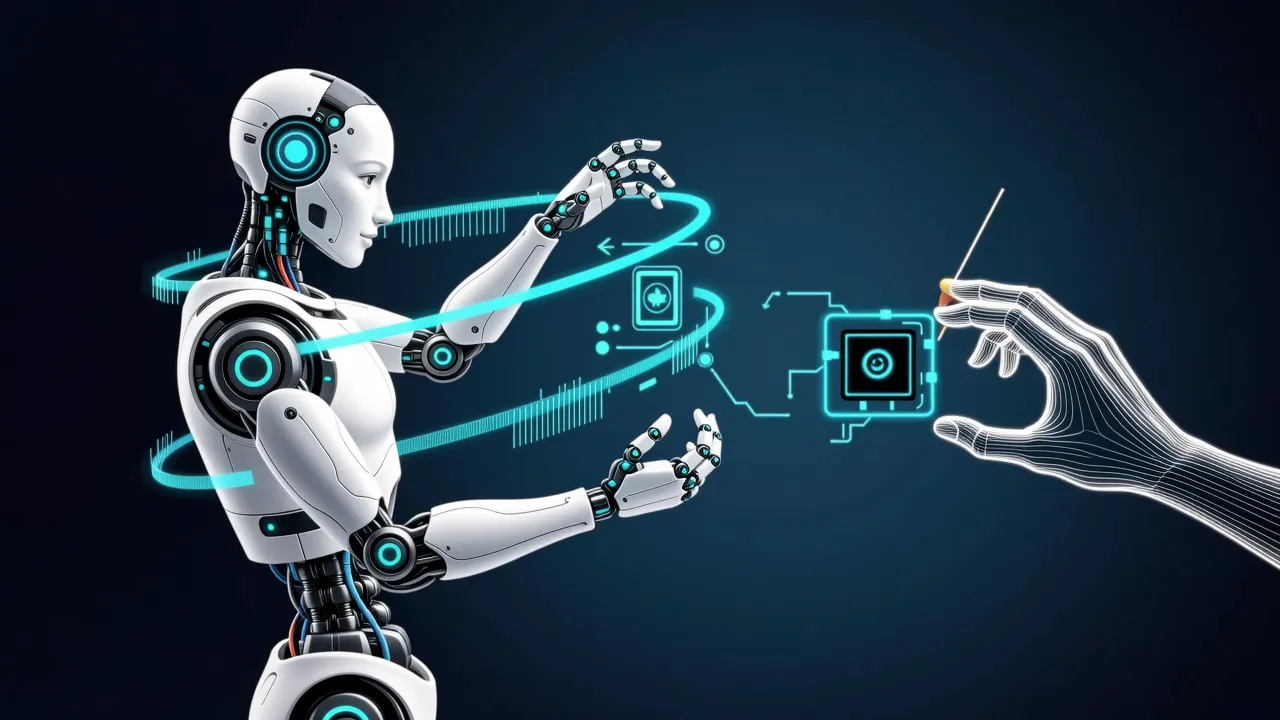
The figures from the demo describe two loops running at very different rates. Vision runs at 10 Hz, meaning the robot takes in a new picture of the scene in front of it ten times a second. Motion runs at 200 Hz, twenty times faster. A degree of freedom is one independent axis of motion — a joint that can be driven on its own — so 24 degrees of freedom means the network issues targets for 24 joints at once, 200 times a second. Keeping perception in a slower loop and control in a faster one lets a heavier model handle language and scene understanding while a lighter one keeps the body steady. That the behaviours did not depend on remote operation means no person was steering the robot from outside.[4]
What the announcement bundled
The 29 February announcement put three things in one package: a funding round, an infrastructure arrangement with Microsoft Azure, and a model-development agreement with OpenAI.[1] The video 13 days later showed both sides of that agreement inside a single task — language and visual reasoning from OpenAI, motion from Figure's neural networks.[4]
Sources
- 1Figure Raises $675M at $2.6B Valuation and Signs Collaboration Agreement with OpenAIPR Newswire / Figure AI
- 2Figure AI raises whopping $675M to commercialize humanoidsThe Robot Report
- 3又一批跨国公司地区总部落户上海澎湃新闻
- 4视频深夜热传,这个人形机器人火了!证券时报网
Cite this page: Figure partners with OpenAI on robot AI models. TellWorld, https://www.tellworld.net/news/figure-openai-2024. Updated 2026-11-08