Background
DeepMind Technologies was a London artificial intelligence company founded in 2010 by Demis Hassabis, Shane Legg and Mustafa Suleyman[1]. At the time the acquisition was announced, it was described as a two-year-old company run by the three founders[2].
Before the deal, its investors included Horizons Ventures, Founders Fund, Scott Banister, Peter Thiel and Elon Musk, with Jaan Tallinn as an early investor and adviser[1]. That list mixes venture funds with well-known individual technology investors, a pattern common among research-heavy AI startups of the period.
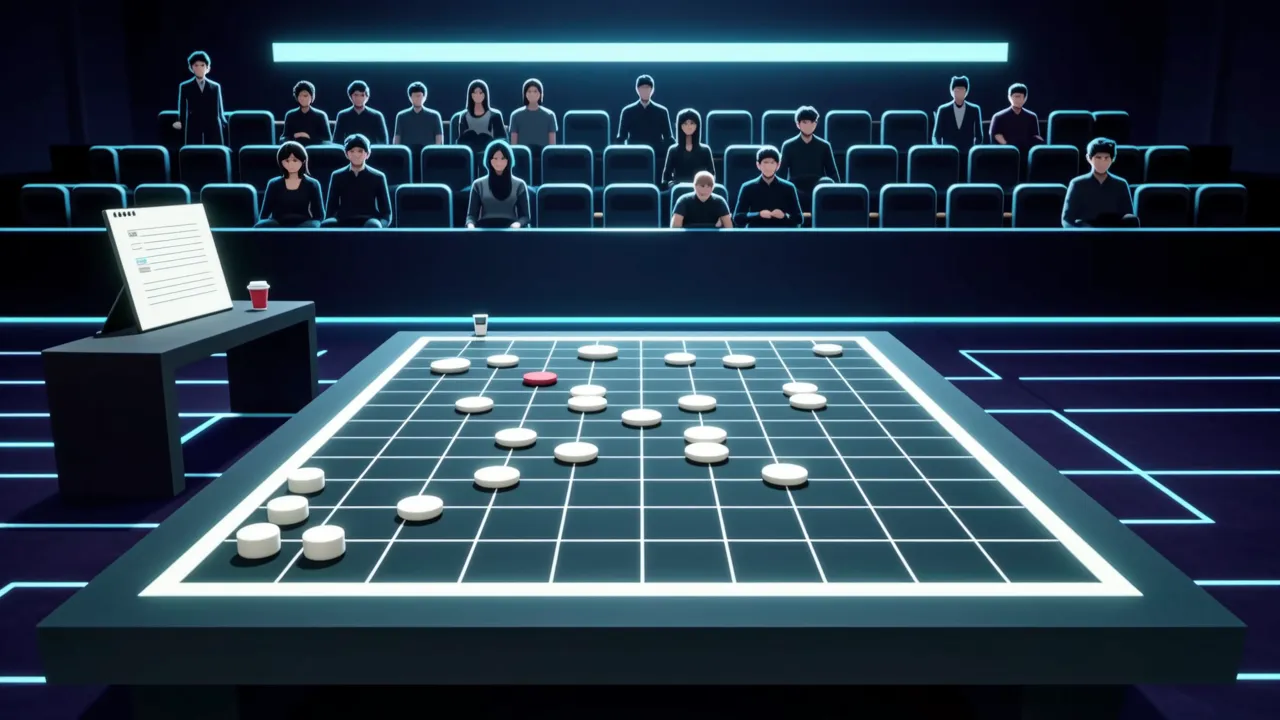
The work that brought the company attention was published in 2013: a system that learned to play video games using deep Q-learning from raw pixels, an approach that combines deep neural networks with reinforcement learning — the branch of machine learning in which a program improves by trial and error against a reward signal. Learning directly from screen pixels means the system was not given hand-coded descriptions of the game state; it worked from what a player would see. That system surpassed human abilities in the Atari games Pong, Breakout and Enduro[1].
What happened
On 26 January 2014, Google confirmed that it had acquired DeepMind[1][2]. The price was not disclosed; reports put it somewhere between $400 million and $650 million[1]. One report valued the deal at $400 million and noted how small that looked next to Google's $3.2 billion purchase of Nest[2], the comparison underlining that this was a purchase of research capacity rather than of a product with a large user base.
Key details
After the acquisition, the company was known as Google DeepMind for about two years[1]. The research group continued to be identified with its founders, and it kept a public profile in the research community: in 2014 the Cambridge Computer Laboratory named DeepMind its "Company of the Year"[1].
The organization's name and structure changed again later. In April 2023, DeepMind and Google Brain were merged into a single unit, again named Google DeepMind[1]. Google Brain had grown inside Google itself as an internal deep-learning research group, so the merger brought two previously separate research efforts — one acquired from outside, one grown internally — under one name.
Why it matters
The acquisition is often treated as an early sign of how large technology companies would come to treat AI research: as something worth buying for its people and long-term direction, even when there is no shipping product to point at. DeepMind was small and its best-known result at the time was a system that played Atari games; the reported price range, and the fact that Google did not disclose it, fit a purchase whose value lay in future capability rather than current revenue.
The 2013 Atari work also illustrated a shift in method. Instead of building a program with rules written in advance for each game, the researchers let one learning procedure discover how to play from experience. Success on three games was a narrow result, but it demonstrated that a general learning approach could handle tasks that had been designed for humans. The later merger with Google Brain placed that line of work inside a larger research organization, and the name Google DeepMind carried the acquired company's identity forward.
Sources
- 1Google DeepMindWikipedia
- 2Google acquires artificial intelligence firm DeepMindThe Christian Science Monitor
Cite this page: Google acquires DeepMind. TellWorld, https://www.tellworld.net/news/deepmind-acquisition-2014. Updated 2026-11-08