Physical Intelligence releases pi-0.5
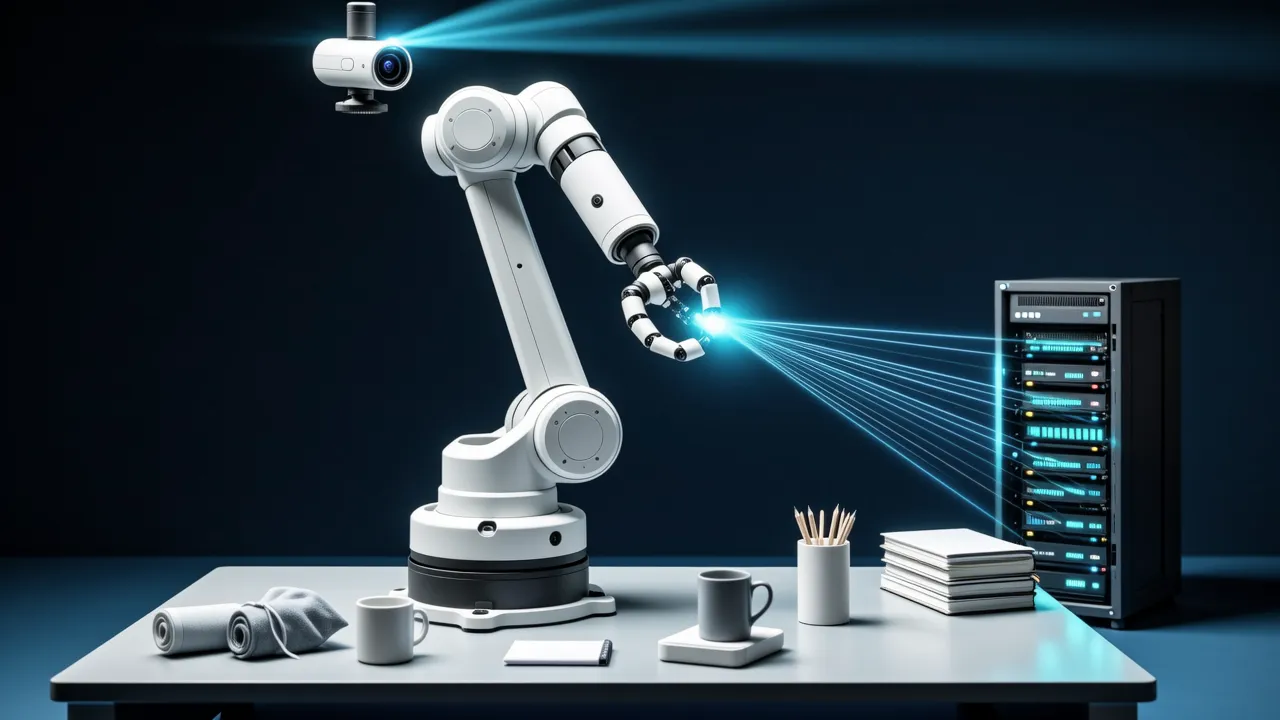
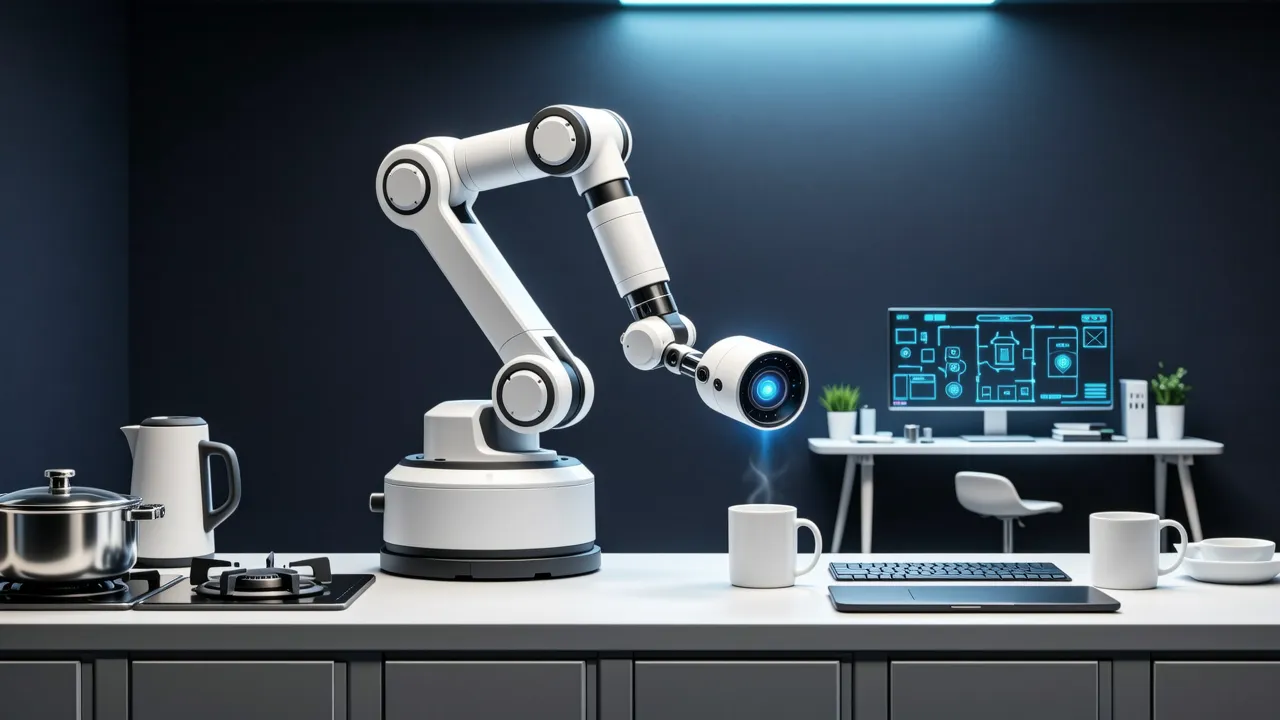
Physical Intelligence released π0.5 on 22 April 2025, a vision-language-action model built on its earlier π0 that the company says can carry out household tasks in homes it never saw during training.
Total 69 · Clear filters
Physical Intelligence released π0.5 on 22 April 2025, a vision-language-action model built on its earlier π0 that the company says can carry out household tasks in homes it never saw during training.
On 10 March 2025 AgiBot released GO-1, a general-purpose embodied foundation model the company says can run across several of its humanoid robot bodies, learn from human videos and pick up new tasks from a few examples.
On 20 February 2025, Figure announced Helix, which it described as a vision-language-action model for controlling a humanoid’s entire upper body from natural language, running onboard low-power GPUs, and coordinating two robots on a shared task.
On 31 October 2024, Physical Intelligence announced π0, a prototype robot-control model trained on large-scale multi-task and multi-robot data that can be prompted or fine-tuned to control a variety of robots.
OpenVLA is an open-source vision-language-action model released in June 2024: trained on 970,000 robot manipulation trajectories and reported to beat a far larger prior model, with checkpoints, notebooks and code made public.
On 22 April 2024 Apple researchers posted the OpenELM paper to arXiv and released eight small language models, with training logs, checkpoints, configurations and code for running the models on Apple devices.
On 28 March 2024 AI21 Labs released Jamba, an open-weights model that combines Mamba state-space layers with Transformer attention. It has 52 billion total parameters and a 256k-token context.
On 19 March 2024, Sakana AI posted a paper on using evolutionary search to merge open models without extra training data or compute, and released a 7B Japanese model that also handles mathematics as an experiment.
In December 2022, Google researchers posted RT-1, a Robotics Transformer trained on real robot data; they reported over 700 instructions at a 97% success rate and released the code.
On 12 July 2022 the BigScience workshop, coordinated by Hugging Face, released BLOOM, a 176-billion-parameter language model covering 46 natural and 13 programming languages.
On 3 May 2022 Meta AI announced OPT-175B, a 175-billion-parameter language model, and released its pretrained weights and training code to researchers under a noncommercial licence. Meta said it was the first release of a model of that size with both weights and code.
EleutherAI announced GPT-NeoX-20B on 2 February 2022 and released its weights on 9 February. The 20-billion-parameter model was trained on CoreWeave GPUs and released under Apache 2.0, and the group called it a research artifact rather than a production system.
On 7 February 2022, NVIDIA and SoftBank Group called off NVIDIA's planned acquisition of Arm Limited, citing regulatory obstacles. SoftBank kept a $1.25 billion prepayment and began preparing Arm for a public offering, while NVIDIA retained its 20-year Arm licence.
On 2 February 2022, DeepMind introduced AlphaCode, a system that writes computer programs at a competitive level and, on average, ranked within the top 54% of participants across 10 Codeforces contests.
On 27 January 2022 OpenAI announced InstructGPT, a version of GPT-3 trained with human feedback to follow user instructions more closely. OpenAI then made these models the default in its API.
On 23 December 2021, authors from Baidu and Peng Cheng Laboratory posted a paper on ERNIE 3.0 Titan, a 260-billion-parameter Chinese pre-trained model they called the largest of its kind, reporting gains on 68 NLP datasets.
On 11 October 2021 NVIDIA and Microsoft announced Megatron-Turing NLG 530B, a language model with 530 billion parameters that they called the largest and most powerful of its kind. The full technical report followed in January 2022.
On 5 July 2021 Baidu researchers posted the ERNIE 3.0 paper, describing a 10-billion-parameter model trained on plain text plus a knowledge graph that combines auto-encoding and auto-regressive networks, topping 54 Chinese tasks and SuperGLUE.
GPT-J-6B is a six-billion-parameter language model released by EleutherAI in June 2021 with open weights under Apache 2.0, trained on The Pile and reported to be close to the 6.7B GPT-3 on zero-shot tasks.
On 18 May 2021 Google announced LaMDA, a language model built for conversation, at its I/O keynote. It grew out of the Meena chatbot, was followed by LaMDA 2 and the AI Test Kitchen, and later powered Bard.
On 21 March 2021 EleutherAI released GPT-Neo, a family of language models at 125M, 1.3B and 2.7B parameters whose weights anyone could download, in contrast to OpenAI's API-only GPT-3.