Runway announces GWM-1, its first world model
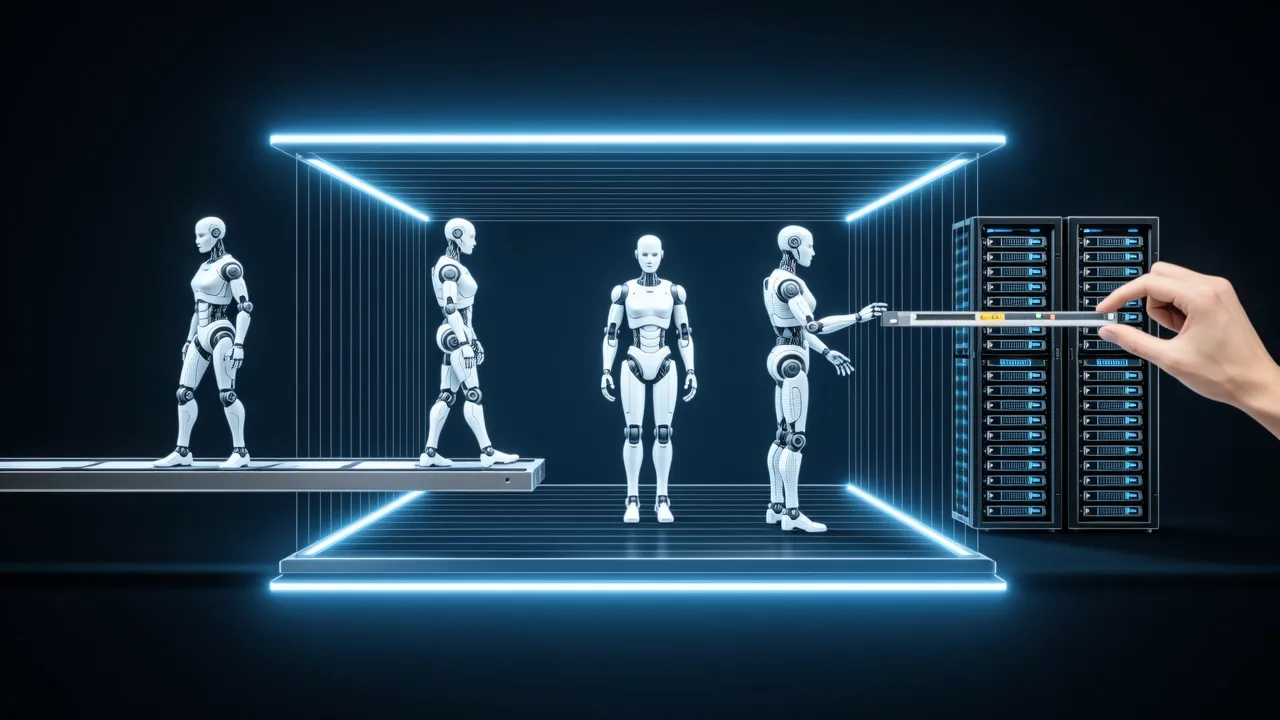
On 11 December 2025, Runway announced GWM-1, a general world model that simulates environments in real time, released in Worlds, Avatars and Robotics variants and built on the company's Gen-4.5 model.
Total 12 · Clear filters
On 11 December 2025, Runway announced GWM-1, a general world model that simulates environments in real time, released in Worlds, Avatars and Robotics variants and built on the company's Gen-4.5 model.
On 5 August 2025 Google DeepMind announced Genie 3, a world model that turns text into navigable environments generated in real time at 24 frames per second and 720p, released as a limited research preview.
On 26 July 2025 Tencent open-sourced HunyuanWorld 1.0, a model that builds explorable 3D worlds from text or images, with a technical report.
On 18 March 2025 NVIDIA announced Isaac GR00T N1, a humanoid robot foundation model released immediately to robotics developers as the first of a family of customizable pretrained models, alongside open simulation tools.
On 6 January 2025, at CES, NVIDIA launched Cosmos, a platform of open world foundation models for physical AI used to train robots and autonomous vehicles.
Genie 2 is a Google DeepMind world model, announced on 4 December 2024, that turns a single image into a playable, action-controllable 3D world that people or AI agents can explore with a keyboard and mouse.
In March 2024 NVIDIA announced Project GR00T, a general-purpose foundation model for humanoid robots. A year later it released Isaac GR00T N1, which it presented as a fully customizable humanoid model.
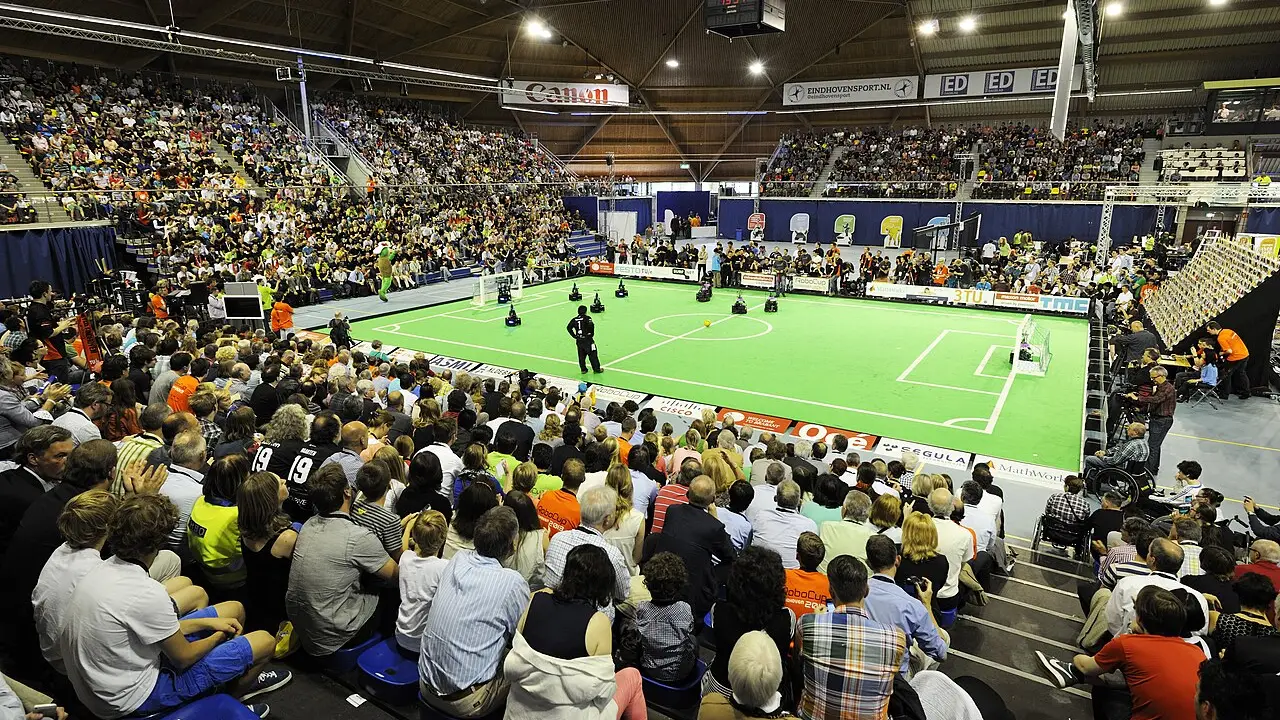
The first official RoboCup games and conference, held in 1997 as planned with IJCAI-97 in Nagoya, drew more than 40 real and simulated teams and over 5,000 spectators, and marked the first step toward robotic soccer players that could beat a human World Cup champion team.
Held in Osaka in November 1996 alongside IROS-96, Pre-RoboCup-96 was the first robot soccer competition aimed at research and education, with eight simulation-league teams and a middle-size robot demonstration; official RoboCup games followed in 1997.
At IJCAI-95 in Montreal in August 1995, organizers announced the first Robot World Cup, to be held with IJCAI-97 in Nagoya, and set up Pre-RoboCup-96 plus the Soccer Server simulator.
In June 1993, researchers including Minoru Asada, Yasuo Kuniyoshi and Hiroaki Kitano proposed a robot soccer competition tentatively called the Robot J-League. International interest soon led to its renaming as the Robot World Cup Initiative, or RoboCup.
In 1992, Alan Mackworth's paper on seeing robots and a Tokyo workshop on AI grand challenges independently put forward robot soccer as a way to drive AI and robotics research.