Background
Most factory robots work behind fences, doing the same motion over and over on a fixed piece of equipment. Digit is built for a different slot: it is intended to work in industrial environments without humans nearby, often bridging two automated production lines[1]. That is the seam of a modern plant, the point where material has to move from the end of one automated step to the start of the next, and where a fixed machine is hard to install.
The company behind it, Agility, was spun out of Oregon State University in 2015[1]. Before the Toyota deal, its Digits were already at work for GXO, Schaeffler and Amazon[1]. Agility also offers cloud software called Arc, which lets customers manage fleets of robots rather than single units[1].
What happened
In February 2026, Toyota Motor Manufacturing Canada (TMMC) contracted seven Digit robots[1]. The agreement is a robots-as-a-service deal, meaning the customer pays for the robots as an ongoing service rather than simply purchasing hardware, and it came after a year-long pilot[1].
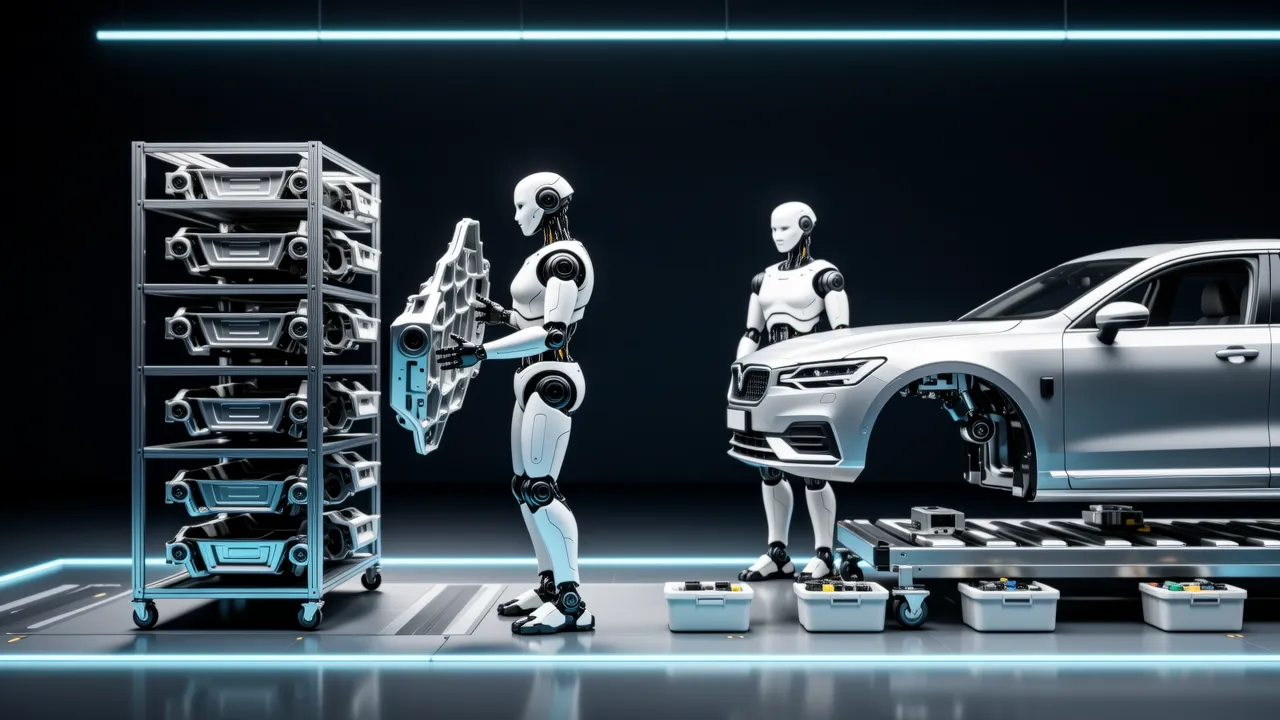
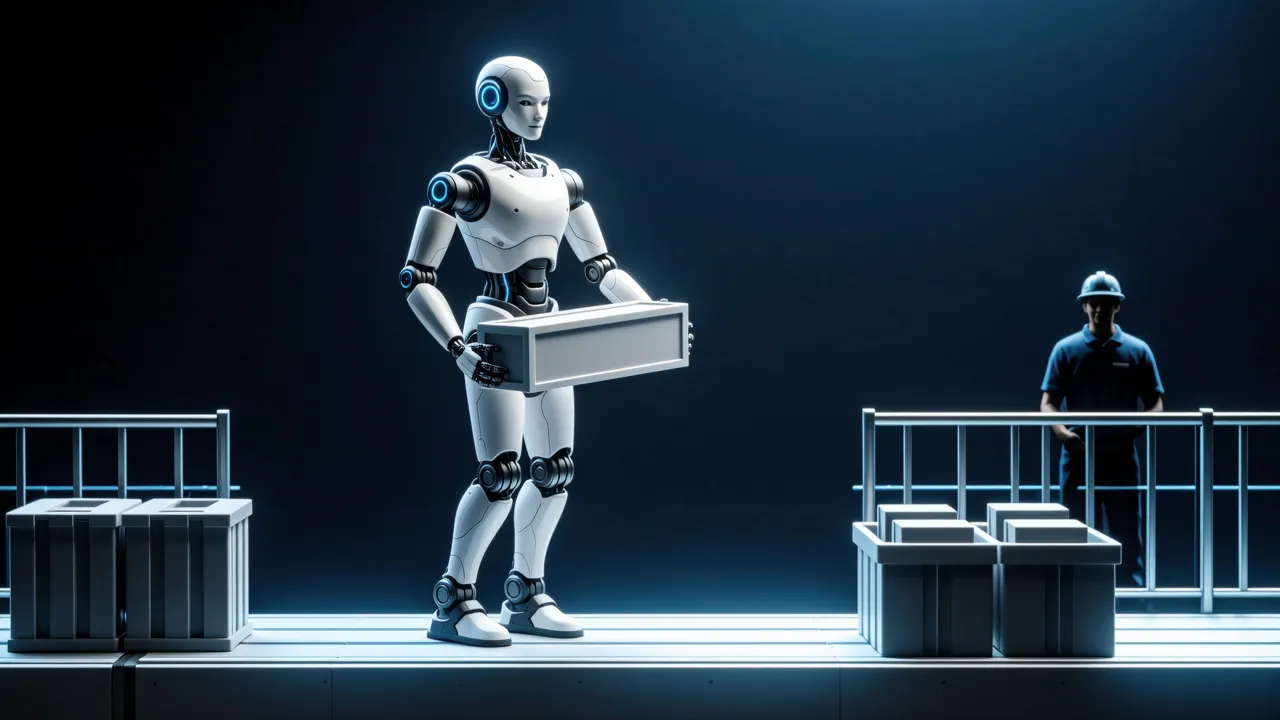
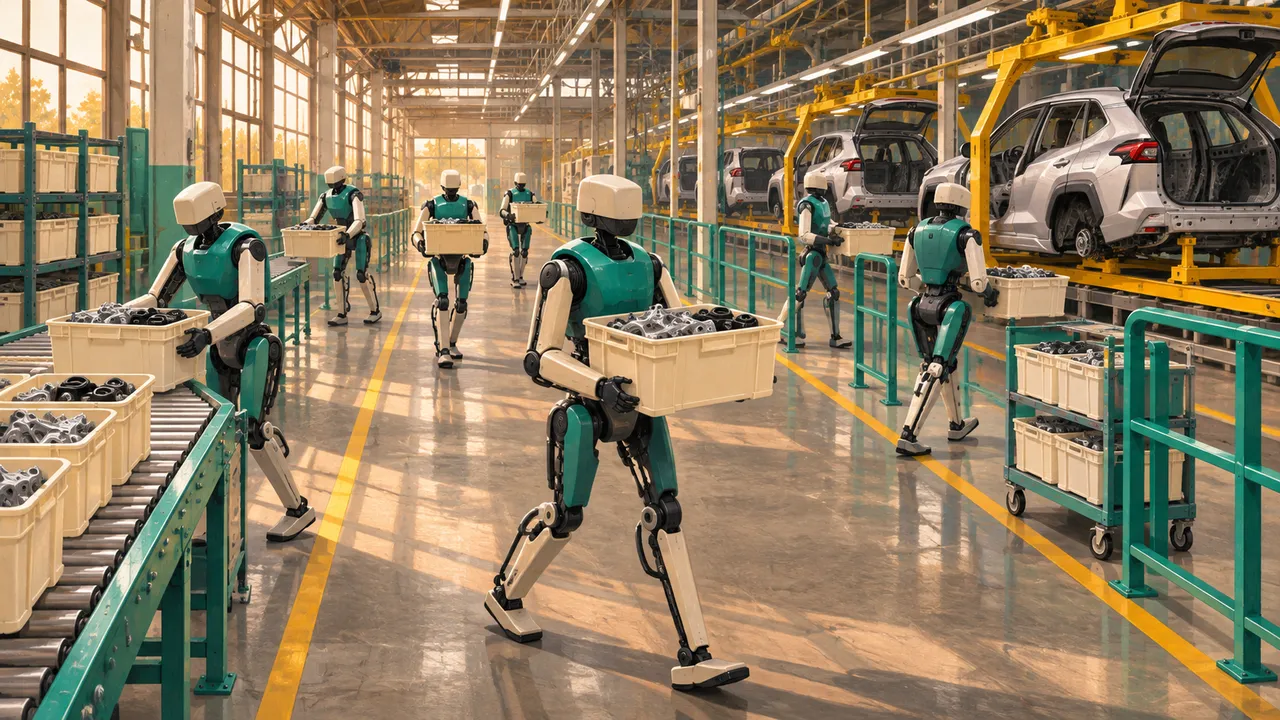
The robots are deployed in a plant that builds RAV4 SUVs, where they unload totes of auto parts from an automated warehouse tugger[1]. It is a repetitive material-handling job at the boundary between two automated systems: the tugger delivers, and the tote has to be taken off and passed on.
Key details
TMMC president Tim Hollander said the company had evaluated a number of robots before choosing Digit[1]. That the plant ran a pilot for a year before signing suggests the decision rested on how the machines performed in the building rather than on a demonstration.
The economics of such deployments are not just the sticker price. Pras Velagapudi, Agility's chief technology officer, said the cost of deployment can be more than the price of the robot by a lot, and that AI tools reduce it[1]. Deployment here means the work around the machine: fitting it into the workflow, integrating it with the equipment around it, and keeping it running. Managing a group of robots is handled through Agility's cloud software Arc[1].
What it means
Car assembly has been a testing ground for automation for decades, but the tasks that remain manual tend to be the ones that are awkward to fix in place: picking things up, moving them a short distance, and setting them down somewhere slightly different each time. Digit is aimed at exactly that band of work, and Toyota's plant puts it between two automated systems rather than among people[1].
The robots-as-a-service form matters for how such projects get approved. A plant does not have to commit to owning and maintaining a new class of machine; it buys a service, and the supplier carries the hardware and, through tools like Arc, the fleet management[1]. Agility's earlier customers, GXO, Schaeffler and Amazon, follow a similar pattern of repetitive material handling in industrial settings[1]. Seven robots in one Canadian plant is a narrow slice of Toyota's production, but it puts a named automaker's factory on the list of places where this generation of robots is doing paid work.
Sources
- 1
Cite this page: Toyota Motor Manufacturing Canada contracts seven Digit robots. TellWorld, https://www.tellworld.net/news/toyota-agility-digit-2026. Updated 2026-11-08