The announcement
On 15 March 2024, Apptronik announced an agreement with Mercedes-Benz to pilot Apollo humanoid robots in Mercedes-Benz manufacturing facilities [1]. Apptronik called it its first publicly announced commercial deployment of Apollo, and the first application of humanoid robotics for Mercedes-Benz [1]. The arrangement is a pilot: a limited trial inside real production settings, run before anyone commits to wider use.
Why a humanoid
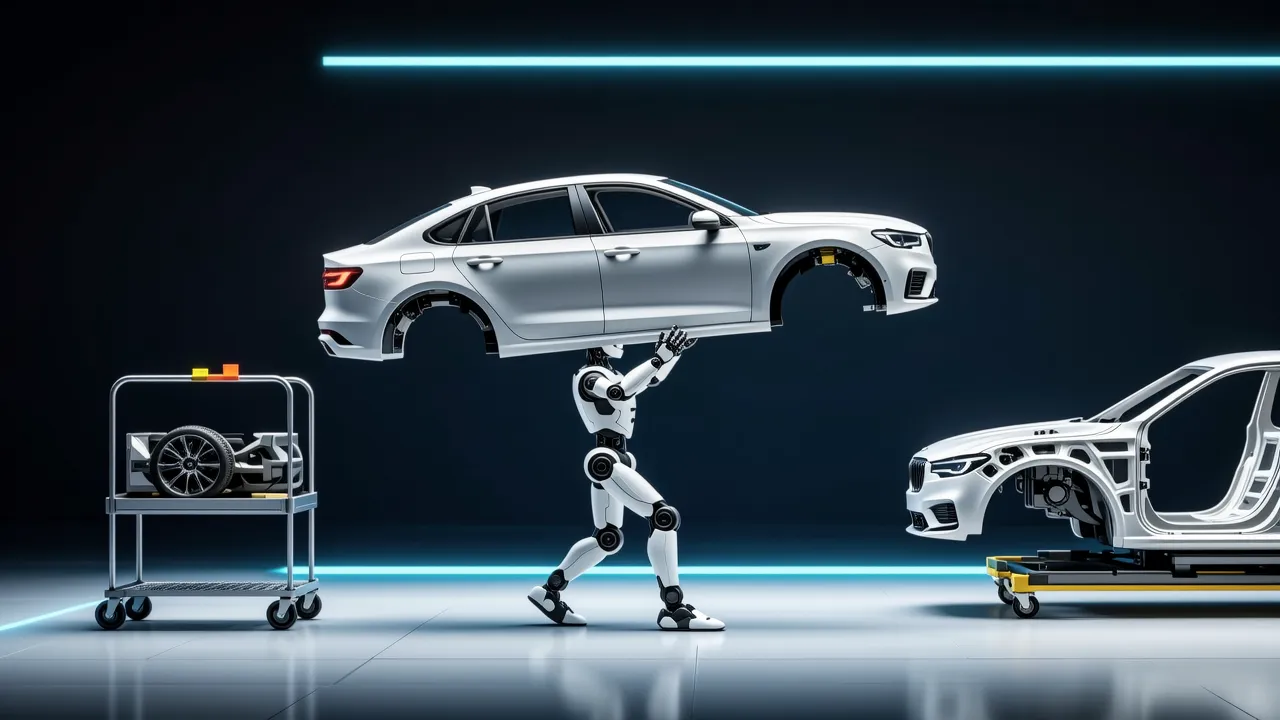
A humanoid robot is a machine built with a torso, arms and legs, made to move through and work in spaces designed around people rather than around machines. Apollo is Apptronik's humanoid robot. The company's argument for that shape is practical: the humanoid form avoids full-scale facility redesigns built around robots rather than people [1]. A plant already has aisles, workbenches, shelves and containers sized for human bodies; a robot with a human-like footprint can, in principle, be put to work there without rebuilding the building around it. A fixed arm bolted to a station does one motion very well, but the work around it — carrying containers, moving parts between stations, handing something to a person — usually still falls to people. A robot that walks and has hands is aimed at that gap.
What the robot would do
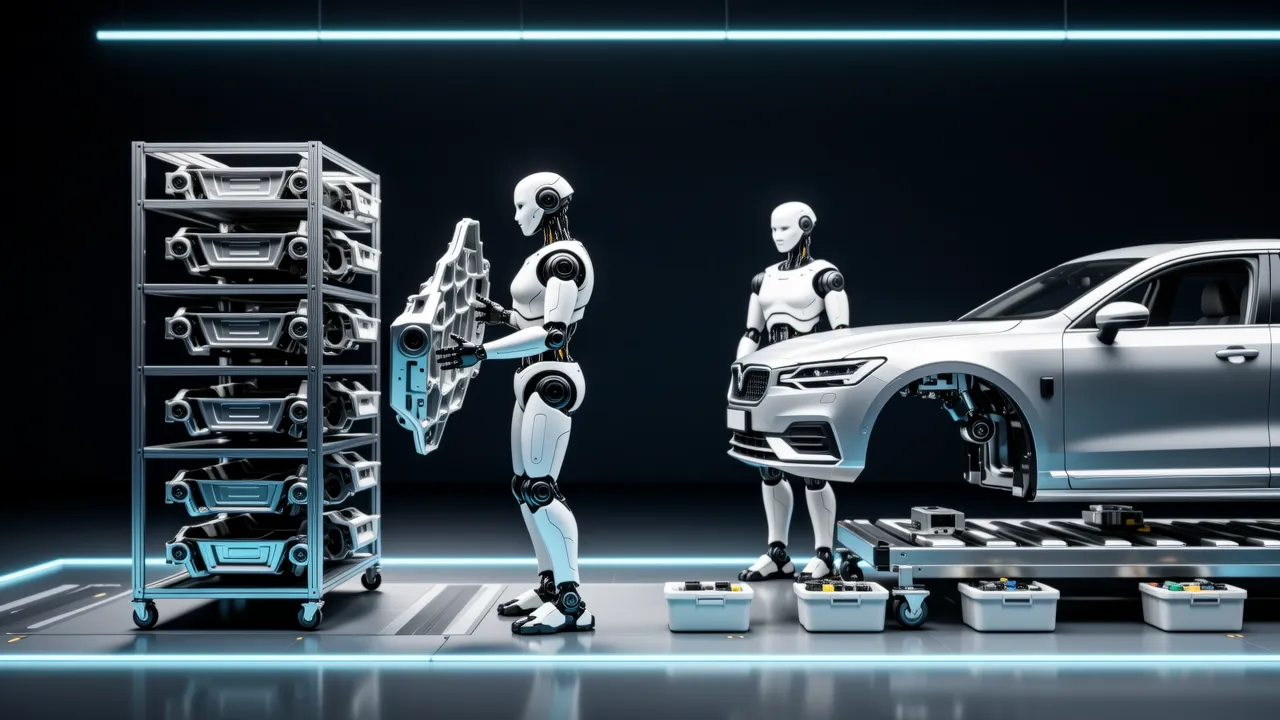
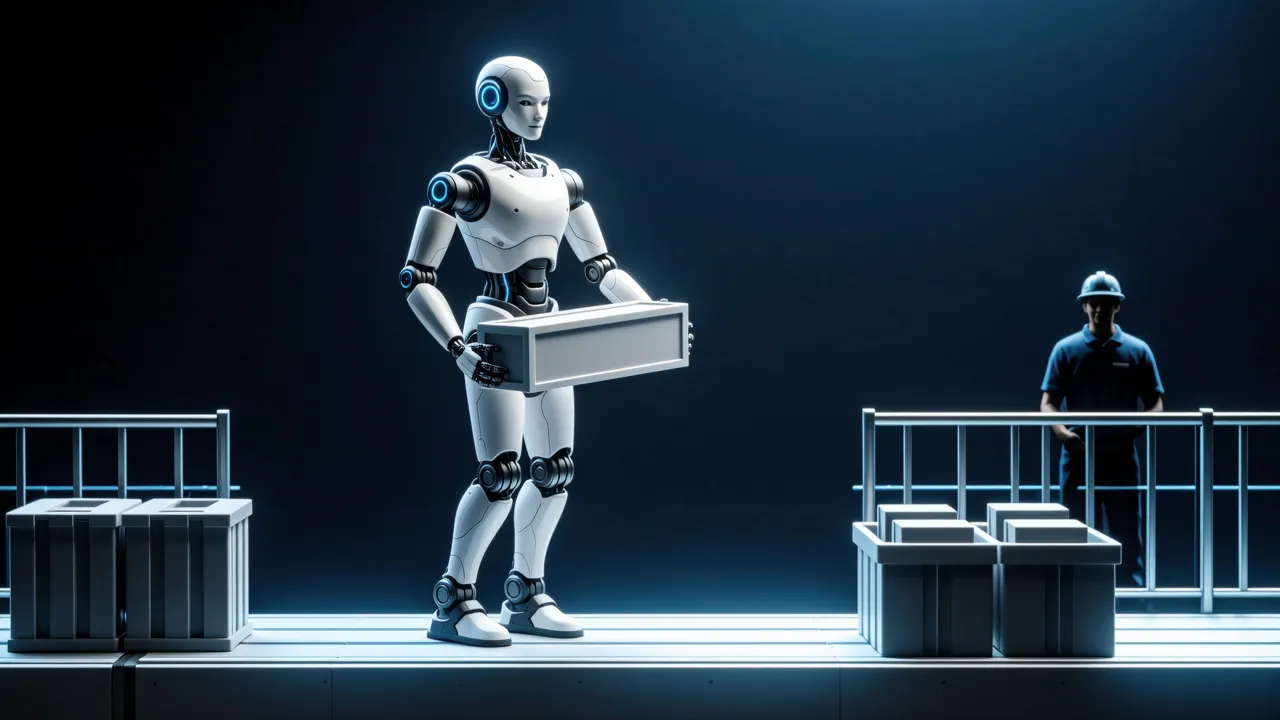
The companies said they would collaborate on identifying applications for advanced robotics in Mercedes-Benz manufacturing [1]. Two tasks were named. Mercedes-Benz was exploring delivering assembly kits of parts to the production line while inspecting the components [1]. Apollo would also be used to deliver totes of kitted parts later in the manufacturing process [1].
In manufacturing, kitting means gathering the parts that go into one unit of assembly into a single container, so that the person on the line has everything at hand instead of picking items one at a time. That container, a tote, then has to reach the right place at the right moment. Both named tasks are walking-and-carrying jobs that sit between stores and the line: they need legs, hands and the ability to move through a busy floor.
Jeff Cardenas said Mercedes-Benz planned to use Apollo for low-skill, physically challenging manual labour [1]. Jörg Burzer of Mercedes-Benz Group said the company was exploring robotics to support its skilled workforce and fill labour gaps [1]. The two statements describe one division of work: robots take the tiring transport jobs, while skilled people stay on assembly and inspection.
Why it matters
For Apptronik, the agreement is the point at which Apollo moves from demonstration to a named customer site — its first publicly announced commercial deployment [1]. For Mercedes-Benz, it is a first step into humanoid robotics at all [1]. The tasks named are logistics rather than assembly: fetching kits, carrying totes, inspecting parts along the way. Such work is repetitive and easy to bound, which makes it a natural place to test whether a general-purpose robot holds up on a real line, and whether it can be dropped into an existing facility instead of one designed around it [1]. The labour framing matters too: a carmaker describing robots as support for a skilled workforce and as a way to fill labour gaps is describing a shortage of hands for hard manual jobs, not a plan to replace the people doing skilled work [1]. What the pilot finds, and whether it grows into something larger, is what the two companies will be watching.
Sources
- 1
Cite this page: Apptronik and Mercedes-Benz announce an Apollo pilot. TellWorld, https://www.tellworld.net/news/apollo-mercedes-2024. Updated 2026-11-08