Background
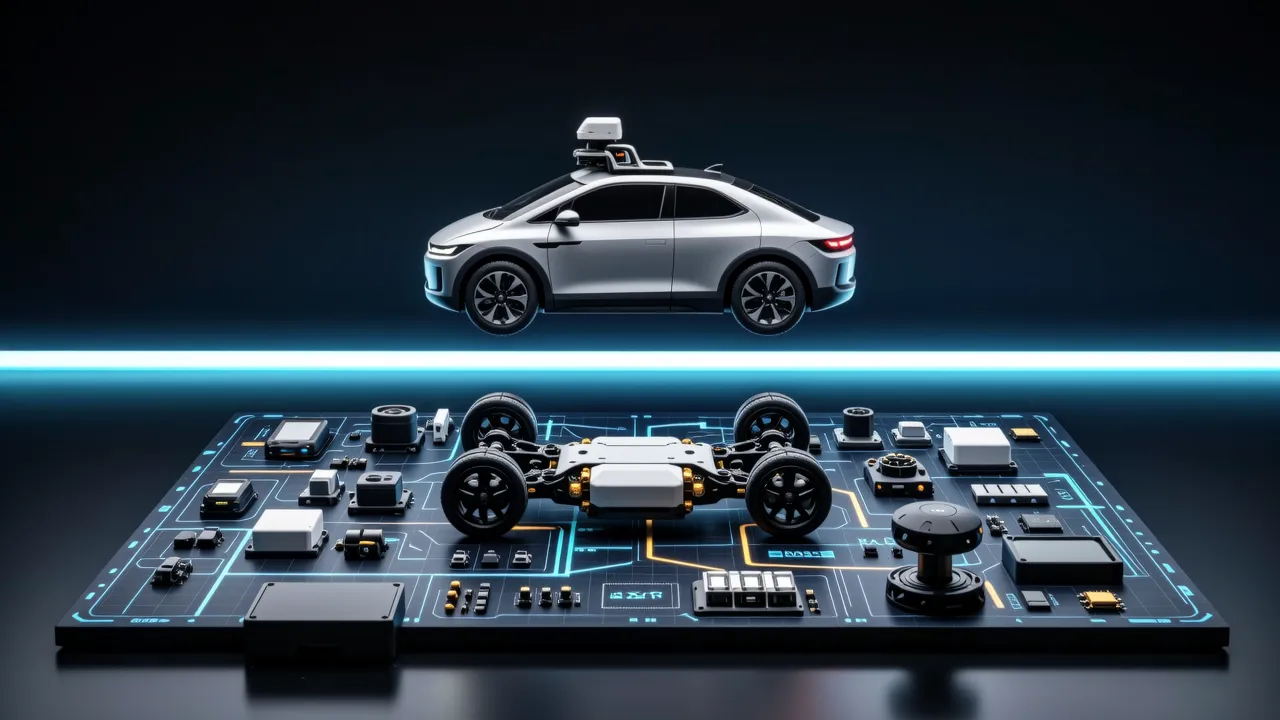
A driverless truck is one in which the software, sensors and onboard computers handle steering, braking and acceleration without a person in the cab. The hard part is not a single clever maneuver but sustained, ordinary driving: holding a lane, keeping distance, merging, and reacting to everything else on the road for hours at a time. Hauling freight between two cities suits this kind of system because so much of the route is highway driving, and because a truck that needs no driver can in principle keep working without a rest break.
What happened
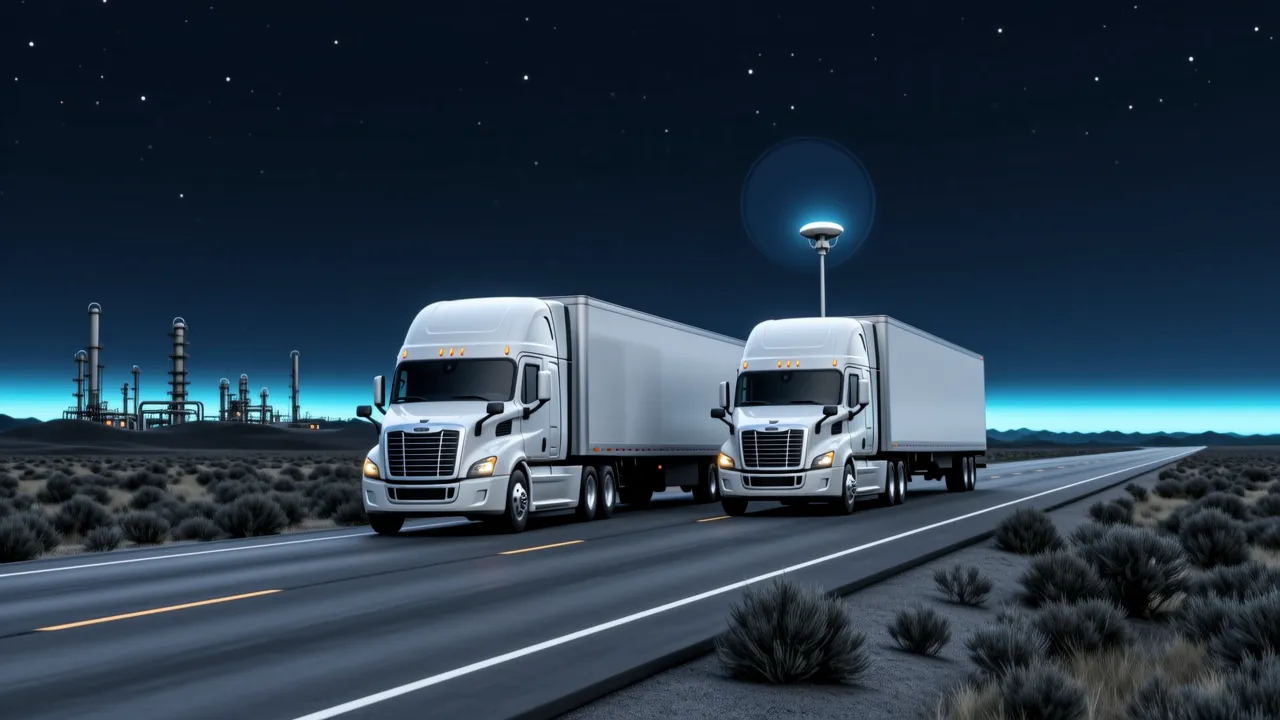
On 27 April 2025, trucks powered by the Aurora Driver began regular driverless operations, after Aurora closed its safety case [1]. The trucks make commercial deliveries for Uber Freight and Hirschbach on the route between Dallas and Houston [1]. In other words, this was not a closed-course demonstration: the vehicles were carrying freight for paying customers on public roads in ordinary traffic.
The first runs
Aurora said the first roundtrip carried a trailer south to Houston and returned with pastries to Dallas [2]. Chris Urmson wrote that the trucks ran on public roads with no one behind the wheel, and with no police escort or road closure [2]. He described the system as designed to drive an eighteen-wheeler down the highway without a driver [2].
Those details matter for how the launch should be read. A police escort or a closed lane would mean the vehicle was still being handled as an exception to normal traffic; running without either means the trucks took part in it. The eighteen-wheeler framing points at the same thing from the engineering side: the target was not a small vehicle on a quiet road but a heavy, long combination vehicle at highway speed.
Pace of the rollout
By the time Aurora wrote its first quarter shareholder letter, the Aurora Driver had completed over 4,000 driverless miles [1]. The company had expanded to two driverless trucks scheduled daily, and said it expected to operate tens of trucks by the end of 2025 [1]. It also said the launch followed a crawl, walk, run approach focused on exercising the full product suite [1] — that is, on using the whole system end to end rather than on maximizing the number of vehicles right away.
Why it matters
For years the question around self-driving freight was whether it would stay in testing. The April launch moved a fleet into paid commercial work, with two well-known freight customers on a fixed Texas corridor [1]. It also put a number on the transition: at the start, two trucks a day, with tens of trucks as the stated target for the end of the same year [1]. The 4,000-plus driverless miles recorded by the time of the shareholder letter give a sense of how much driving had been banked before the service opened [1].
What to watch next is the gap between that target and the starting figure. A corridor between two cities, run by a small number of trucks, is a narrow slice of freight hauling; whether regular driverless operations can be widened beyond it is the open question the company's own plans set up.
Sources
- 1Aurora First Quarter 2025 Shareholder LetterAurora Innovation
- 2Aurora delivers my ride in the first self-driving commercial truckAurora Innovation
Cite this page: Aurora begins commercial driverless trucking in Texas. TellWorld, https://www.tellworld.net/news/aurora-driverless-trucking-2025. Updated 2026-11-08