Anthropic releases Claude Fable 5.1 and Mythos 5.1
On 1 September 2026 Anthropic released Claude Fable 5.1 and Claude Mythos 5.1. Prices stayed at $10 and $50 per million tokens, and Mythos 5.1 is offered through verification programmes.
Total 29 · Clear filters
On 1 September 2026 Anthropic released Claude Fable 5.1 and Claude Mythos 5.1. Prices stayed at $10 and $50 per million tokens, and Mythos 5.1 is offered through verification programmes.
On 24 July 2026 Anthropic released Claude Opus 5 at $5 and $25 per million tokens. Anthropic said it came close to Claude Fable 5's frontier intelligence at half the price.
On 9 June 2026 Anthropic released Claude Fable 5, its first Mythos-class model for general use, and Claude Mythos 5, the same model with some safeguards lifted for vetted partners. Both were priced at $10 and $50 per million tokens.
On 27 November 2025 DeepSeek released DeepSeekMath-V2, a model trained to check its own proofs. DeepSeek reported gold-level scores on IMO 2025 problems and 118 of 120 points on Putnam 2024, the latter with scaled test-time compute.
On 14 May 2025, Google DeepMind announced AlphaEvolve, a Gemini-powered coding agent that designs algorithms; it reported a better compute-scheduling heuristic, a faster 4×4 matrix multiplication method, and gains on open mathematical problems.
DeepSeek released DeepSeek-Prover-V2, an open-source model for theorem proving in Lean 4, with its paper posted to arXiv on 30 April 2025. It solved 49 of the 658 PutnamBench problems.
On 16 July 2024 Mistral AI released two specialised 7B open models: Codestral Mamba, built on the Mamba architecture for code, and Mathstral, a math model made with Project Numina.
On 25 June 2024 EvolutionaryScale published ESM3, a protein language model trained at large scale, with a paper on the esmGFP generation experiment and an open checkpoint built on 2.78 billion natural protein sequences.
On 8 May 2024, Google DeepMind and Isomorphic Labs announced AlphaFold 3, a model that predicts the structures and interactions of proteins, DNA, RNA and ligands, and that Google reported as the first AI system to outperform physics-based tools for biomolecular structure prediction.
On 15 November 2022 Meta AI and Papers with Code unveiled Galactica, a language model meant to help scientists, with a public demo. Meta took the demo offline about three days later after users showed it producing fabricated, confident answers.
On 15 July 2021 the Institute for Protein Design released RoseTTAFold as code on GitHub and a public web server, with lead author Minkyung Baek describing structures computable in minutes on a gaming computer.
On 27 September 2011 the National Engineering Laboratory for Speech and Language Information Processing was unveiled at USTC, jointly built with iFlytek to connect speech research, product testing and standards work.
The 25th AAAI Conference on Artificial Intelligence was held on August 7–11, 2011 at the Hyatt Regency San Francisco, bringing AI researchers and practitioners together for keynotes, invited talks and scientific exchange; David Ferrucci of IBM's T. J. Watson Research Center gave a keynote.
On 24 February 2011 NASA launched Robonaut 2, a humanoid built with General Motors, aboard space shuttle Discovery on STS-133 — the first human-like robot sent to space. It flew as a torso-only prototype for testing in microgravity.
The 2011 ILSVRC saw XRCE, the 2010 runner-up, win classification with compressed high-dimensional signatures and linear SVMs, while the new single-object localization task was won by UvA's selective search approach.
The spring 2010 release of ImageNet, announced by Fei-Fei Li on 11 May 2010, totalled more than 11 million images in 15,500 categories and added bounding boxes, SIFT features and a MATLAB toolbox, alongside a call to join ILSVRC2010.
In 1999 IBM launched the Deep Computing Institute, building on its experience with Deep Blue to apply advanced computing to complex technological and business problems.
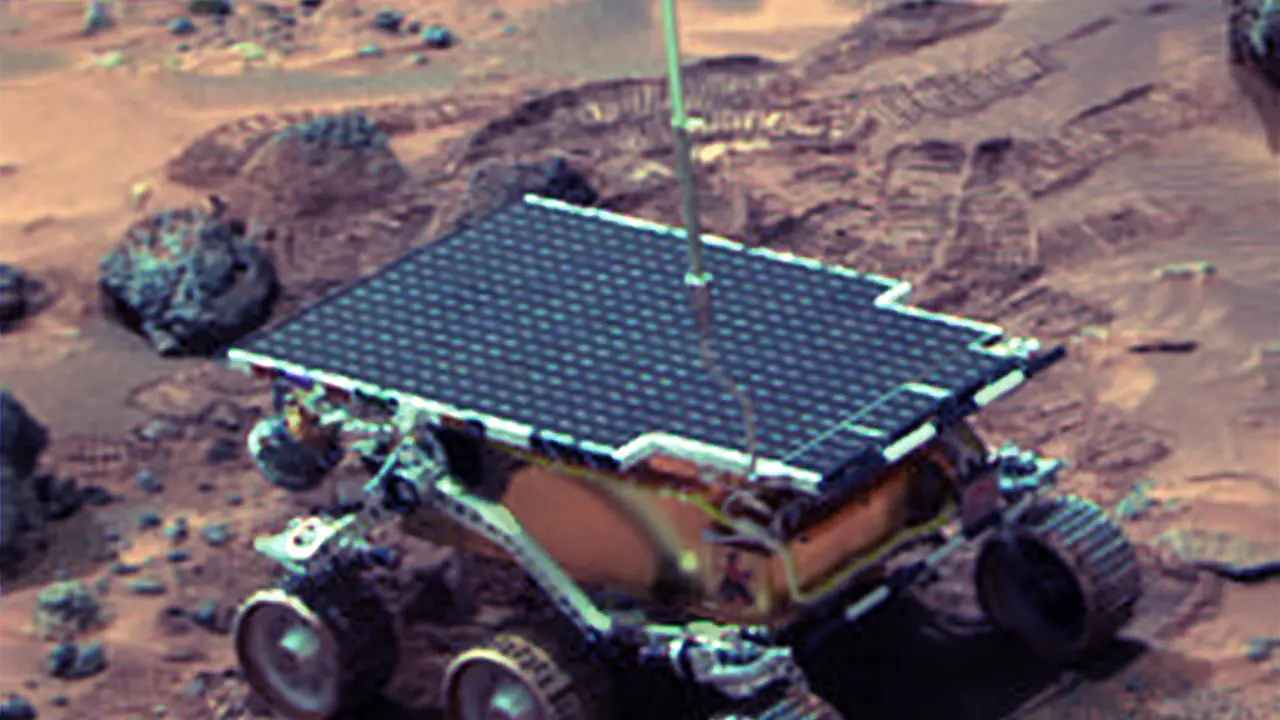
On July 4, 1997, NASA's Mars Pathfinder landed on Mars and deployed Sojourner, the first wheeled vehicle operated on another planet, beginning an uninterrupted period in which at least one spacecraft has operated at Mars.
The first official RoboCup games and conference, held in 1997 as planned with IJCAI-97 in Nagoya, drew more than 40 real and simulated teams and over 5,000 spectators, and marked the first step toward robotic soccer players that could beat a human World Cup champion team.
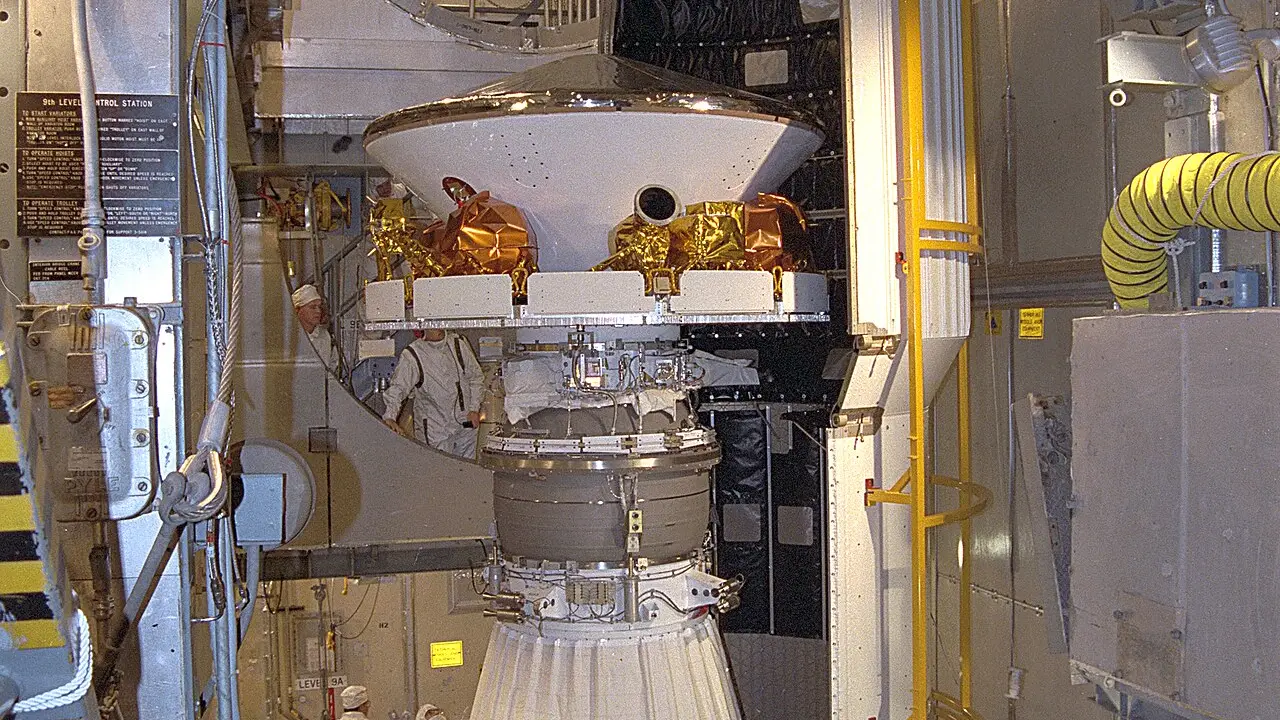
Mars Pathfinder launched on December 4, 1996, from Cape Canaveral on a Delta II rocket, carrying a lander and the small rover Sojourner. Between them the two vehicles flew four instruments, one of them a spectrometer mounted on the rover itself.
Held in Osaka in November 1996 alongside IROS-96, Pre-RoboCup-96 was the first robot soccer competition aimed at research and education, with eight simulation-league teams and a middle-size robot demonstration; official RoboCup games followed in 1997.