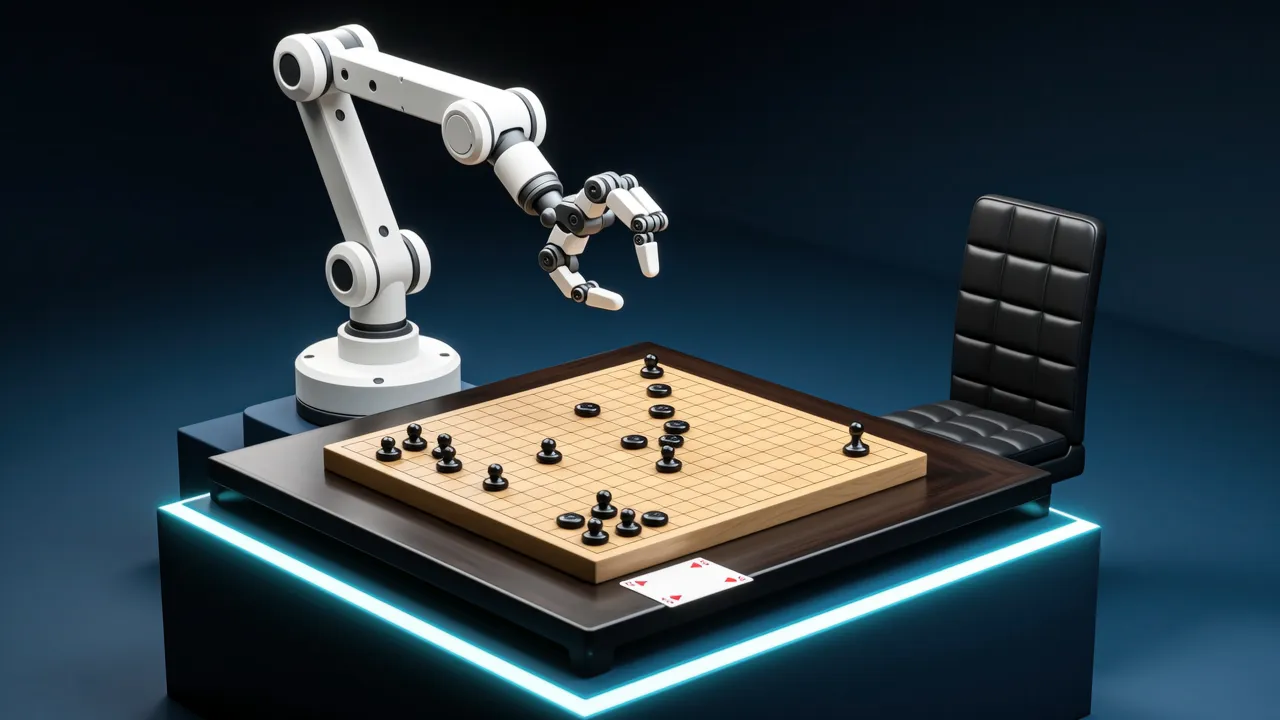
AlphaGo beats Ke Jie 3–0 and retires
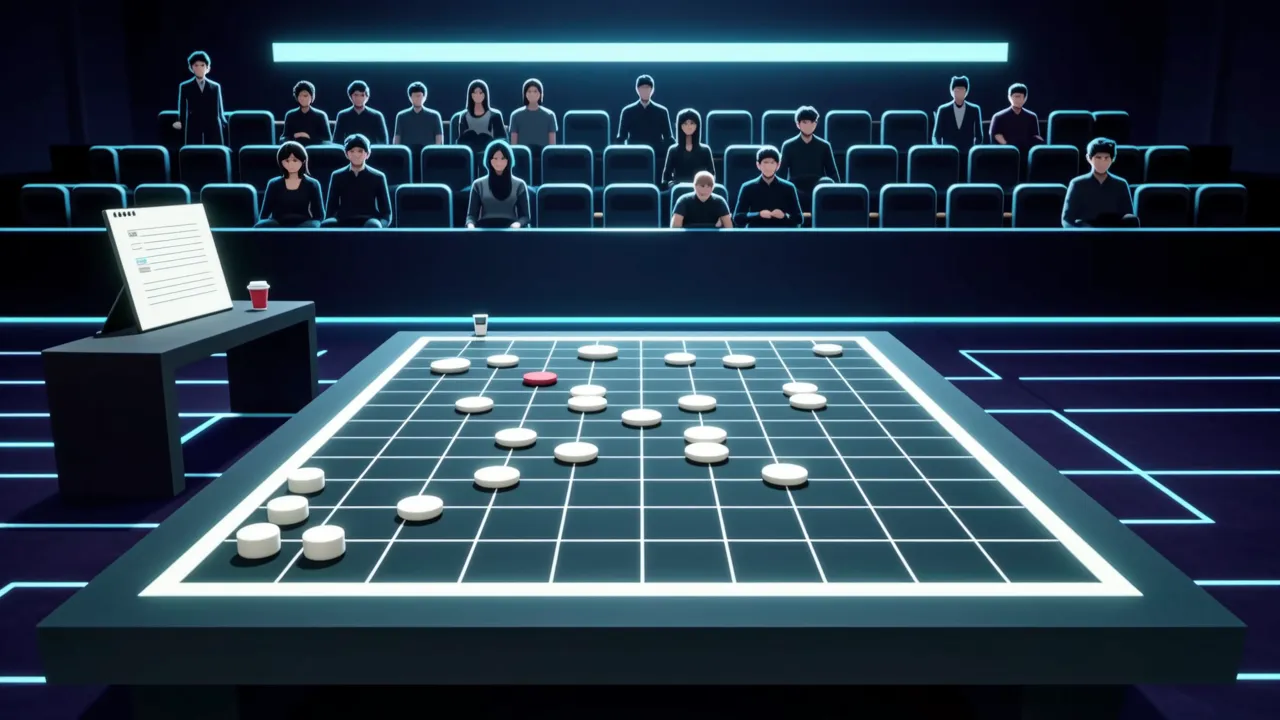
In May 2017 AlphaGo beat Ke Jie, then the world's top-ranked Go player, in all three games of a match at the Future of Go Summit in Wuzhen, China. DeepMind retired the program from competition afterwards.
Total 273 · Clear filters
In May 2017 AlphaGo beat Ke Jie, then the world's top-ranked Go player, in all three games of a match at the Future of Go Summit in Wuzhen, China. DeepMind retired the program from competition afterwards.
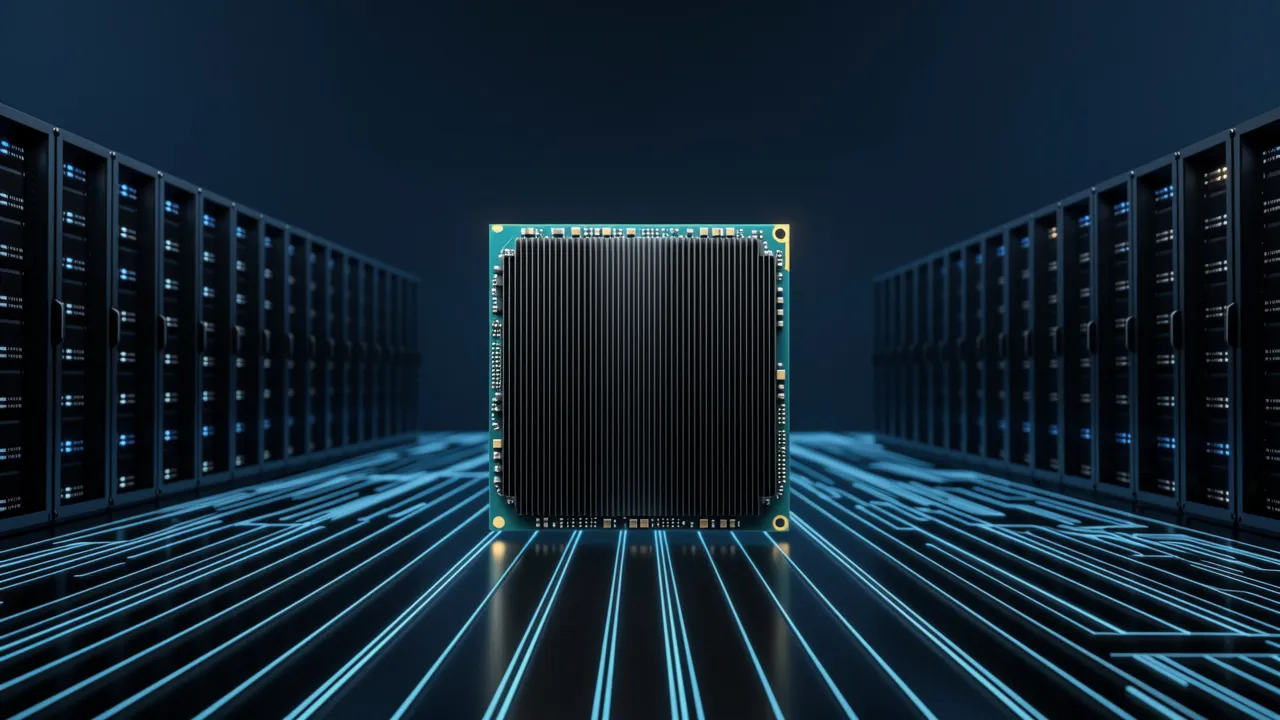
In May 2016 Google disclosed the Tensor Processing Unit, a custom chip built for machine learning that had already run in its data centers for over a year and powered RankBrain, Street View and AlphaGo.
In March 2016 DeepMind's AlphaGo beat Lee Sedol, an 18-time world champion Go player, 4–1 in a five-game match in Seoul, a result watched by more than 200 million people worldwide.
On 27 January 2016 DeepMind announced AlphaGo alongside a paper in Nature reporting that the program had beaten European Go champion Fan Hui 5–0 in October 2015 — the first time a computer program had beaten a professional Go player.
On 19 December 2013, DeepMind researchers posted a paper showing that one convolutional network, trained with a variant of Q-learning, could learn Atari 2600 control policies directly from raw pixels and outperform prior methods on six of seven games.
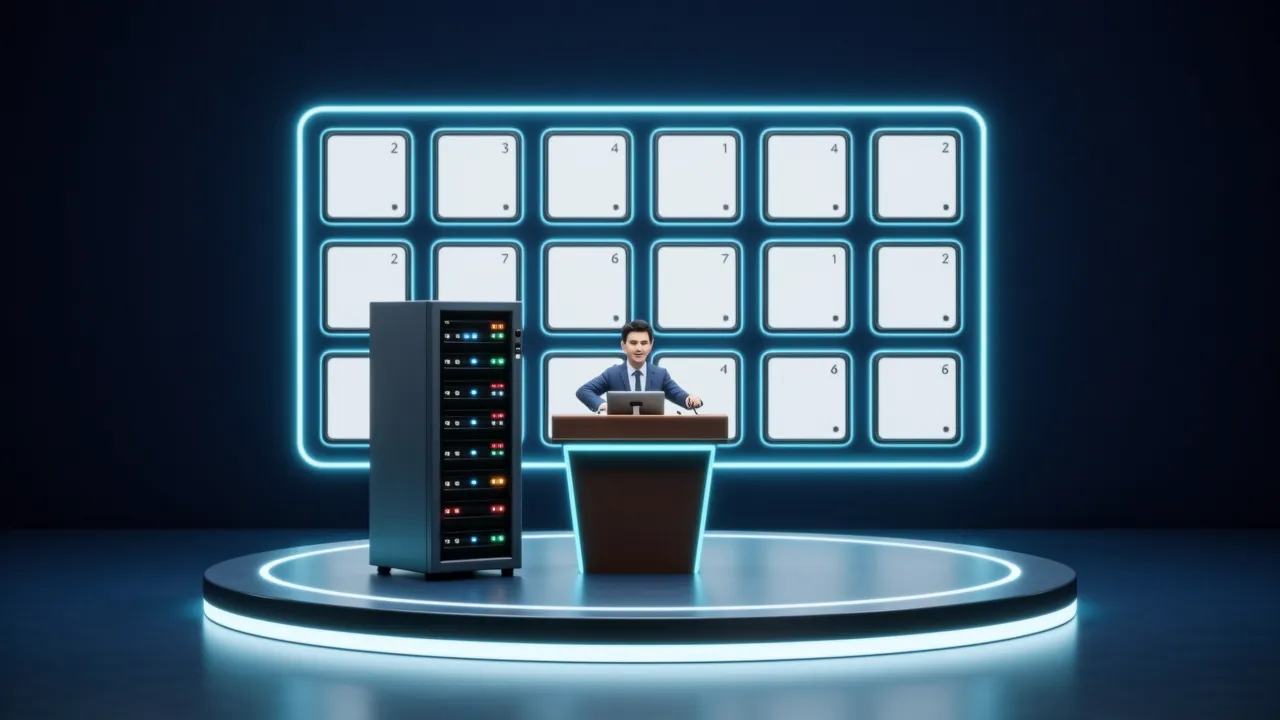
In February 2011 IBM's Watson beat Jeopardy! champions Brad Rutter and Ken Jennings in two televised matches, winning USD 77,147 for charity — a public test of machine question-answering, and IBM's chosen successor to its 1997 chess victory.
In 2011 ACM gave Judea Pearl the A.M. Turing Award for a calculus of probabilistic and causal reasoning, work that began with his invention of Bayesian networks and later produced the do-calculus for causal inference.
In January 2004 NASA's Spirit and Opportunity landed on Mars carrying autonomous navigation software. The mission was planned around about one kilometre of driving; the rovers went much farther, with a large share of their early driving decided on Mars rather than on Earth.
In January 2000, Carnegie Mellon announced that its NASA-funded rover prototype Nomad was searching for meteorites in Antarctica, and that the public could follow the hunt through the Big Signal Web site. The BBC reported the expedition as the first time a robot found extraterrestrial material on Earth.
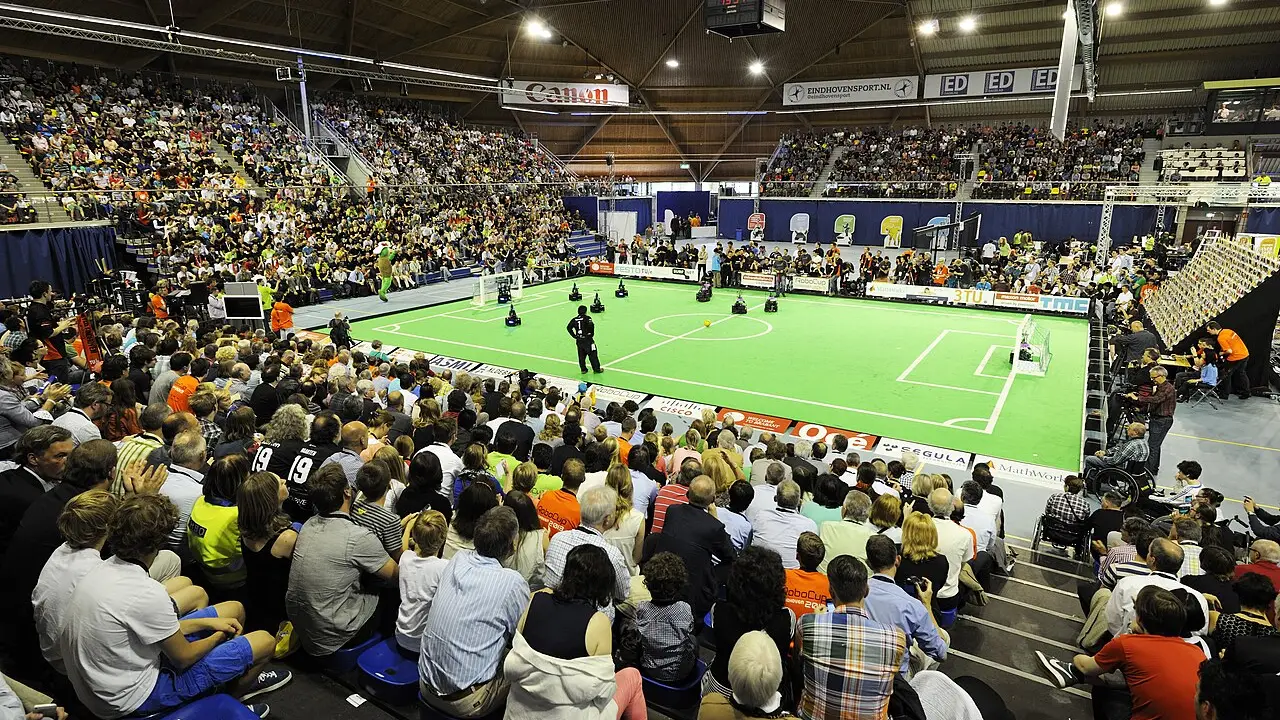
The first official RoboCup games and conference, held in 1997 as planned with IJCAI-97 in Nagoya, drew more than 40 real and simulated teams and over 5,000 spectators, and marked the first step toward robotic soccer players that could beat a human World Cup champion team.
Held in Osaka in November 1996 alongside IROS-96, Pre-RoboCup-96 was the first robot soccer competition aimed at research and education, with eight simulation-league teams and a middle-size robot demonstration; official RoboCup games followed in 1997.
At IJCAI-95 in Montreal in August 1995, organizers announced the first Robot World Cup, to be held with IJCAI-97 in Nagoya, and set up Pre-RoboCup-96 plus the Soccer Server simulator.
In June 1993, researchers including Minoru Asada, Yasuo Kuniyoshi and Hiroaki Kitano proposed a robot soccer competition tentatively called the Robot J-League. International interest soon led to its renaming as the Robot World Cup Initiative, or RoboCup.
In 1992, Alan Mackworth's paper on seeing robots and a Tokyo workshop on AI grand challenges independently put forward robot soccer as a way to drive AI and robotics research.
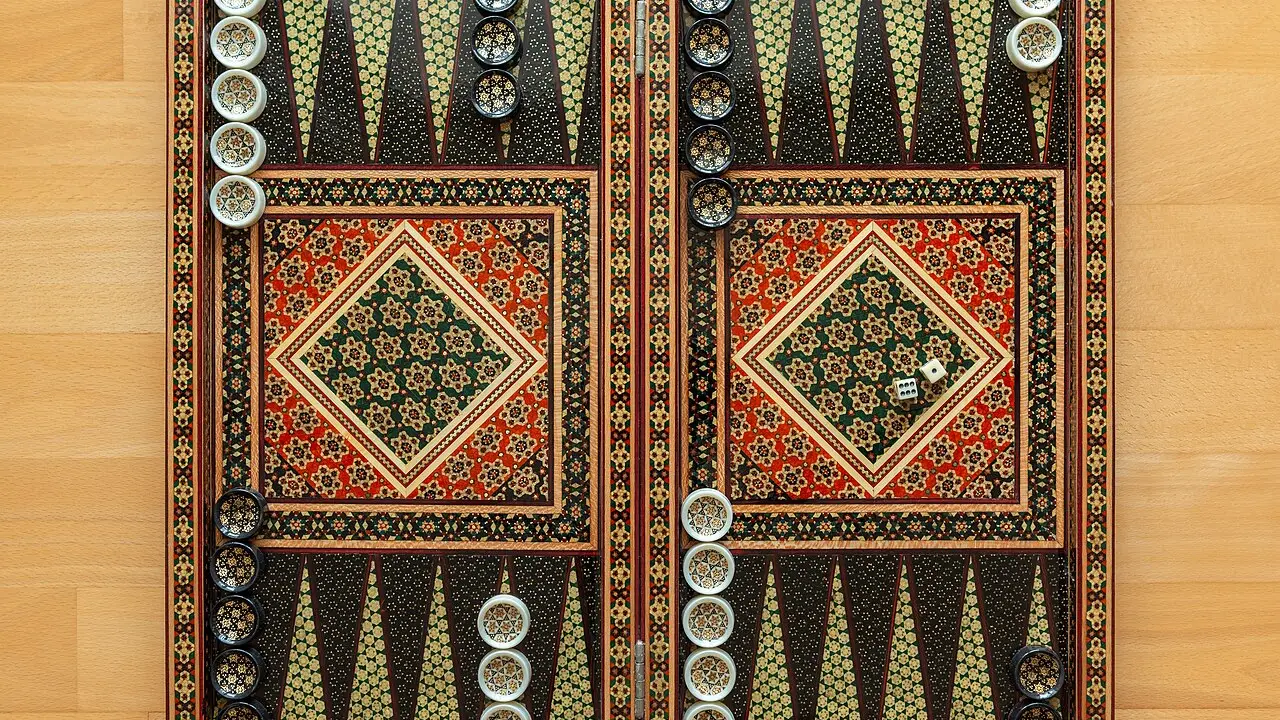
TD-Gammon was an IBM backgammon program built by Gerald Tesauro that taught itself to evaluate positions by playing against itself with temporal-difference learning, reaching a level just below top human players and becoming an early landmark for reinforcement learning.
In 1988 the Kyoto Prize in Advanced Technology went to John McCarthy, honoured for founding artificial intelligence and for inventing LISP, the programming language built for symbol manipulation rather than numerical calculation.
In 1975 the ACM gave its A.M. Turing Award jointly to Allen Newell and Herbert A. Simon, citing two decades of work that helped establish artificial intelligence, the psychology of human cognition and list processing.
In 1971 the ACM gave John McCarthy the A.M. Turing Award, honouring the researcher who named artificial intelligence, co-founded MIT's AI Project and created the LISP language.
In 1969 the ACM named Marvin Minsky a Turing Award laureate for his central role in creating and shaping artificial intelligence. He had co-founded MIT's AI laboratory and written an early paper that put symbol manipulation at the centre of the field.
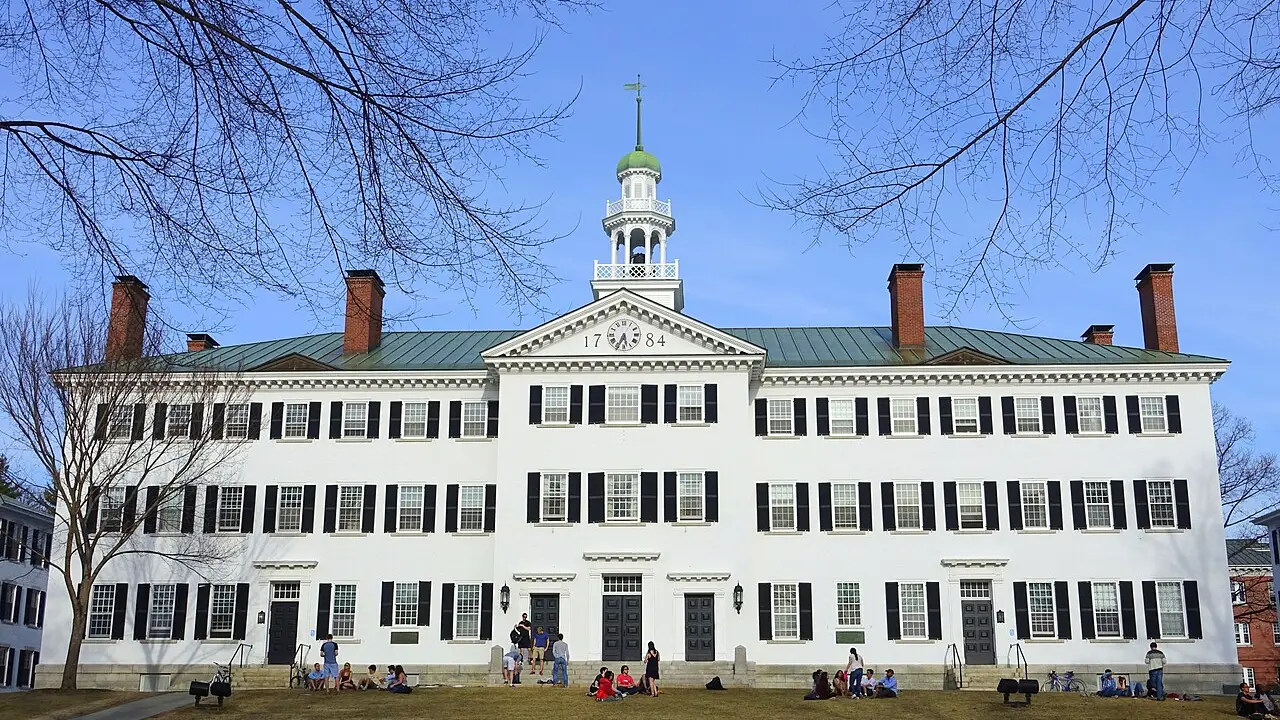
In the summer of 1956 a small group of researchers gathered at Dartmouth College for the Dartmouth Summer Research Project on Artificial Intelligence, widely regarded as the founding event of AI as a research field.
In August 1955 four researchers proposed a summer study at Dartmouth College on making machines simulate learning and other features of intelligence. The document is credited with introducing the term "artificial intelligence."