Claude 3.7 Sonnet and Claude Code are announced
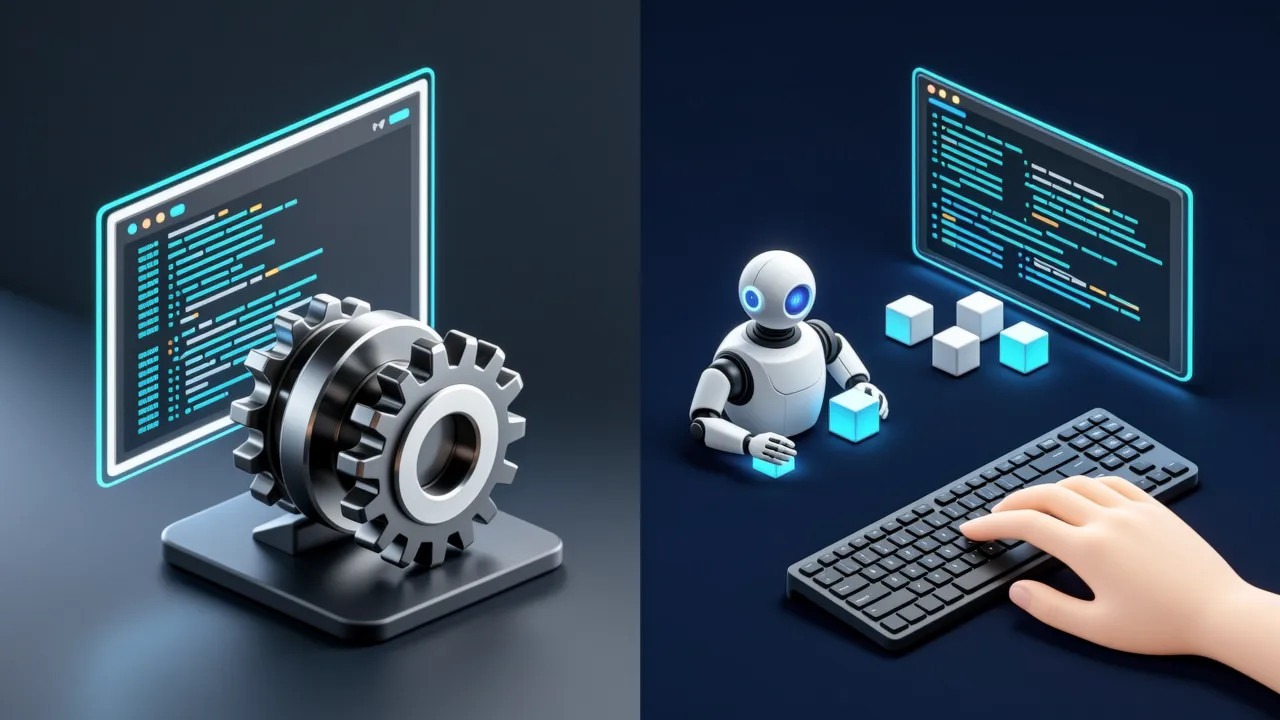
On 24 February 2025 Anthropic announced Claude 3.7 Sonnet, which it called the first hybrid reasoning model on the market, and Claude Code, a terminal-based coding agent in limited research preview.
Total 671 · Clear filters
On 24 February 2025 Anthropic announced Claude 3.7 Sonnet, which it called the first hybrid reasoning model on the market, and Claude Code, a terminal-based coding agent in limited research preview.
On 20 February 2025, Figure announced Helix, which it described as a vision-language-action model for controlling a humanoid’s entire upper body from natural language, running onboard low-power GPUs, and coordinating two robots on a shared task.
On 17 February 2025 StepFun published the Step-Audio technical report and released code and weights for its open speech models, jointly with Geely.
On 17 February 2025 StepFun and Geely jointly open-sourced Step-Video-T2V, a 30-billion-parameter video model, and Step-Audio, a speech model family.
On 17 February 2025 xAI unveiled Grok 3 and Grok 3 mini, with a Think button for step-by-step reasoning and the DeepSearch research agent. Free users received Grok 3 on 20 February.
On 14 February 2025 Perplexity launched Deep Research, which runs dozens of searches, reads hundreds of sources and writes a full report. The company reported 21.1% on Humanity's Last Exam.
On 2 February 2025 OpenAI launched deep research in ChatGPT, an agent built on a version of the o3 reasoning model that produced research reports in roughly 3 to 30 minutes and was offered to Pro users first.
On 31 January 2025 OpenAI released o3-mini, the first reasoning model it made available to free ChatGPT users, alongside an API release priced per million tokens.
On 30 January 2025 Mistral AI released Mistral Small 3, a 24-billion-parameter model under the Apache 2.0 licence, scoring over 81% on MMLU and running at about 150 tokens per second.
On 28 January 2025 Alibaba unveiled Qwen2.5-Max and said its instruct model beat DeepSeek V3 on several benchmarks. The model's weights were not released, and access went through Qwen Chat and the Alibaba Cloud API.
On 27 January 2025 DeepSeek released Janus-Pro, a single model that handles both image understanding and text-to-image generation, in 1B and 7B sizes.
On 24 January 2025 Baichuan released Baichuan-M1-preview and open-sourced Baichuan-M1-14B, a smaller model it described as the first open-source LLM trained from scratch for medicine.
On 23 January 2025 OpenAI released Operator, a research preview agent that used its own browser to fill forms, place orders and schedule appointments for ChatGPT Pro users in the US. It combined GPT-4o vision with reinforcement learning and introduced confirmation and takeover safeguards.
On 22 January 2025 ByteDance released Doubao-1.5-pro, a closed multimodal model built on a sparse mixture-of-experts design, with a deep-thinking variant that was reported to beat OpenAI o1-preview on AIME.
On 21 January 2025 Tencent released the inference code and pretrained models of Hunyuan3D 2.0, a system that pairs a shape model with a texture model to generate high-resolution 3D assets.
On 21 January 2025 ByteDance Seed researchers posted the UI-TARS paper. UI-TARS is a GUI agent that reads only screenshots and operates a computer with keyboard and mouse, and its weights were released openly.
Moonshot AI's multimodal reasoning model, released on 20 January 2025, which the company claimed matched OpenAI's o1 in mathematics, coding and multimodal reasoning, and which was trained with reinforcement learning that avoided tree search, value functions and process reward models.
On 20 January 2025 DeepSeek released DeepSeek-R1 as an open reasoning model, claiming performance on par with OpenAI o1 on math, code and reasoning tasks. Its release coincided with a sharp drop in Nvidia's share price.
On 15 January 2025 iFlytek released Spark X1, described by the company as China's first deep reasoning model trained on fully domestic compute, built with Huawei and used first in education and healthcare.
Cohere's North is an AI workspace that combines language models, search and agents for business users, built for regulated enterprises that need private or air-gapped deployments.
On 6 January 2025, at CES, NVIDIA launched Cosmos, a platform of open world foundation models for physical AI used to train robots and autonomous vehicles.