Alibaba launches Qwen3.6 for agentic coding
In April 2026 Alibaba launched Qwen3.6, starting with the proprietary Qwen3.6-Plus for agentic coding on 2 April, followed by open Qwen3.6-35B-A3B weights in mid-April.
Total 236 · Clear filters
In April 2026 Alibaba launched Qwen3.6, starting with the proprietary Qwen3.6-Plus for agentic coding on 2 April, followed by open Qwen3.6-35B-A3B weights in mid-April.
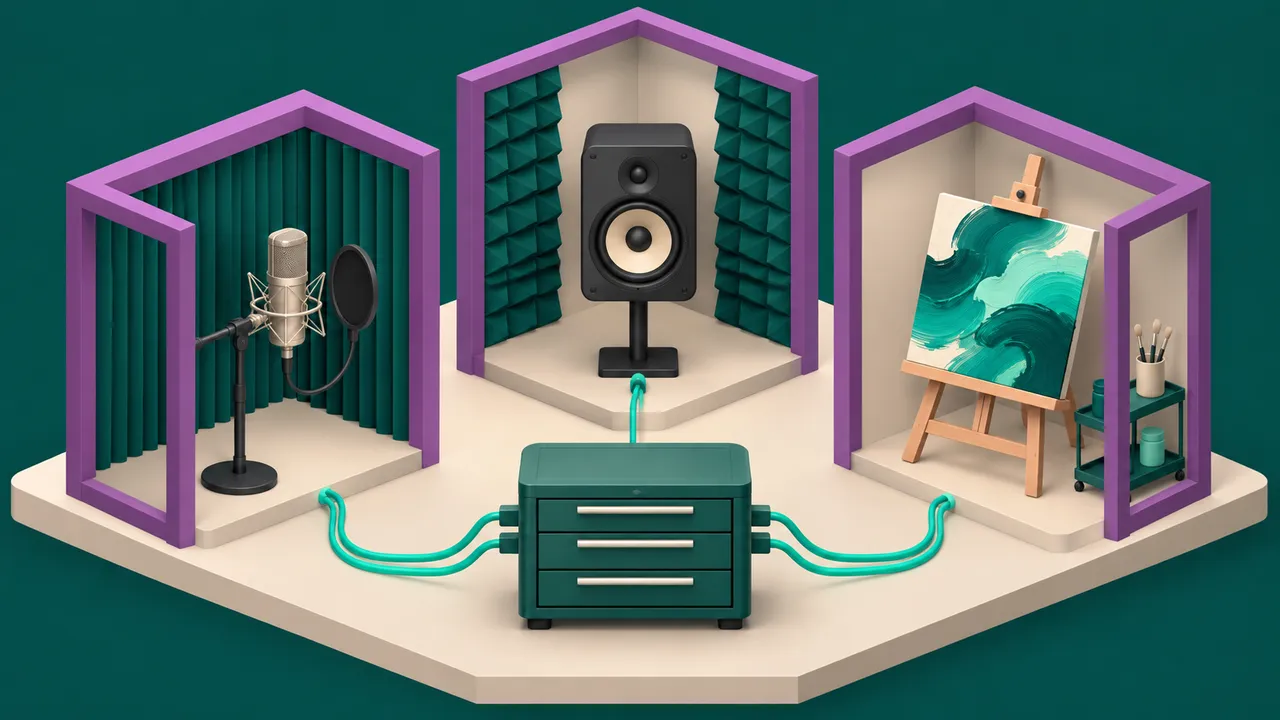
On 2 April 2026 Mustafa Suleyman announced three Microsoft AI models for developers: MAI-Transcribe-1, MAI-Voice-1 and MAI-Image-2. All three became available in Microsoft Foundry and the MAI Playground, with published model cards.
In April 2026 Moonshot AI released Kimi K2.6, an open-weight model aimed at long-horizon coding, with Agent Swarm scaled to 300 sub-agents and 4,000 coordinated steps.
On 24 March 2026 OpenAI announced that it was discontinuing Sora in its app and API. The Sora app shut down on 26 April 2026, and the planned Disney investment tied to Sora did not go ahead.
On 23 March 2026 Mistral AI released Voxtral TTS, a 4B text-to-speech model with voice cloning from three seconds of audio, open weights under a non-commercial licence, and API pricing of $0.016 per 1,000 characters.
Midjourney released the V8 alpha on 17 March 2026, generating images about five times faster, with a native 2K --hd mode, improved text rendering, new prompt parameters and a Grid Mode interface. Point releases followed later that year.
PixVerse closed a Series C led by CDH Investments on 12 March 2026, saying the round made it a global AI unicorn and was Asia's largest in AI video generation. It reported more than 100 million users.
In March 2026 MiniMax released MiniMax-M2.7, a model with 229B listed parameters that the company described as its first to take part in its own evolution, and which posted strong scores on machine-learning, coding, science and competition-math benchmarks.
On 17 February 2026 Anthropic released Claude Sonnet 4.6 at $3 and $15 per million tokens. It became the default model for Free and Pro users on claude.ai and Claude Cowork.
India hosted the AI Impact Summit 2026 in New Delhi from 16 to 21 February 2026, the first edition of the global AI summit series held in the Global South. A declaration was endorsed by 92 countries and organisations, and 13 model providers signed frontier AI commitments.
In February 2026 MiniMax released MiniMax-M2.5 together with M2.5-Lightning, a variant that runs at 100 tokens per second. MiniMax said the Lightning version costs $0.3 per million input tokens and $2.4 per million output tokens.
ByteDance's Seedance 2.0 video model went live on 12 February 2026. Viral clips drew copyright complaints from the Motion Picture Association and Hollywood studios, and ByteDance later paused the global launch, according to The Information.
On 12 February 2026 Anthropic announced a $30 billion Series G at a $380 billion post-money valuation, led by GIC and Coatue, with run-rate revenue of $14 billion and Claude Code alone above $2.5 billion.
On 10 February 2026 Runway announced a $315 million Series E at a $5.3 billion valuation, nearly double its previous valuation, and said the money would fund pre-training of next-generation world models.
On 5 February 2026 OpenAI released GPT-5.3-Codex for its Codex coding agent, describing it as the most capable agentic coding model to date and saying it had helped build itself. A faster research preview, GPT-5.3-Codex-Spark, followed a week later.
Kuaishou launched the Kling 3.0 series in February 2026. The series uses an All-in-One framework for text, image, audio and video, and launched globally on 5 February as four models.
On 5 February 2026 Anthropic released Claude Opus 4.6, then its smartest model, with agent teams in Claude Code and a 1M-token context window in beta. Pricing stayed at $5 and $25 per million tokens.
Kuaishou said Kling AI passed US$20 million in monthly revenue in December 2025, an annualized rate of US$240 million, 19 months after launch — a sign that generated video is becoming a paid business.
On 11 December 2025, Runway announced GWM-1, a general world model that simulates environments in real time, released in Worlds, Avatars and Robotics variants and built on the company's Gen-4.5 model.
On 9 December 2025, Anthropic donated MCP to the Agentic AI Foundation, a directed fund under the Linux Foundation; MCP became a founding project alongside Block's goose and OpenAI's AGENTS.md while retaining technical autonomy.
On 9 December 2025 Mistral AI released Devstral 2, a 123B dense coding model, and the smaller Devstral Small 2, alongside Mistral Vibe, an open-source command-line coding agent built on them.