Apptronik expands its Series A to $935M
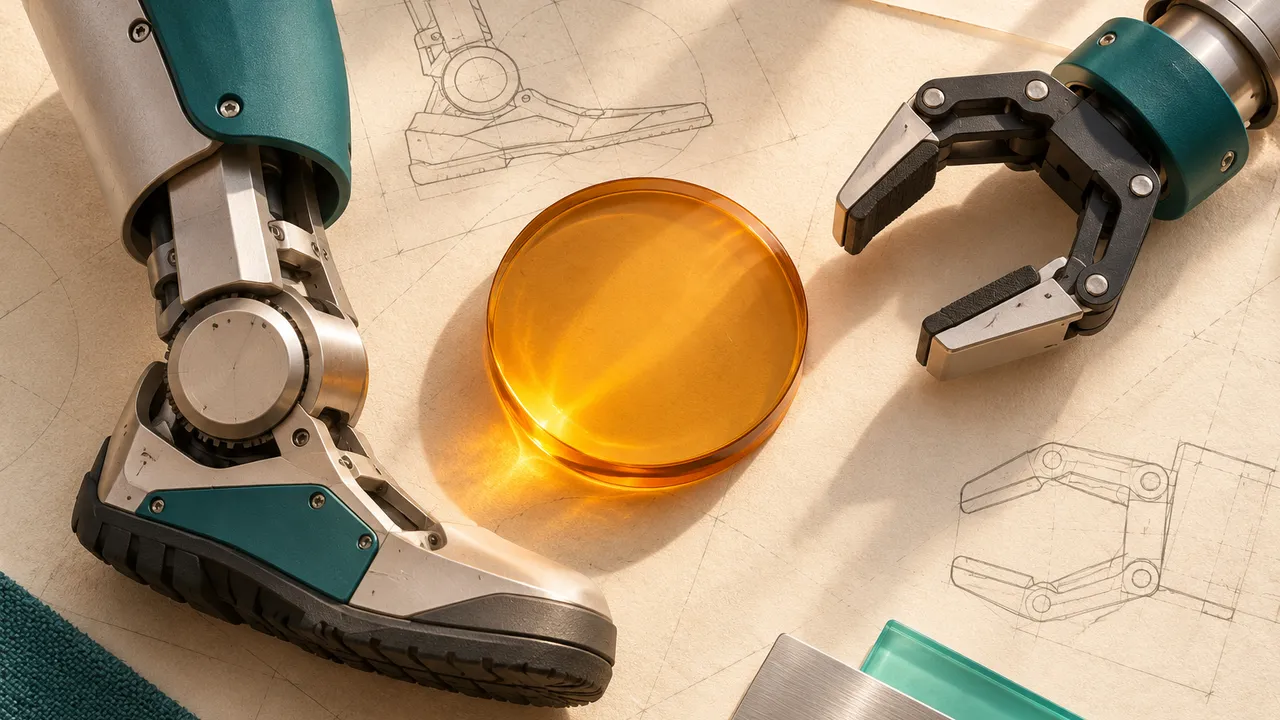
Apptronik reopened its Series A in February 2026, raising the round to $935 million at a reported $5.3 billion valuation, as the humanoid robot maker pushes Apollo into warehouse and industrial work.
Total 671 · Clear filters
Apptronik reopened its Series A in February 2026, raising the round to $935 million at a reported $5.3 billion valuation, as the humanoid robot maker pushes Apollo into warehouse and industrial work.
On 11 February 2026 iFlytek released Spark X2, a large model trained entirely on domestic computing power and aimed at education, healthcare, automotive and agent use cases.
Robert Playter announced on 10 February 2026 that he was stepping down as Boston Dynamics CEO after 30 years at the company; CFO Amanda McMaster took interim charge while a successor was sought.
On 5 February 2026 OpenAI released GPT-5.3-Codex for its Codex coding agent, describing it as the most capable agentic coding model to date and saying it had helped build itself. A faster research preview, GPT-5.3-Codex-Spark, followed a week later.
Kuaishou launched the Kling 3.0 series in February 2026. The series uses an All-in-One framework for text, image, audio and video, and launched globally on 5 February as four models.
On 5 February 2026 Anthropic released Claude Opus 4.6, then its smartest model, with agent teams in Claude Code and a 1M-token context window in beta. Pricing stayed at $5 and $25 per million tokens.
In February 2026 StepFun released Step 3.5 Flash, an Apache 2.0 Mixture-of-Experts model with 196 billion total parameters, tool use and a 256K-token context. Its technical report was posted on 11 February.
In February 2026 Perplexity released Perplexity Computer, a general-purpose AI agent that splits a request into tasks and subtasks and hands them to sub-agents run on different models, offered first to Max subscribers.
Grok 4.20 was released in February 2026, the month xAI became a SpaceX subsidiary. Its multi-agent version, in which agents collaborate on deep research, went live in the API in March 2026.
On 29 January 2026 Alibaba's chip unit T-Head listed the Zhenwu 810E, formally revealing a PPU accelerator the company had kept under wraps and completing its combination of Qwen models, cloud and chips.
On 27 January 2026 Moonshot AI released Kimi K2.5, an open-weight multimodal model with an Agent Swarm feature that splits complex tasks among up to 100 sub-agents, launched alongside the Kimi Code command-line tool.
Skild AI, a maker of general-purpose robotic software, raised $1.4 billion in a Series C led by SoftBank, valuing the company at more than $14 billion.
On 13 January 2026 Baichuan released Baichuan-M3, a new-generation open-source medical-enhanced LLM, at a media briefing.
Boston Dynamics and Google DeepMind announced a partnership at CES 2026 to apply DeepMind's AI foundation models to Boston Dynamics robots, with the humanoid Atlas as the first test case.
Anthropic released Claude Cowork as a research preview in January 2026, an agentic tool that applies the approach behind Claude Code to non-coding knowledge work such as research, analysis and document creation. An enterprise release followed in February 2026.
On 18 December 2025, Lovable announced a $330M Series B at a $6.6B valuation, with new corporate and venture investors joining as the company reported rapid growth in projects built on its platform.
On 18 December 2025, at its FORCE conference, Volcano Engine released Doubao Large Model 1.8 and the audio-video generation model Seedance 1.5 pro, along with agent tools and an AI savings plan.
On 17 December 2025 Google released Gemini 3 Flash, a speed-oriented model that became the default in the Gemini app, with published scores of 90.4% on GPQA Diamond and 78% on SWE-bench Verified.
On 15 December 2025 NVIDIA announced the Nemotron 3 family of open models, releasing Nano at once and promising Super and Ultra in 2026 along with three trillion tokens of data.
On 11 December 2025 OpenAI released GPT-5.2 in Instant, Thinking and Pro versions, billing it as stronger at professional work and reporting scores that, on OpenAI's GDPval evaluation, matched or beat human experts.
On 11 December 2025 Ai2 released Molmo 2, an open-weights family of vision-language models that adds pointing, tracking and grounded question answering in video, in 8B, 4B and 7B versions.