Kling AI passes US$100 million annualized revenue
Kling AI, launched in June 2024, reported a US$100 million annualized revenue run rate in March 2025 and monthly subscription bookings above RMB 100 million in April and May 2025.
Total 122 · Clear filters
Kling AI, launched in June 2024, reported a US$100 million annualized revenue run rate in March 2025 and monthly subscription bookings above RMB 100 million in April and May 2025.
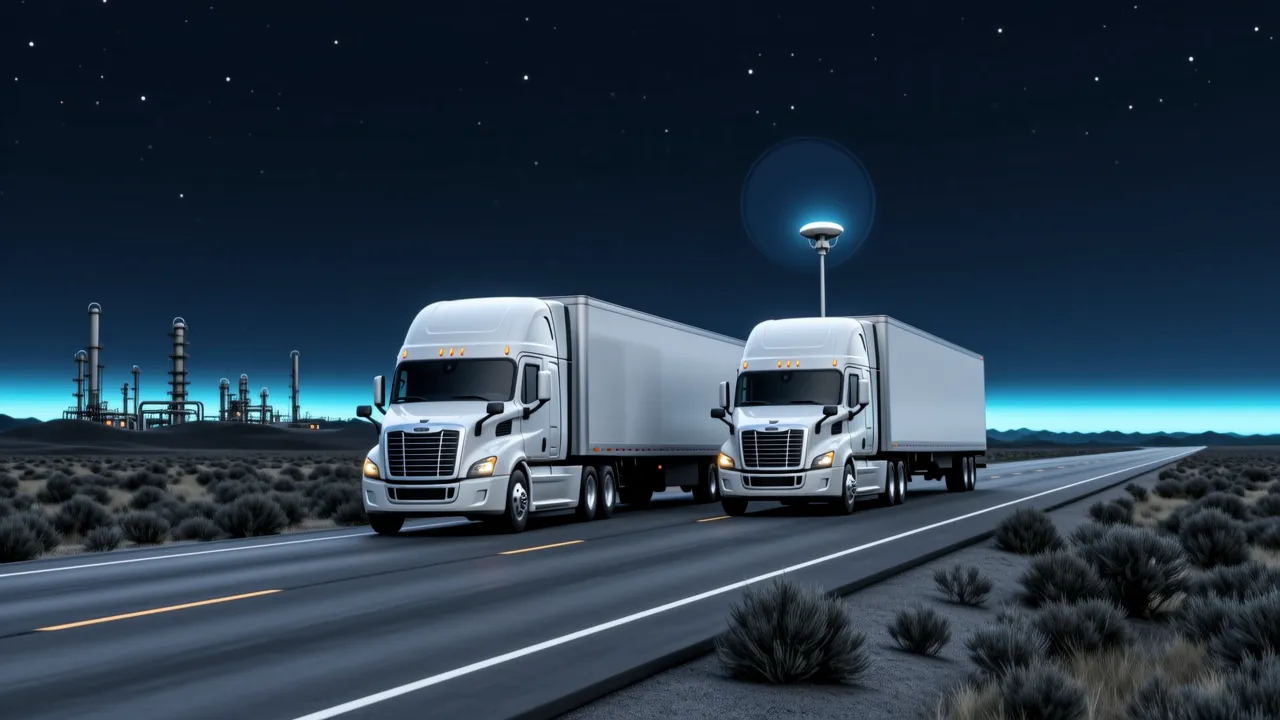
On 27 April 2025, trucks running on Aurora's self-driving system began regular driverless commercial hauls for Uber Freight and Hirschbach between Dallas and Houston, with no one in the cab and no police escort.
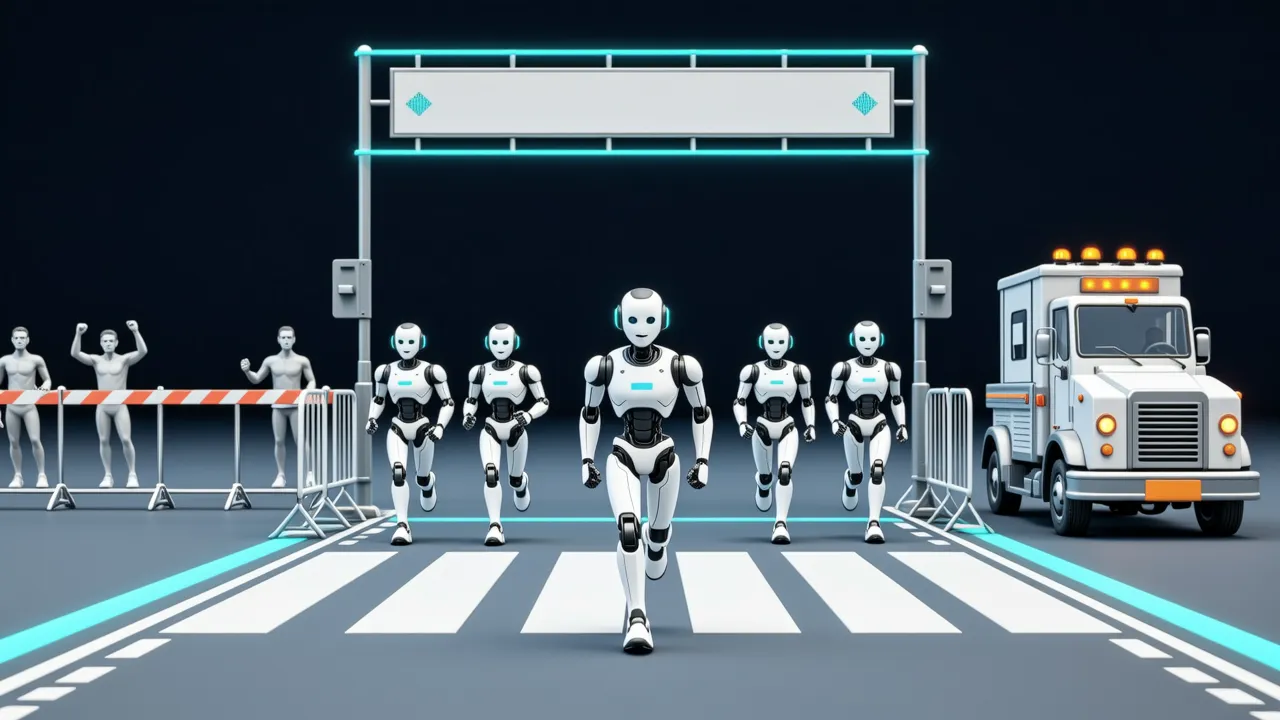
In April 2025 twenty humanoid robot teams raced a half marathon in Beijing on the same 21.0975 km course used by human runners. Tiangong Ultra won in 2 hours 40 minutes 42 seconds.
In March 2025 Baichuan disbanded its financial-industry enterprise team and restructured to focus on AI for healthcare, later releasing the open medical models Baichuan-M2-32B and Baichuan-M3.
The first International AI Safety Report, published on 29 January 2025, was led by Yoshua Bengio and written by over 100 experts with backing from 30 countries; it sets out the science of general-purpose AI capabilities, risks and mitigations without making policy recommendations.
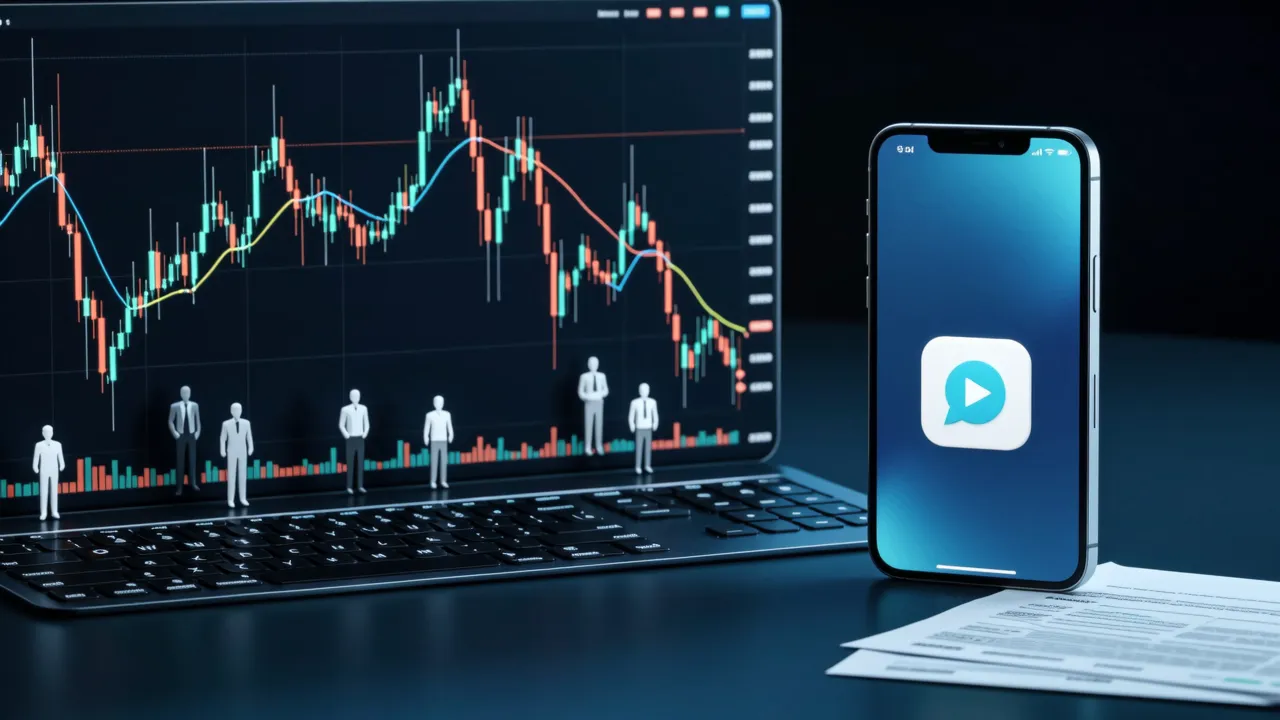
On 27 January 2025 DeepSeek's mobile app passed ChatGPT as the most downloaded free app on Apple's U.S. App Store. The same day Nvidia shares fell 17 percent, the biggest one-day loss in U.S. history for any company.
In early 2025, 01.AI denied reports that it was selling its pre-training team to Alibaba; large-model training moved into a joint lab with Alibaba, while 01.AI focused on smaller, cheaper models and enterprise platforms built around DeepSeek.
Shun-ichi Amari, a mathematical engineer at Teikyo University and honorary science advisor at RIKEN, received the 2025 Kyoto Prize in Advanced Technology, Information Science for laying theoretical foundations of artificial intelligence and establishing information geometry.
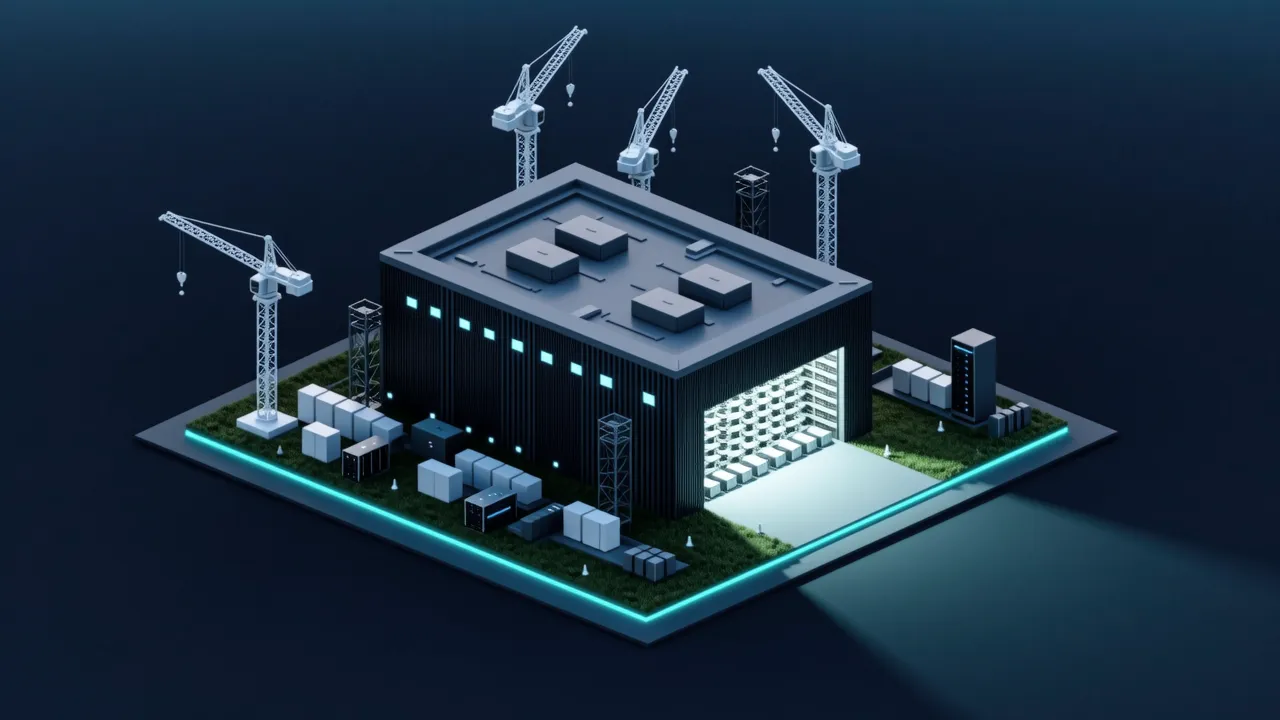
In December 2024 Meta announced a 4-million-square-foot, $10 billion-plus data center in Richland Parish, Louisiana, its 23rd US data center, built to train future open-source large language models and later expanded substantially.
Horizon Robotics, a Chinese supplier of smart-driving solutions founded in 2015, began trading on the Hong Kong Stock Exchange on 24 October 2024, raising HK$5.407 billion in what was the city's largest technology IPO that year.
The 2024 Nobel Prize in Chemistry went to David Baker for computational protein design and, jointly, to Demis Hassabis and John Jumper of Google DeepMind for AI-based protein structure prediction. The Academy said their work solved a 50-year-old problem.
On 8 October 2024 the Nobel Prize in Physics went to John J. Hopfield and Geoffrey Hinton for foundational work on artificial neural networks, the systems behind much of modern machine learning.
In September 2024 the Hugging Face Hub passed 1 million downloadable public models for the first time; by October 2025 it held more than 2 million.
xAI's Colossus supercomputer in Memphis, Tennessee, built with NVIDIA, went into operation in 2024 with about 100,000 H100 GPUs. It was the main training system behind Grok.
On August 13, 2024, OpenAI released SWE-bench Verified, a 500-sample human-validated subset of SWE-bench built with the benchmark's original authors from Princeton, after filtering ambiguous tasks and unreliable tests.
On 19 June 2024 Ilya Sutskever announced Safe Superintelligence Inc. on X, a company with one stated goal: building safe superintelligence. It raised $1 billion in September 2024.
On 5 June 2024 Nvidia's market value passed $3 trillion, making it the third company to reach that level after Microsoft and Apple; two weeks later it became the world's most valuable company, driven by demand for data-center AI chips.
In 2024 a Canadian tribunal held Air Canada responsible for wrong bereavement-fare advice given by the chatbot on its website, rejecting the airline's claim that the chatbot was a separate legal entity.
An IMF staff analysis published in January 2024 estimated that almost 40 percent of global employment is exposed to AI, with effects uneven across income levels and a risk of widening inequality.
In 2024 the ACM gave its A.M. Turing Award to Andrew Barto and Richard Sutton for building the conceptual and algorithmic foundations of reinforcement learning, work that runs from 1980s papers to a standard textbook and on to deep reinforcement learning.
UBTECH, a Chinese robot maker founded in 2012, listed on the Hong Kong Stock Exchange main board on 29 December 2023 at HK$90 per share; the company calls itself the first humanoid robot company on the exchange.