AlphaGo defeats Lee Sedol 4–1 in Seoul
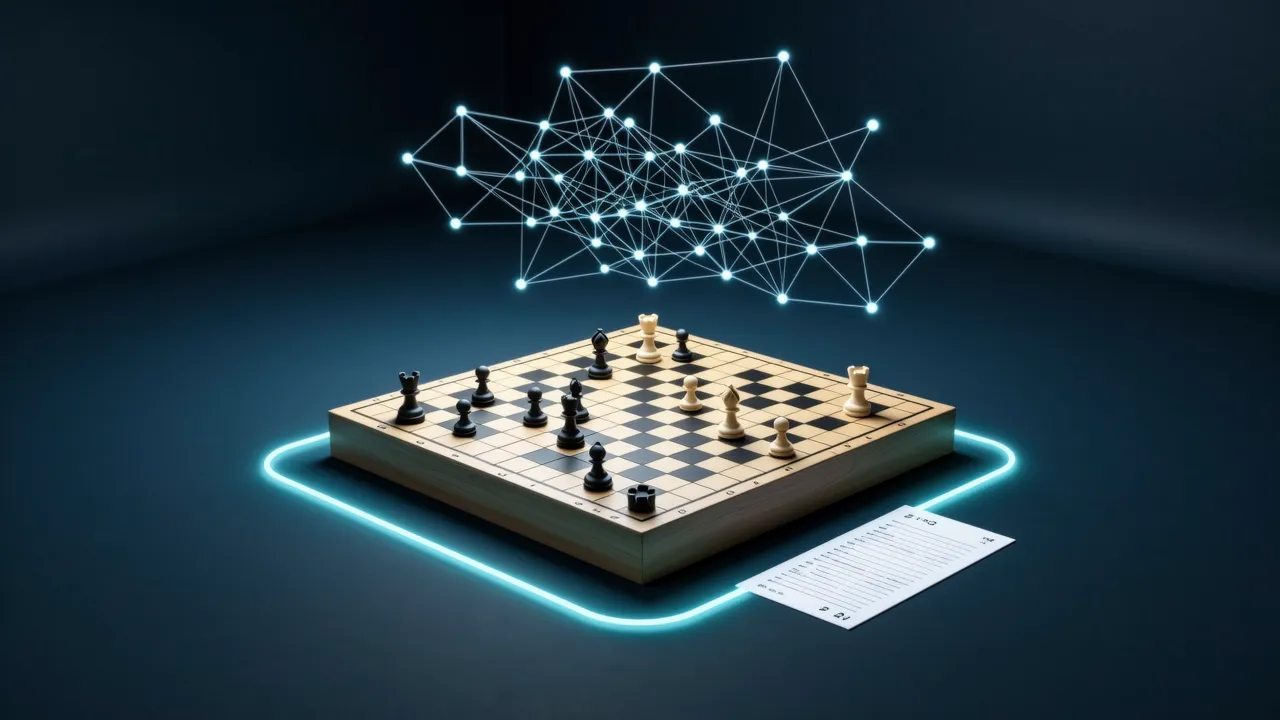
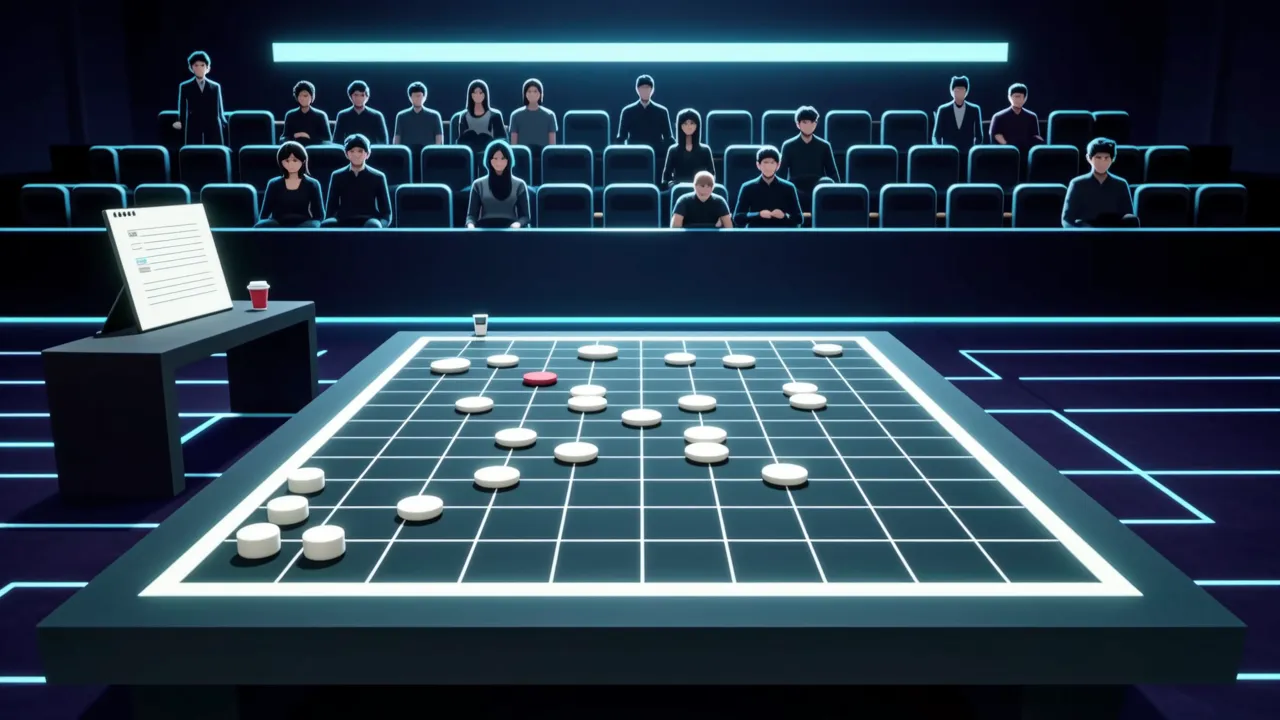
In March 2016 DeepMind's AlphaGo beat Lee Sedol, an 18-time world champion Go player, 4–1 in a five-game match in Seoul, a result watched by more than 200 million people worldwide.
Total 1,098
In March 2016 DeepMind's AlphaGo beat Lee Sedol, an 18-time world champion Go player, 4–1 in a five-game match in Seoul, a result watched by more than 200 million people worldwide.
On 27 January 2016 DeepMind announced AlphaGo alongside a paper in Nature reporting that the program had beaten European Go champion Fan Hui 5–0 in October 2015 — the first time a computer program had beaten a professional Go player.
A multi-stakeholder organisation formally established in late 2016 by researchers from six of the world's largest technology companies to study and share best practices in AI, advance public understanding and provide an open platform for discussion of AI's effects on society.
The 2015 ImageNet classification contest was won by ResNet, a network up to 152 layers deep whose layers learn residual functions relative to their inputs; it reached 3.57% error on the test set and, by one account, exceeded human performance.
In December 2015 a group of entrepreneurs and AI researchers founded OpenAI in San Francisco as a non-profit research company whose stated aim was to advance digital intelligence for humanity's benefit rather than financial return.
On 9 November 2015 Google released TensorFlow, its second-generation machine learning system, as open source under the Apache 2.0 licence, letting people outside Google build and train models with the same system Google used in its own products.
Toyota announced in November 2015 that it would create the Toyota Research Institute, a separately incorporated artificial intelligence research company, with $1 billion over five years and former DARPA programme manager Gill Pratt as chief executive.
On 14 October 2015 Tesla announced Version 7.0 of its car software, which switched on Autopilot: lane steering, turn-signal lane changes and traffic-aware cruise control, running on sensor hardware the Model S had been carrying since the year before.
The DARPA Robotics Challenge Finals, held on 5 and 6 June 2015 at the Fairplex in Pomona, California, put 23 teams and their robots through eight tasks; Team KAIST's DRC-Hubo took first place and the $2 million prize.
On 8 August 2014 Science published the paper describing TrueNorth, an IBM chip holding 1 million spiking neurons and 256 million synapses on 5.4 billion transistors, showing a brain-inspired design running on milliwatts.
Goodfellow, Bengio, and co-authors proposed a generative-model framework with adversarially trained generator and discriminator.
On 27 May 2014, Google published a design for a self-driving prototype with no steering wheel or pedals and said it planned to build about a hundred vehicles and test them with safety drivers.
On 16 May 2014 US time, Baidu named Andrew Ng, a Stanford professor and co-founder of Coursera, as chief scientist in overall charge of Baidu Research, announced at the opening of its Sunnyvale office and new Silicon Valley AI Lab.
On 2 April 2014 at Build, Microsoft unveiled Windows Phone 8.1 and introduced Cortana, a Bing-powered personal assistant with a Halo-inspired persona, a developer API and a rollout starting with a U.S. beta.
On 26 January 2014 Google confirmed its acquisition of DeepMind, the London AI company founded in 2010. The deal brought a small deep-learning research group known for Atari-playing systems into Google and set up a unit later merged with Google Brain.
On 9 January 2014 IBM announced the Watson Group, a business unit for cloud-delivered cognitive services, backed by more than $1 billion and about 2,000 professionals — an attempt to turn Watson into a commercial platform rather than a research project.
At ILSVRC 2014, GoogLeNet won the classification track with 6.67% top-5 error, while VGG's network won localisation and took second in classification; more than 50 institutions took part.
A two-day DARPA competition in December 2013 in which 16 teams put prototype disaster-response robots through eight simulated tasks; SCHAFT of Tokyo scored highest with 27 points out of a possible 32.
On 19 December 2013, DeepMind researchers posted a paper showing that one convolutional network, trained with a variant of Q-learning, could learn Atari 2600 control policies directly from raw pixels and outperform prior methods on six of seven games.
In late 2013 Facebook launched Facebook AI Research (FAIR), with Yann LeCun as its first director. The lab's open research model shaped Meta's later AI work, including PyTorch and the Llama models.
On 1 December 2013 Jeff Bezos announced Prime Air on CBS's 60 Minutes: drones to deliver packages within 30 minutes, carrying up to 2.3 kg within about 16 km of a warehouse, pending FAA rules and years of testing.