Ai2 introduces Olmo Hybrid
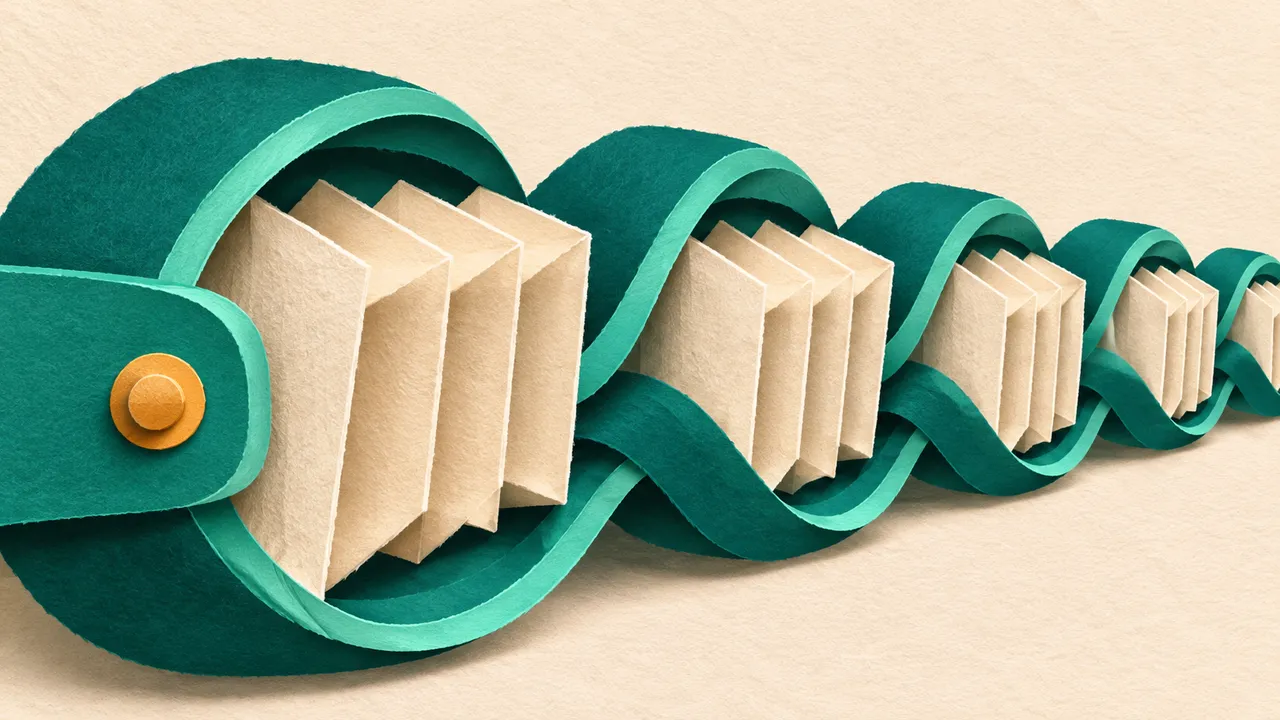
On 5 March 2026 Ai2 released Olmo Hybrid, a fully open 7B model that stacks Gated DeltaNet linear-RNN layers with attention layers in a 3:1 ratio and reaches Olmo 3's MMLU accuracy with 49% fewer training tokens.
Total 79 · Clear filters
On 5 March 2026 Ai2 released Olmo Hybrid, a fully open 7B model that stacks Gated DeltaNet linear-RNN layers with attention layers in a 3:1 ratio and reaches Olmo 3's MMLU accuracy with 49% fewer training tokens.
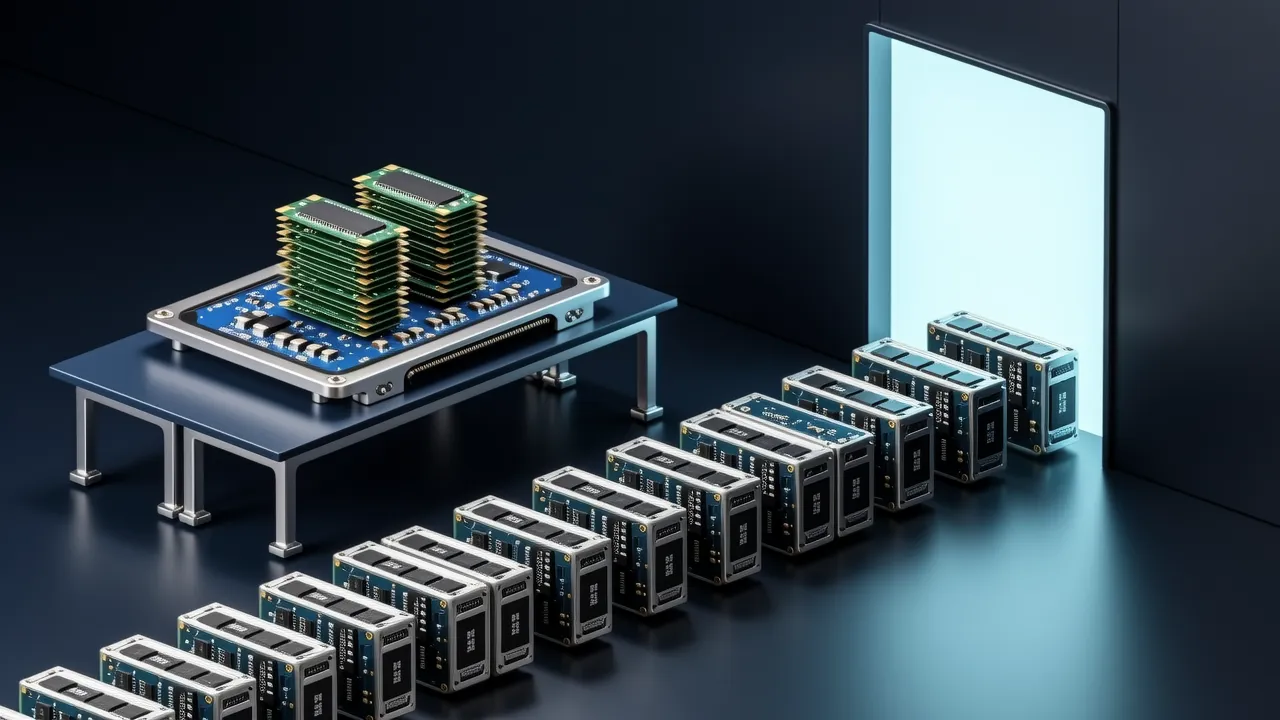
TSMC's CoWoS advanced packaging places logic dies and HBM stacks on a silicon interposer; capacity remains sold out, and TSMC is expanding in Tainan and Chiayi while developing panel-level CoPoS.
Cambricon's next flagship cloud training chip, the MLU 690, entered mass production in early 2026, pairing a dual-die package with more than 700 TFLOPS of FP16 compute and 196 GB of HBM3 memory.
On 1 December 2025 Hugging Face released Transformers v5.0.0rc0, the first major version since v4 in November 2020. The library grew from about 40 architectures to more than 400.
On 19 November 2025 Yann LeCun confirmed that he would leave Meta after ten years to found an AI startup focused on advanced machine intelligence. Meta was to be a partner of the new company.
At Huawei Connect 2025 in Shanghai, Huawei published its first three-year Ascend chip roadmap, running to 2028, alongside new Atlas SuperPoD systems and a pledge to open source CANN.
In September 2025 Alibaba's Qwen team released Qwen3-Next, an 80B-parameter open model with 3B parameters active per token, built on a hybrid of linear attention and sparse mixture-of-experts layers.
Aurora is a foundation model for the Earth system whose Nature paper, published on 21 May 2025 and promoted by Microsoft Research the same month, reports better than operational forecasts across four domains at far lower compute.
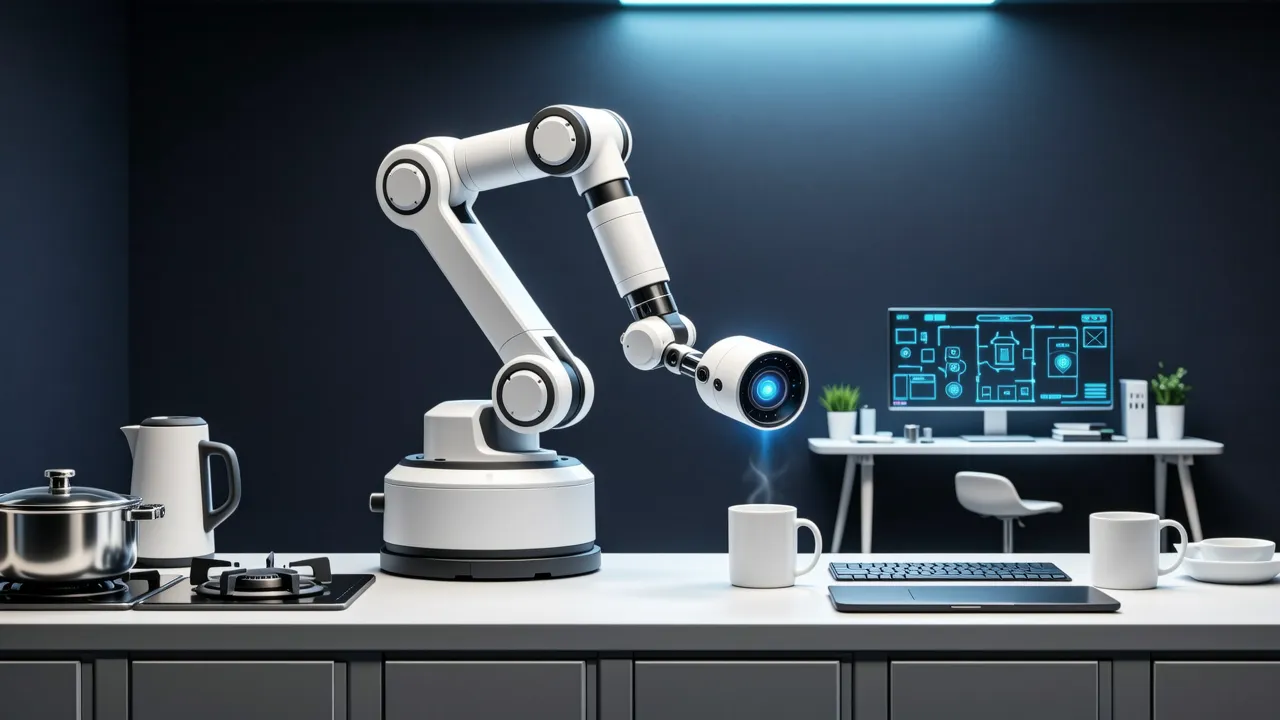
Physical Intelligence released π0.5 on 22 April 2025, a vision-language-action model built on its earlier π0 that the company says can carry out household tasks in homes it never saw during training.
Shun-ichi Amari, a mathematical engineer at Teikyo University and honorary science advisor at RIKEN, received the 2025 Kyoto Prize in Advanced Technology, Information Science for laying theoretical foundations of artificial intelligence and establishing information geometry.
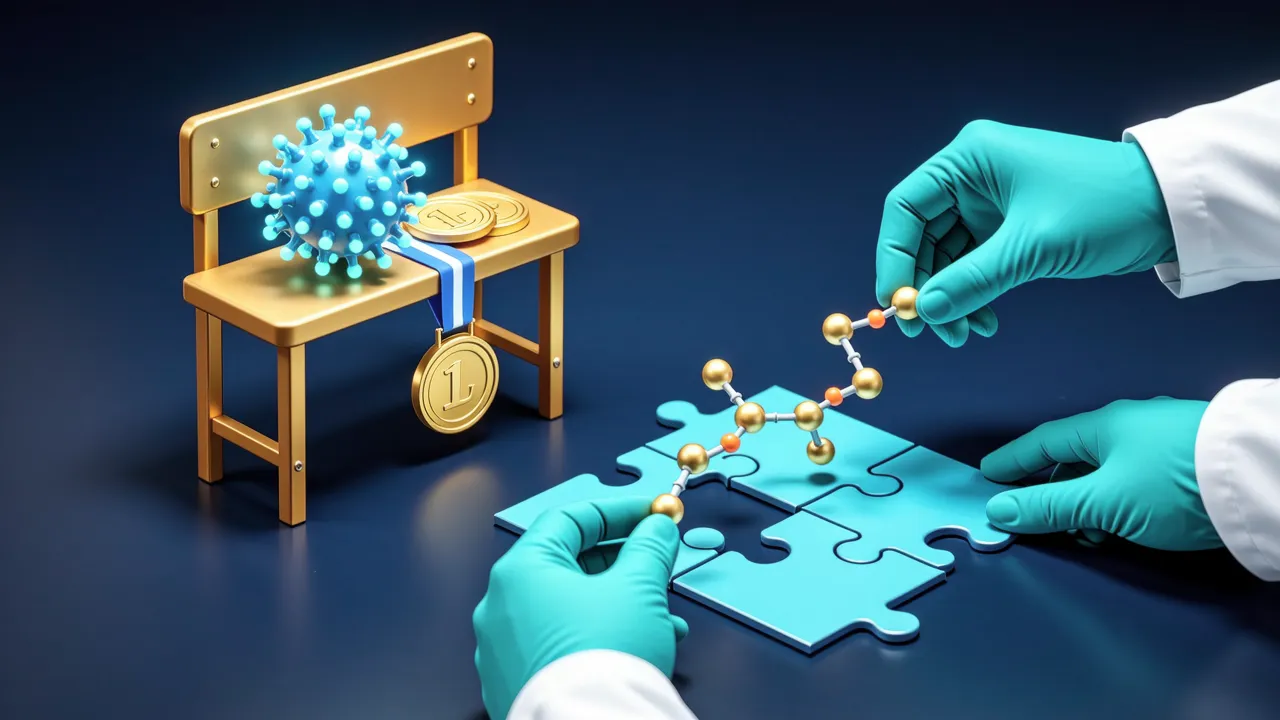
The 2024 Nobel Prize in Chemistry went to David Baker for computational protein design and, jointly, to Demis Hassabis and John Jumper of Google DeepMind for AI-based protein structure prediction. The Academy said their work solved a 50-year-old problem.
On 8 October 2024 the Nobel Prize in Physics went to John J. Hopfield and Geoffrey Hinton for foundational work on artificial neural networks, the systems behind much of modern machine learning.
On 8 May 2024, Google DeepMind and Isomorphic Labs announced AlphaFold 3, a model that predicts the structures and interactions of proteins, DNA, RNA and ligands, and that Google reported as the first AI system to outperform physics-based tools for biomolecular structure prediction.
On 22 February 2024 Stability AI announced an early preview of Stable Diffusion 3, a text-to-image suite from 800M to 8B parameters that combines a diffusion transformer with flow matching.
On 9 January 2024 DeepSeek released DeepSeekMoE, a mixture-of-experts architecture built around fine-grained experts and shared experts, with an open-weights 16B model.
In 2024 the ACM gave its A.M. Turing Award to Andrew Barto and Richard Sutton for building the conceptual and algorithmic foundations of reinforcement learning, work that runs from 1980s papers to a standard textbook and on to deep reinforcement learning.
On 29 November 2023 Google DeepMind announced GNoME, a deep-learning system that predicted 2.2 million new crystal structures, 380,000 of them among the most stable; hundreds of the predictions were independently made by outside researchers.
On 14 November 2023, Google DeepMind announced GraphCast; its Science paper reported beating ECMWF HRES on most test variables, and a live version forecast Hurricane Lee's landfall earlier.
On 5 July 2023 Nature published Pangu-Weather, a deep-learning global weather model that reported better deterministic forecasts than ECMWF's operational system on every variable it tested, in the same issue as a deep-learning precipitation nowcasting paper.
On 20 April 2023 Google announced that its Brain team and DeepMind would merge into one unit, Google DeepMind, led by Demis Hassabis. Google said the goal was to speed up its AI progress and build capable systems safely and responsibly.
In December 2022, Google researchers posted RT-1, a Robotics Transformer trained on real robot data; they reported over 700 instructions at a 97% success rate and released the code.