Anthropic releases Claude Fable 5.1 and Mythos 5.1
On 1 September 2026 Anthropic released Claude Fable 5.1 and Claude Mythos 5.1. Prices stayed at $10 and $50 per million tokens, and Mythos 5.1 is offered through verification programmes.
Total 141 · Clear filters
On 1 September 2026 Anthropic released Claude Fable 5.1 and Claude Mythos 5.1. Prices stayed at $10 and $50 per million tokens, and Mythos 5.1 is offered through verification programmes.
On 24 July 2026 Anthropic released Claude Opus 5 at $5 and $25 per million tokens. Anthropic said it came close to Claude Fable 5's frontier intelligence at half the price.
On 9 June 2026 Anthropic released Claude Fable 5, its first Mythos-class model for general use, and Claude Mythos 5, the same model with some safeguards lifted for vetted partners. Both were priced at $10 and $50 per million tokens.
On 23 May 2026 Mistral AI said it had agreed to acquire Emmi AI, an Austrian physics-AI company whose large engineering models simulate power grids, injection moulding and car safety tests; more than 30 staff, including co-founder Johannes Brandstetter, are joining.
On 12 May 2026 Isomorphic Labs announced a $2.1 billion Series B round led by Thrive Capital, money the company says will scale its business globally and push its drug candidate pipeline forward.
In March 2026 Ali Farhadi stepped down as CEO of the Allen Institute for AI after about two and a half years in the role, and founding member Peter Clark returned as interim chief executive.
On 5 March 2026 Ai2 released Olmo Hybrid, a fully open 7B model that stacks Gated DeltaNet linear-RNN layers with attention layers in a 3:1 ratio and reaches Olmo 3's MMLU accuracy with 49% fewer training tokens.
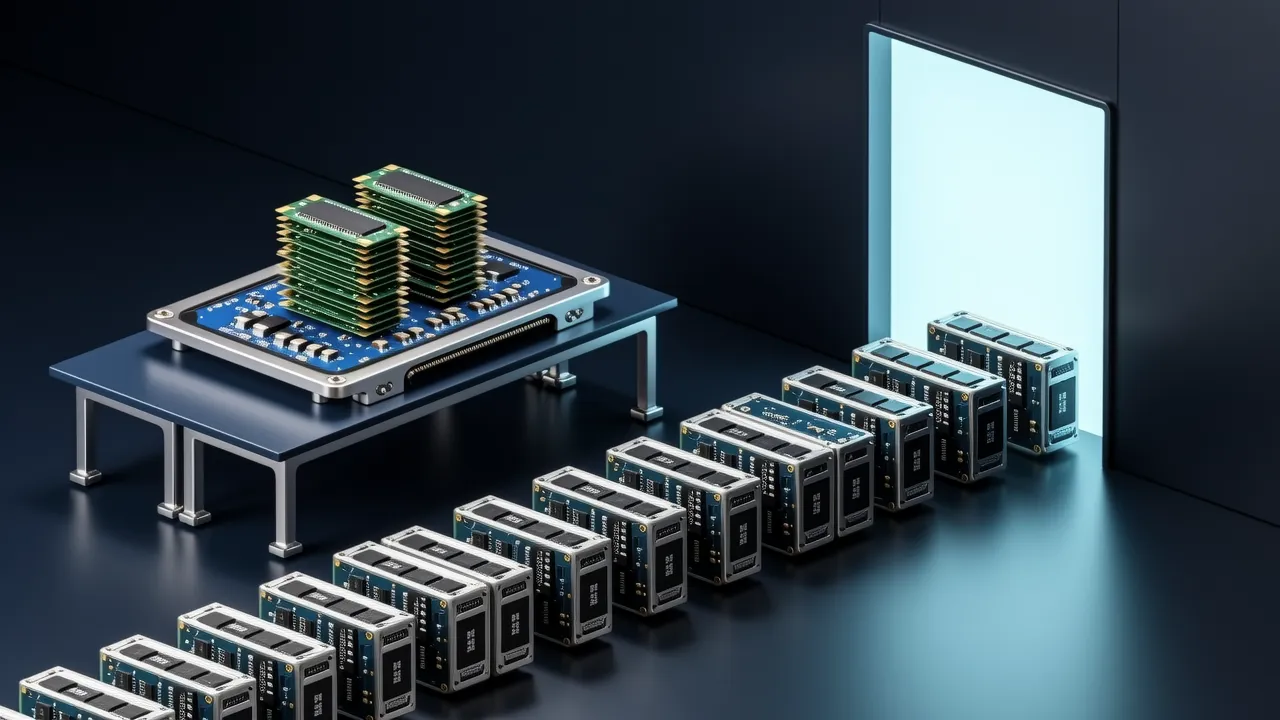
TSMC's CoWoS advanced packaging places logic dies and HBM stacks on a silicon interposer; capacity remains sold out, and TSMC is expanding in Tainan and Chiayi while developing panel-level CoPoS.
Cambricon's next flagship cloud training chip, the MLU 690, entered mass production in early 2026, pairing a dual-die package with more than 700 TFLOPS of FP16 compute and 196 GB of HBM3 memory.
Insilico Medicine listed on the Hong Kong Stock Exchange on 30 December 2025 under code 3696.HK, raising HKD 2.277 billion in what it called the largest Hong Kong biotech IPO of 2025 by funds raised.
On 1 December 2025 Hugging Face released Transformers v5.0.0rc0, the first major version since v4 in November 2020. The library grew from about 40 architectures to more than 400.
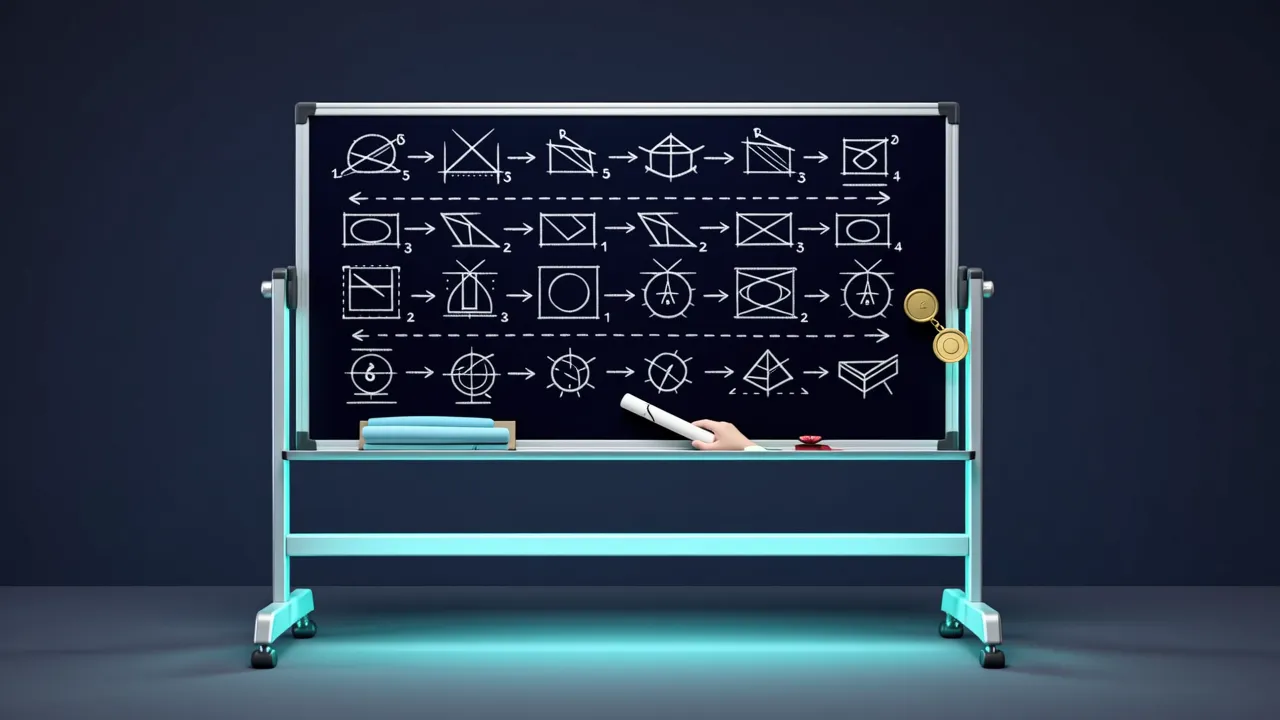
On 27 November 2025 DeepSeek released DeepSeekMath-V2, a model trained to check its own proofs. DeepSeek reported gold-level scores on IMO 2025 problems and 118 of 120 points on Putnam 2024, the latter with scaled test-time compute.
On 19 November 2025 Yann LeCun confirmed that he would leave Meta after ten years to found an AI startup focused on advanced machine intelligence. Meta was to be a partner of the new company.
On 6 November 2025 Mark Zuckerberg and Priscilla Chan announced a Biohub initiative pairing frontier AI with frontier biology; the EvolutionaryScale team joined it, and its chief scientist Alex Rives became Biohub's head of science.
At Huawei Connect 2025 in Shanghai, Huawei published its first three-year Ascend chip roadmap, running to 2028, alongside new Atlas SuperPoD systems and a pledge to open source CANN.
In September 2025 Alibaba's Qwen team released Qwen3-Next, an 80B-parameter open model with 3B parameters active per token, built on a hybrid of linear attention and sparse mixture-of-experts layers.
On 21 July 2025, Google DeepMind announced that an advanced Gemini model with Deep Think reached gold-medal standard at the 2025 International Mathematical Olympiad, solving five of six problems for 35 of 42 points under officially certified grading.
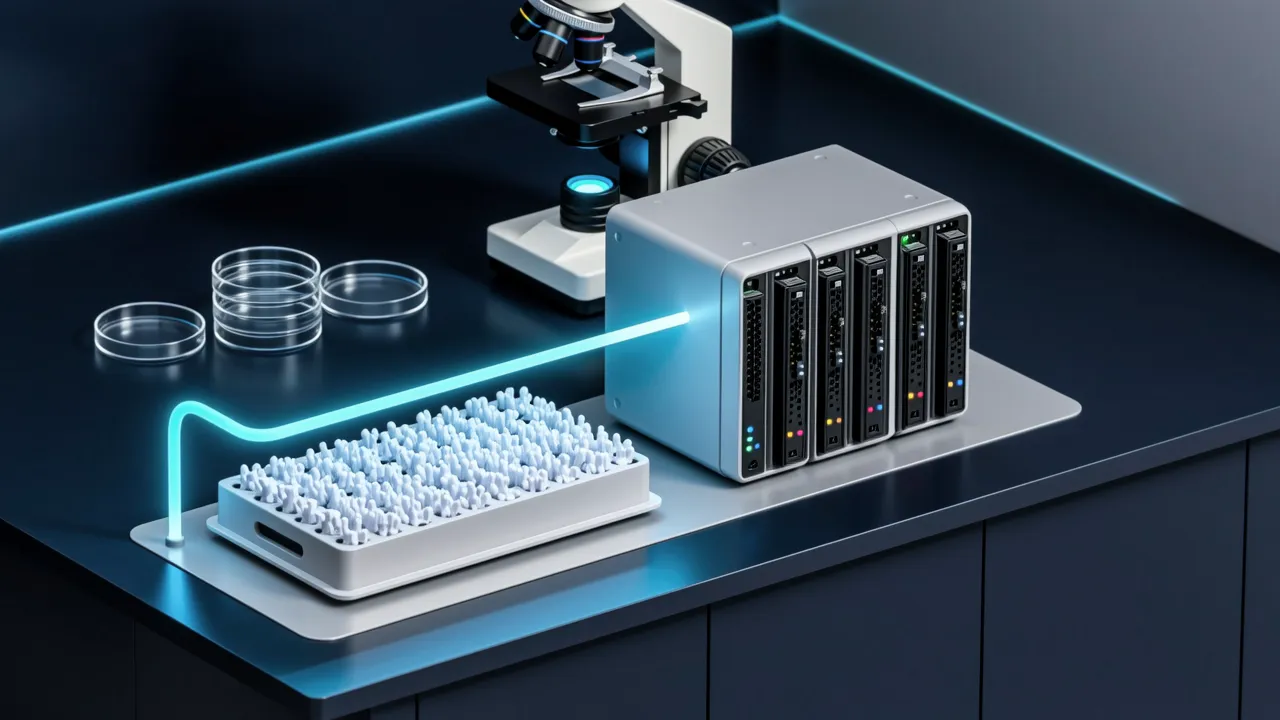
In June 2025 Nature Medicine published a phase 2a trial of rentosertib, a TNIK inhibitor for idiopathic pulmonary fibrosis that was discovered by an AI platform, together with early signs of a lung-function effect.
Aurora is a foundation model for the Earth system whose Nature paper, published on 21 May 2025 and promoted by Microsoft Research the same month, reports better than operational forecasts across four domains at far lower compute.
On 14 May 2025, Google DeepMind announced AlphaEvolve, a Gemini-powered coding agent that designs algorithms; it reported a better compute-scheduling heuristic, a faster 4×4 matrix multiplication method, and gains on open mathematical problems.
DeepSeek released DeepSeek-Prover-V2, an open-source model for theorem proving in Lean 4, with its paper posted to arXiv on 30 April 2025. It solved 49 of the 658 PutnamBench problems.