Ai2 introduces Olmo Hybrid
On 5 March 2026 Ai2 released Olmo Hybrid, a fully open 7B model that stacks Gated DeltaNet linear-RNN layers with attention layers in a 3:1 ratio and reaches Olmo 3's MMLU accuracy with 49% fewer training tokens.
Total 94 · Clear filters
On 5 March 2026 Ai2 released Olmo Hybrid, a fully open 7B model that stacks Gated DeltaNet linear-RNN layers with attention layers in a 3:1 ratio and reaches Olmo 3's MMLU accuracy with 49% fewer training tokens.
On 10 February 2026 Runway announced a $315 million Series E at a $5.3 billion valuation, nearly double its previous valuation, and said the money would fund pre-training of next-generation world models.
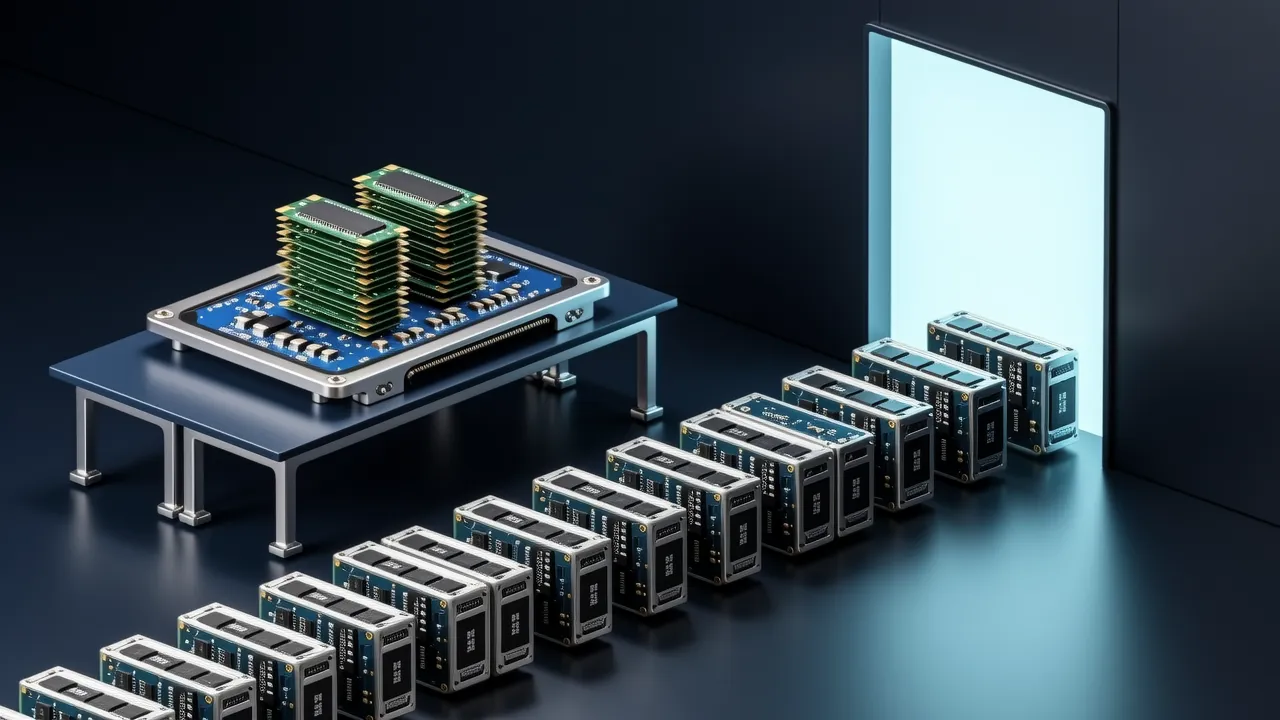
TSMC's CoWoS advanced packaging places logic dies and HBM stacks on a silicon interposer; capacity remains sold out, and TSMC is expanding in Tainan and Chiayi while developing panel-level CoPoS.
Cambricon's next flagship cloud training chip, the MLU 690, entered mass production in early 2026, pairing a dual-die package with more than 700 TFLOPS of FP16 compute and 196 GB of HBM3 memory.
On 11 December 2025, Runway announced GWM-1, a general world model that simulates environments in real time, released in Worlds, Avatars and Robotics variants and built on the company's Gen-4.5 model.
On 1 December 2025 Hugging Face released Transformers v5.0.0rc0, the first major version since v4 in November 2020. The library grew from about 40 architectures to more than 400.
On 19 November 2025 Yann LeCun confirmed that he would leave Meta after ten years to found an AI startup focused on advanced machine intelligence. Meta was to be a partner of the new company.
At Huawei Connect 2025 in Shanghai, Huawei published its first three-year Ascend chip roadmap, running to 2028, alongside new Atlas SuperPoD systems and a pledge to open source CANN.
In September 2025 Alibaba's Qwen team released Qwen3-Next, an 80B-parameter open model with 3B parameters active per token, built on a hybrid of linear attention and sparse mixture-of-experts layers.
On 5 August 2025 Google DeepMind announced Genie 3, a world model that turns text into navigable environments generated in real time at 24 frames per second and 720p, released as a limited research preview.
On 26 July 2025 Tencent open-sourced HunyuanWorld 1.0, a model that builds explorable 3D worlds from text or images, with a technical report.
Aurora is a foundation model for the Earth system whose Nature paper, published on 21 May 2025 and promoted by Microsoft Research the same month, reports better than operational forecasts across four domains at far lower compute.
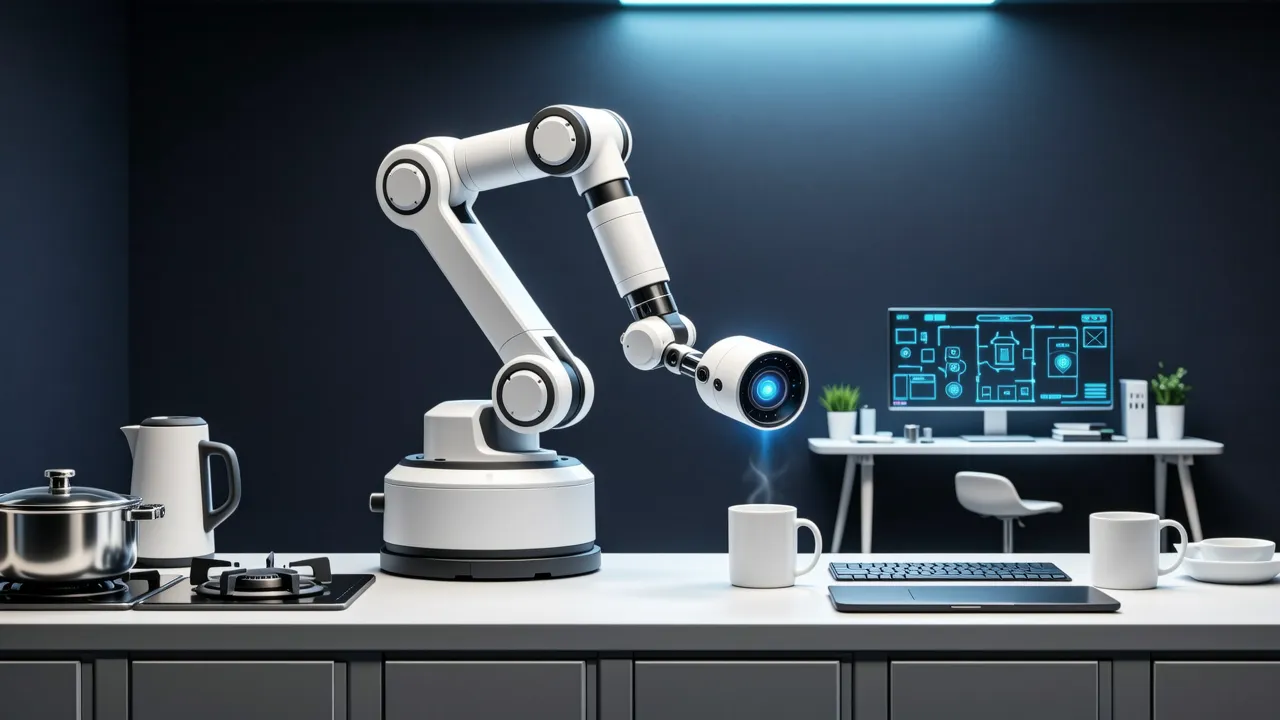
Physical Intelligence released π0.5 on 22 April 2025, a vision-language-action model built on its earlier π0 that the company says can carry out household tasks in homes it never saw during training.
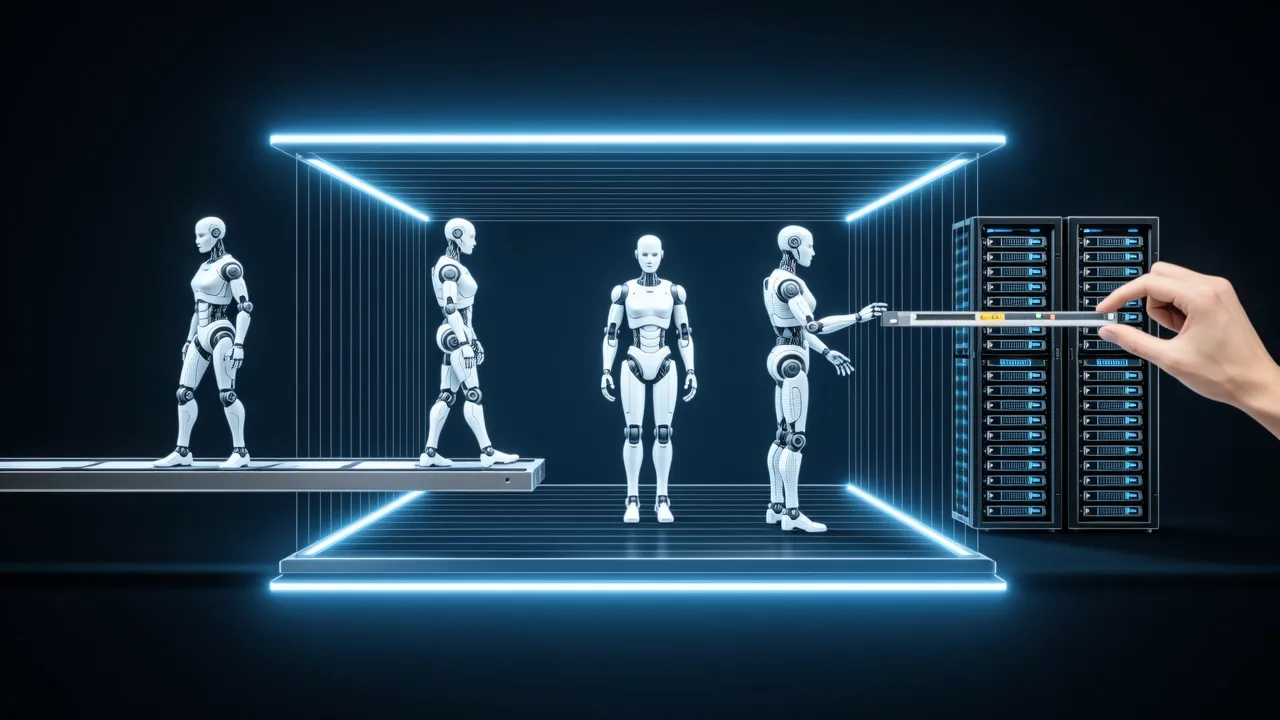
On 18 March 2025 NVIDIA announced Isaac GR00T N1, a humanoid robot foundation model released immediately to robotics developers as the first of a family of customizable pretrained models, alongside open simulation tools.
On 6 January 2025, at CES, NVIDIA launched Cosmos, a platform of open world foundation models for physical AI used to train robots and autonomous vehicles.
Shun-ichi Amari, a mathematical engineer at Teikyo University and honorary science advisor at RIKEN, received the 2025 Kyoto Prize in Advanced Technology, Information Science for laying theoretical foundations of artificial intelligence and establishing information geometry.
Genie 2 is a Google DeepMind world model, announced on 4 December 2024, that turns a single image into a playable, action-controllable 3D world that people or AI agents can explore with a keyboard and mouse.
The 2024 Nobel Prize in Chemistry went to David Baker for computational protein design and, jointly, to Demis Hassabis and John Jumper of Google DeepMind for AI-based protein structure prediction. The Academy said their work solved a 50-year-old problem.
On 8 October 2024 the Nobel Prize in Physics went to John J. Hopfield and Geoffrey Hinton for foundational work on artificial neural networks, the systems behind much of modern machine learning.
On 8 May 2024, Google DeepMind and Isomorphic Labs announced AlphaFold 3, a model that predicts the structures and interactions of proteins, DNA, RNA and ligands, and that Google reported as the first AI system to outperform physics-based tools for biomolecular structure prediction.
In March 2024 NVIDIA announced Project GR00T, a general-purpose foundation model for humanoid robots. A year later it released Isaac GR00T N1, which it presented as a fully customizable humanoid model.