OpenAI releases GPT-5.1-Codex-Max
On 19 November 2025 OpenAI released GPT-5.1-Codex-Max, an agentic coding model added to its Codex agent, and alongside it GPT-5.1 Pro, which replaced GPT-5 Pro.
Total 178 · Clear filters
On 19 November 2025 OpenAI released GPT-5.1-Codex-Max, an agentic coding model added to its Codex agent, and alongside it GPT-5.1 Pro, which replaced GPT-5 Pro.
On 19 November 2025 Yann LeCun confirmed that he would leave Meta after ten years to found an AI startup focused on advanced machine intelligence. Meta was to be a partner of the new company.
On 18 November 2025 Google released Antigravity, a free public preview agentic development platform for macOS, Windows and Linux, in which agents work across the editor, terminal and browser.
On 20 October 2025 Anthropic launched Claude Code on the web, a research preview that lets developers hand coding tasks from a browser to Claude, running on Anthropic-managed cloud infrastructure.
On 15 October 2025 Anthropic released Claude Haiku 4.5 to all users. It cost $1 and $5 per million tokens and matched Sonnet 4's coding performance at one-third the cost.
In late October 2025 MiniMax released MiniMax-M2, a 230-billion-parameter mixture-of-experts model built for coding and AI agents. It scored 61 on the Artificial Analysis Intelligence Index, which MiniMax said ranked first among open-source models.
On 29 September 2025 Anthropic released Claude Sonnet 4.5 at the same price as Sonnet 4, alongside the Claude Agent SDK, the toolkit behind Claude Code offered to other developers.
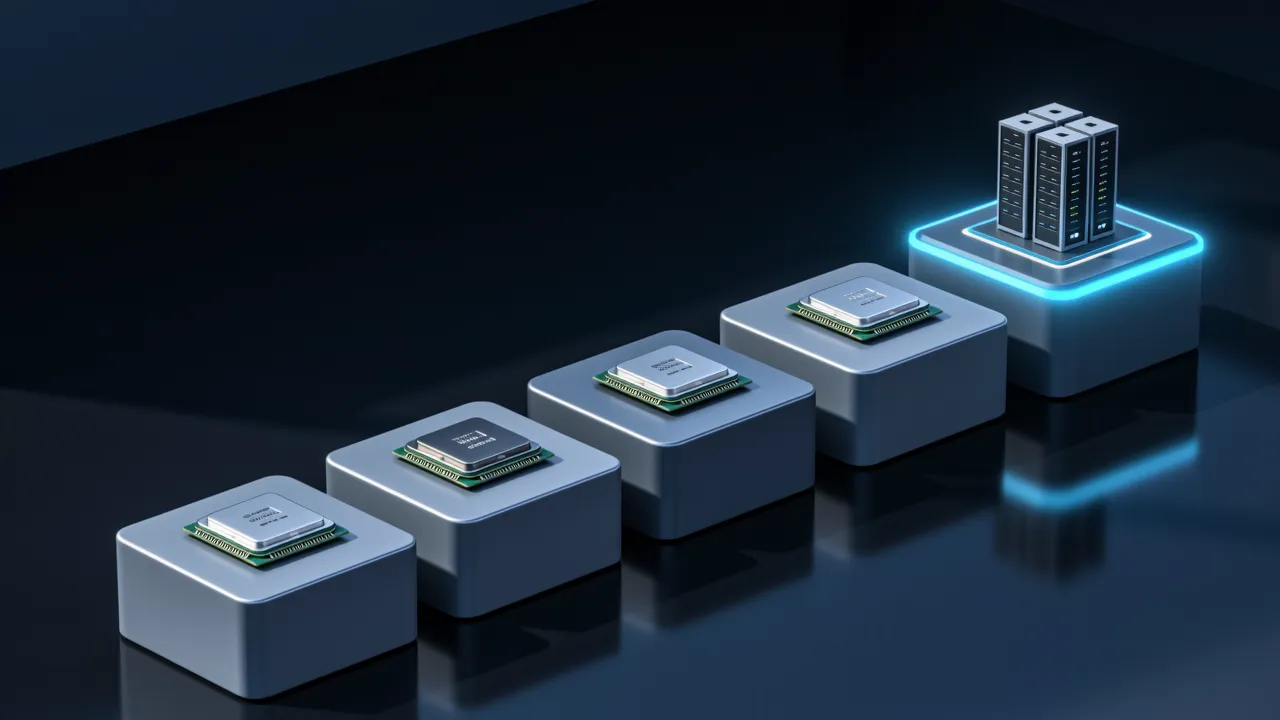
At Huawei Connect 2025 in Shanghai, Huawei published its first three-year Ascend chip roadmap, running to 2028, alongside new Atlas SuperPoD systems and a pledge to open source CANN.
On 15 September 2025 OpenAI released GPT-5-Codex, a version of GPT-5 tuned for agentic software engineering, as the default model for its Codex coding agent, with API access following later that month at GPT-5 prices.
Anthropic announced a $13 billion Series F on 2 September 2025 at a $183 billion post-money valuation, led by ICONIQ, as run-rate revenue passed $5 billion and Claude Code passed $500 million.
In late September 2025 Zhipu released GLM-4.6 under the MIT License, with a 200K-token context window, stronger coding and agent abilities, and support for Chinese domestic chips.
In September 2025 Alibaba's Qwen team released Qwen3-Next, an 80B-parameter open model with 3B parameters active per token, built on a hybrid of linear attention and sparse mixture-of-experts layers.
On 28 August 2025 xAI released Grok Code Fast 1, a fast reasoning model for agentic coding. It launched free for a limited time inside several popular coding tools.
On 5 August 2025 Google DeepMind announced Genie 3, a world model that turns text into navigable environments generated in real time at 24 frames per second and 720p, released as a limited research preview.
On 5 August 2025 Anthropic released Claude Opus 4.1, an upgrade to Opus 4 for agentic tasks, coding and reasoning, at unchanged pricing. Anthropic said larger improvements would follow.
On 26 July 2025 Tencent open-sourced HunyuanWorld 1.0, a model that builds explorable 3D worlds from text or images, with a technical report.
On 22 July 2025 Alibaba announced Qwen3-Coder-480B-A35B-Instruct and released Qwen Code, an open-source command-line agent adapted from Gemini CLI.
On 17 July 2025 TRAE announced SOLO, an autonomous coding mode that drafts a spec, then plans, builds and ships features. SOLO became generally available on 4 November 2025 with SOLO Coder and SOLO Builder.
In July 2025 OpenAI's $3 billion deal to acquire the AI coding startup Windsurf collapsed; the same day Google DeepMind hired Windsurf's CEO and top researchers, with Google paying $2.4 billion to license the startup's technology.
In July 2025 Moonshot AI released Kimi K2 as an open-weight mixture-of-experts model with 1 trillion total parameters and 32 billion active per token, under a modified MIT license.
On 25 June 2025 Google released Gemini CLI, an open-source agent for the terminal, with a free tier for personal Google accounts that Google described as the industry's largest allowance.