Agility Robotics to go public through a SPAC merger
Agility Robotics announced it will go public through a SPAC merger, raising $465 million as it works to commercialize Digit robots and launch the next-generation Digit 5.
Total 99 · Clear filters
Agility Robotics announced it will go public through a SPAC merger, raising $465 million as it works to commercialize Digit robots and launch the next-generation Digit 5.
The Agentic AI Foundation reported 305 member organisations in under a year, saying agents are moving from developer experiments to institutional infrastructure.
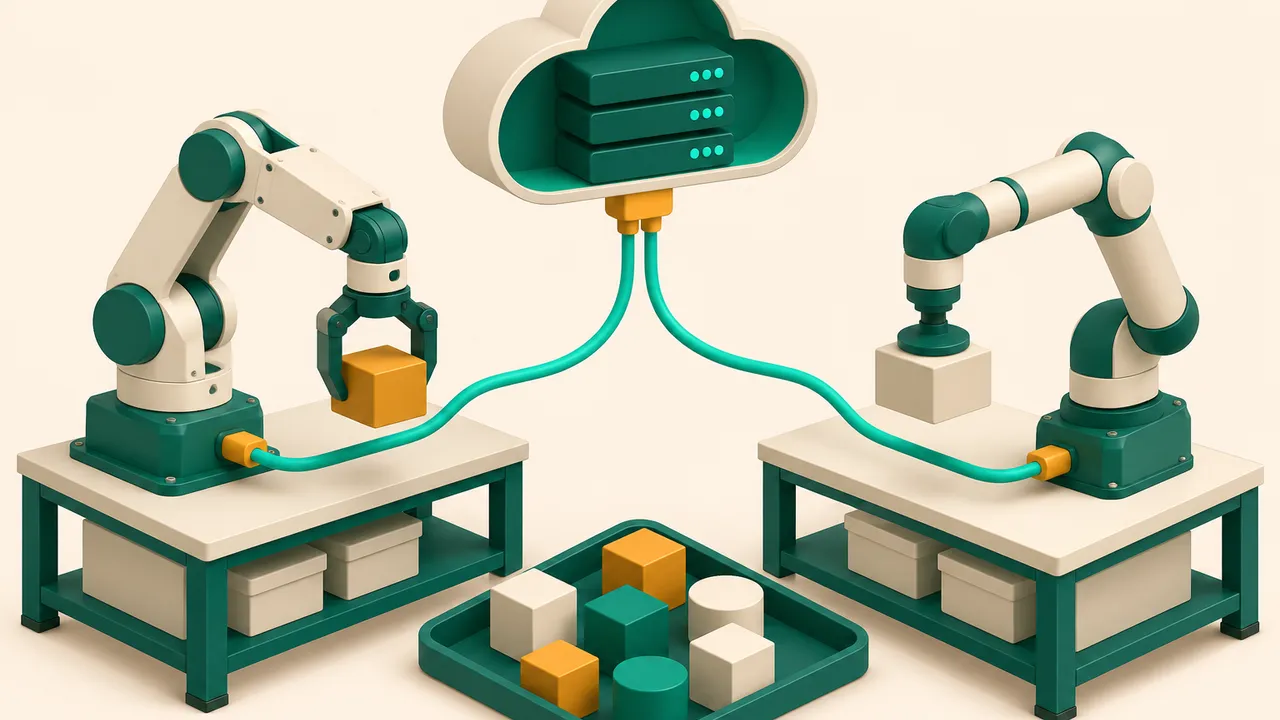
On 13 October 2026, Physical Intelligence opened a beta of the Pi API, a service that lets customers upload their own robot data, fine-tune the company's models and run cloud-hosted inference on their own machines.
Released on 7 October 2026, Claude Haiku 5.5 is the third model of the Claude 5.5 family. It is the first Haiku model with an adjustable effort setting, and its prices start at $0.10 per million input tokens.
Waymo said it will launch its autonomous ride service in Toronto, its first Canadian city, with the first passengers planned for 2028.
Released on 22 September 2026, Claude Opus 5.5 is the first model of the Claude 5.5 family. Anthropic said it matched Claude Fable 5.1 on most work, at a lower price.
IBM released the Granite 4.2 family on 25 August 2026, with native reasoning that streams inside think tags and can be switched between full, low-effort and non-thinking modes per query.
Unitree, the Hangzhou robot maker, listed on Shanghai's STAR Market on 19 August 2026 at 150.80 yuan per share, opening its first trading day 629.44% higher and valuing the company at 444.9 billion yuan.
On 9 July 2026 OpenAI released GPT-5.6, a three-model family named Sol, Terra and Luna, together with ChatGPT Work for enterprise teams, and merged its Codex app into the ChatGPT desktop app.
On 2 June 2026 Mustafa Suleyman announced seven new in-house MAI models at Microsoft Build, led by the reasoning model MAI-Thinking-1. The group also included coding, image, transcription and voice models, and a healthcare collaboration with Mayo Clinic.
On 20 May 2026 Cohere released Command A+ as an Apache 2.0 open model with 218 billion total parameters. It was aimed at sovereign and critical-infrastructure users.
On 5 May 2026 ElevenLabs said it had crossed $500 million in annual recurring revenue and closed a third tranche of its Series D, with BlackRock, NVIDIA's NVentures, Santander and others investing.
Shengshu Technology announced a Series B round of nearly 2 billion yuan led by Alibaba Cloud, money it says will go to foundation world models for both digital generation and physical action.
On 2 April 2026 Mustafa Suleyman announced three Microsoft AI models for developers: MAI-Transcribe-1, MAI-Voice-1 and MAI-Image-2. All three became available in Microsoft Foundry and the MAI Playground, with published model cards.
PixVerse closed a Series C led by CDH Investments on 12 March 2026, saying the round made it a global AI unicorn and was Asia's largest in AI video generation. It reported more than 100 million users.
Tencent launched WorkBuddy, a desktop AI agent for workplace tasks, on 9 March 2026. A global version followed in late May 2026.
On 5 March 2026 OpenAI released GPT-5.4 in Thinking and Pro versions, its first general-purpose model with native computer use; it scored 75% on OSWorld-Verified, above the 72.4% human average.
Apptronik reopened its Series A in February 2026, raising the round to $935 million at a reported $5.3 billion valuation, as the humanoid robot maker pushes Apollo into warehouse and industrial work.
Robert Playter announced on 10 February 2026 that he was stepping down as Boston Dynamics CEO after 30 years at the company; CFO Amanda McMaster took interim charge while a successor was sought.
On 29 January 2026 Alibaba's chip unit T-Head listed the Zhenwu 810E, formally revealing a PPU accelerator the company had kept under wraps and completing its combination of Qwen models, cloud and chips.
Skild AI, a maker of general-purpose robotic software, raised $1.4 billion in a Series C led by SoftBank, valuing the company at more than $14 billion.