Cohere raises $500 million at a $6.8 billion valuation
On 14 August 2025 Cohere announced a $500 million funding round at a $6.8 billion valuation, led by Radical Ventures and Inovia Capital. It also hired a chief AI officer and a CFO.
Total 1,098
On 14 August 2025 Cohere announced a $500 million funding round at a $6.8 billion valuation, led by Radical Ventures and Inovia Capital. It also hired a chief AI officer and a CFO.
On 12 August 2025 the AI startup Perplexity made a $34.5 billion all-cash bid to buy Google's Chrome browser, presenting the sale as a remedy for Google's antitrust litigation and pledging to keep Chromium open source.
GLM-4.5V is a vision-language model released by Zhipu on 11 August 2025, built on GLM-4.5-Air and published under the MIT License; Zhipu reported state-of-the-art results among similarly sized models on 42 vision-language benchmarks.
From 2025, the Yomiuri Shimbun, Encyclopædia Britannica, Reddit and others sued the AI answer engine Perplexity over how it uses their content, opening a multi-country test of copyright law.
On 7 August 2025 OpenAI introduced GPT-5, a unified system that routes each request between a fast model and a deeper reasoning model. It rolled out the same day to ChatGPT Free, Plus, Pro and Team users.
On 6 August 2025 Shanghai released its Embodied Intelligence Industry Development Implementation Plan, targeting 100 key enterprises, 100 major application scenarios, 100 leading products and a core industry scale above 50 billion yuan.
On 6 August 2025 Cohere made its agentic AI platform North widely available, aimed at taking over "boring" multistep work and built to run on-premises or in private and hybrid clouds for large organisations.
On 5 August 2025 Google DeepMind announced Genie 3, a world model that turns text into navigable environments generated in real time at 24 frames per second and 720p, released as a limited research preview.
On 5 August 2025 OpenAI released gpt-oss-120b and gpt-oss-20b, two open-weight reasoning models under the Apache 2.0 license, sized to run on a single GPU or a 16 GB device.
On 5 August 2025 Anthropic released Claude Opus 4.1, an upgrade to Opus 4 for agentic tasks, coding and reasoning, at unchanged pricing. Anthropic said larger improvements would follow.
On 4 August 2025 the Qwen team released Qwen-Image, a 20-billion-parameter image generation model with open weights under Apache 2.0, noted for rendering text inside images, especially Chinese.
In August 2025 Baidu said Apollo Go would partner with Lyft to deploy fully autonomous vehicles in key European markets, starting with Germany and the UK and scaling to thousands of cars.
In August 2025 Baichuan open-sourced Baichuan-M2-32B, its second medical-enhanced model, which it called the world's strongest open-source medical model.
On 31 July 2025 Cohere released Command A Vision, a 112-billion-parameter vision-language model built on Command A. Its open weights were posted under a non-commercial licence.
On 29 July 2025 the Linux Foundation welcomed AGNTCY, an open project for interoperable AI agents, with Cisco, Dell Technologies, Google Cloud, Oracle and Red Hat as formative members.
On 28 July 2025 Alibaba released Wan2.2, a video generation model family, as open code and weights under Apache 2.0. Its A14B models brought a mixture-of-experts design to video diffusion.
On 26 July 2025 Tencent open-sourced HunyuanWorld 1.0, a model that builds explorable 3D worlds from text or images, with a technical report.
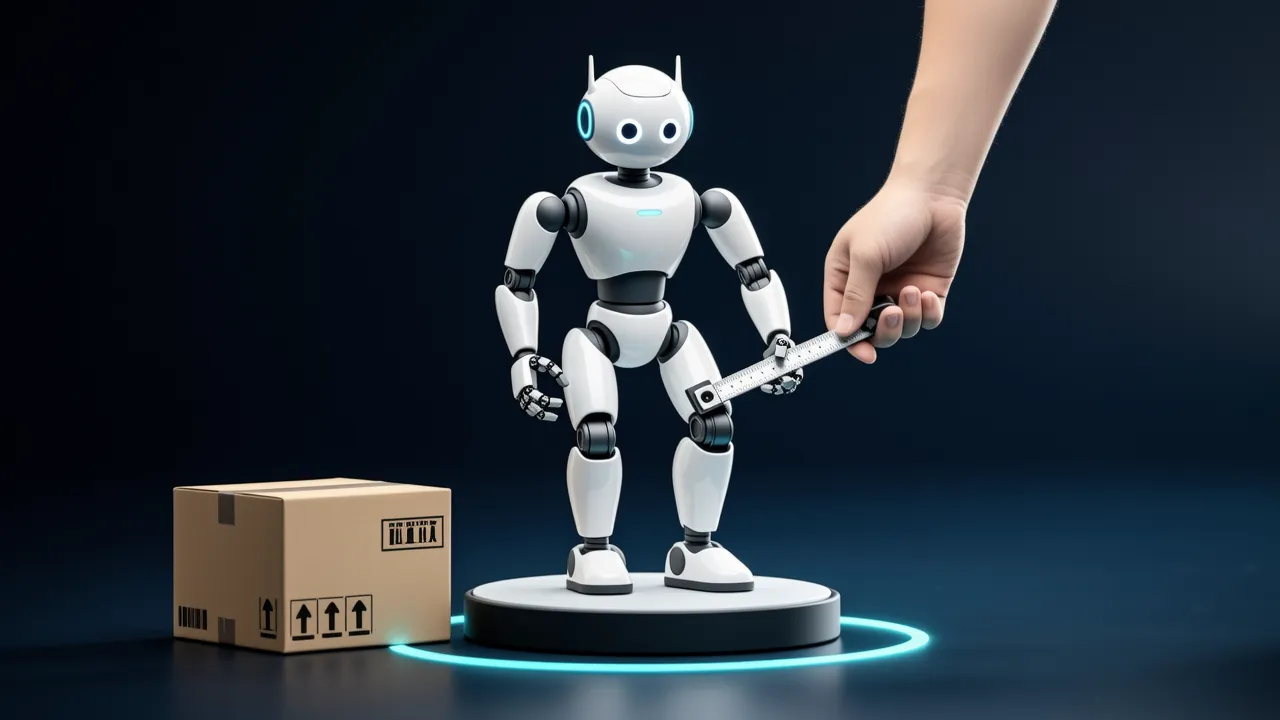
On 25 July 2025 Unitree released the R1, a roughly 25 kg humanoid robot with 26 joints, priced from 39,900 yuan — well below the 150,000 to 200,000 yuan prices then common for humanoid robots.
In July 2025, during WAIC, StepFun released the open Step 3 multimodal reasoning model and formed a Model-Chip Ecosystem Innovation Alliance with Huawei, Biren, Moore Threads and Enflame.
Runway released Aleph, an in-context video model that edits footage already shot: it adds, removes and transforms objects, generates new camera angles and changes style or lighting, and is available on all paid plans.
In July 2025 Meta shut down Papers with Code without notice, taking its 9,327 benchmark leaderboards and tens of thousands of paper-code links offline; the community rescued data snapshots, and Hugging Face's Trending Papers was named the replacement.