NVIDIA announces Project GR00T
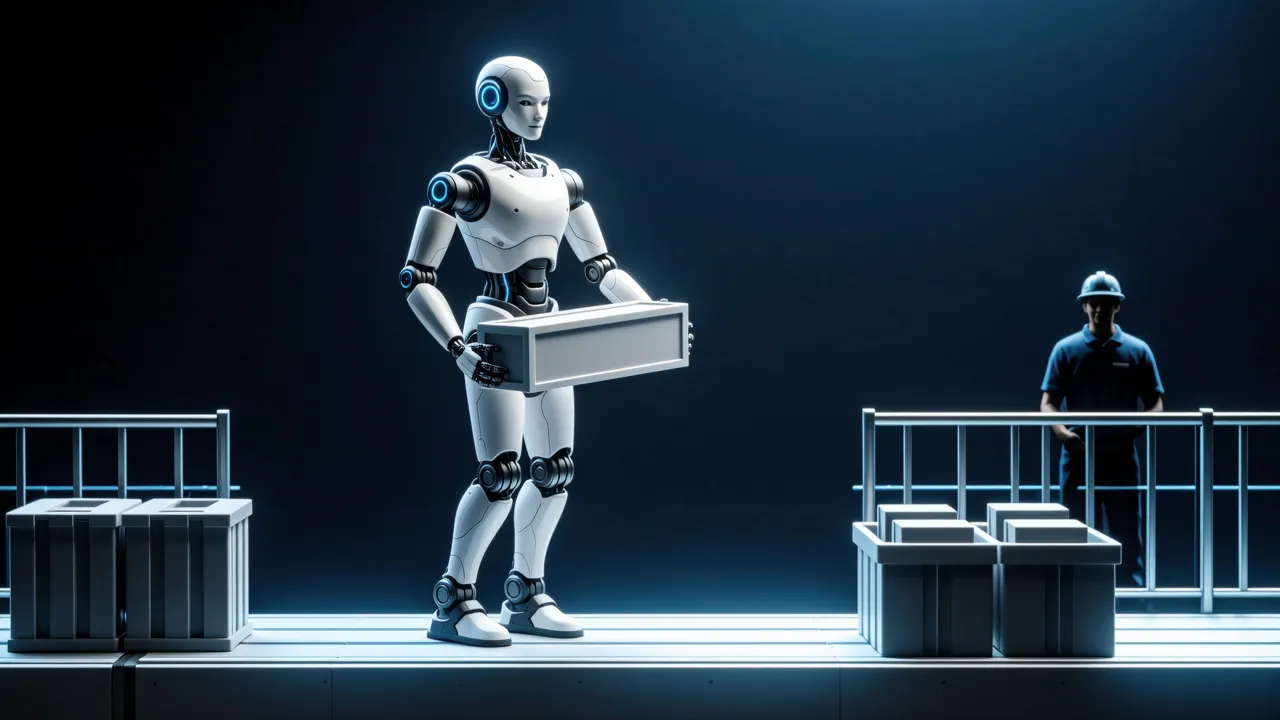
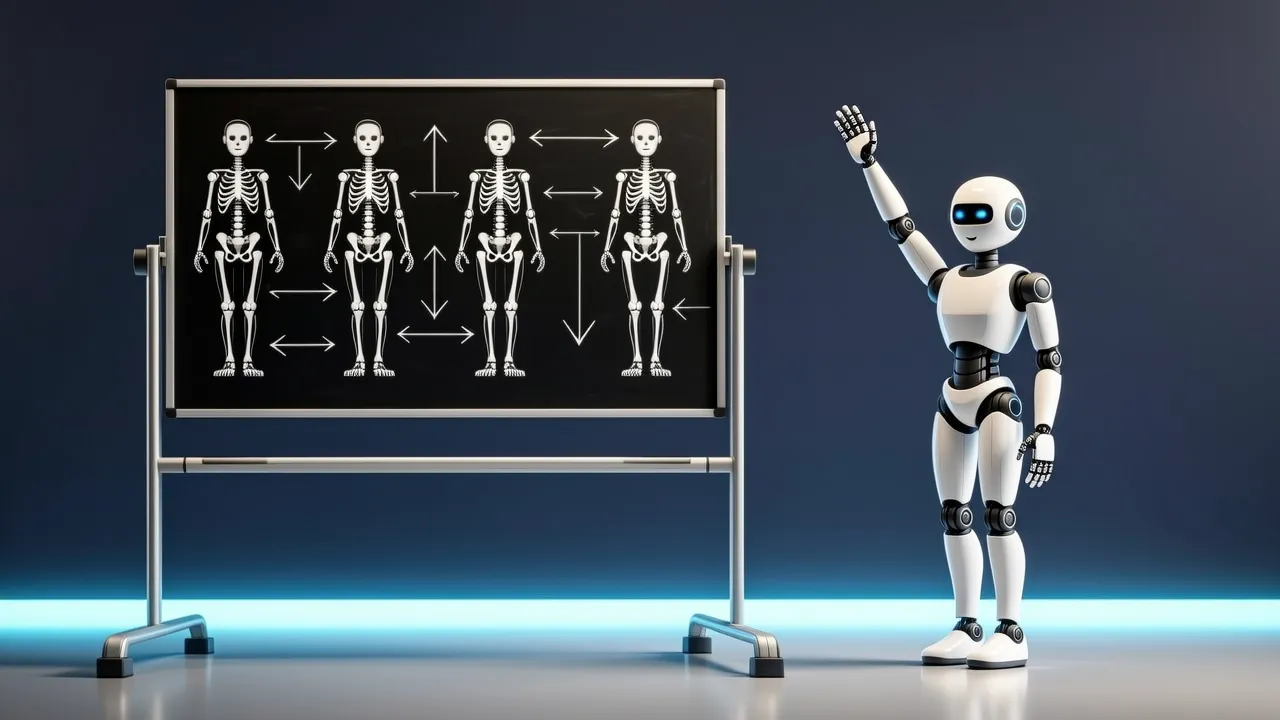
In March 2024 NVIDIA announced Project GR00T, a general-purpose foundation model for humanoid robots. A year later it released Isaac GR00T N1, which it presented as a fully customizable humanoid model.
Total 1,098
In March 2024 NVIDIA announced Project GR00T, a general-purpose foundation model for humanoid robots. A year later it released Isaac GR00T N1, which it presented as a fully customizable humanoid model.
On 17 March 2024 xAI released the base weights and architecture of Grok-1, a 314-billion-parameter mixture-of-experts model, under the Apache 2.0 license.
On 15 March 2024 Apptronik announced a pilot with Mercedes-Benz to test Apollo humanoid robots in its manufacturing facilities — Apptronik's first publicly announced commercial deployment of Apollo.
The European Parliament approved the AI Act on 13 March 2024 and the Council of the EU formally adopted it on 21 May 2024; the Council described the act as the first worldwide rules on AI.
On 13 March 2024 Anthropic made Claude 3 Haiku available, calling it the fastest and most affordable model in its intelligence class. It was priced at a one-to-five input-to-output ratio and accepted image input.
On 11 March 2024 Cohere released Command R, a 35-billion-parameter model built for retrieval-augmented generation and tool use. Its weights were released for research use on Hugging Face.
In March 2024 Talen Energy sold its Cumulus data center campus beside the Susquehanna nuclear plant to Amazon Web Services for $650 million, with 960 MW of plant output going to AWS; a 2025 deal expanded it to 1,920 MW through 2042.
On 4 March 2024 Anthropic announced the Claude 3 family: Haiku, Sonnet and Opus, in ascending order of capability. All three added vision and launched with a 200K-token context window.
In March 2024 Moonshot AI opened a closed beta of its Kimi assistant with a 2 million Chinese character context window, roughly ten times what the chatbot handled at launch, and gave it to invited users first.
In March 2024 Microsoft hired nearly all of Inflection AI's staff, including co-founders Mustafa Suleyman and Karén Simonyan, and paid $650 million to license its technology — a deal the UK competition authority later examined as a merger.
On 29 February 2024, humanoid robot maker Figure announced a US$675 million Series B at a US$2.6 billion valuation and a collaboration with OpenAI to develop AI models for its robots.
On 28 February 2024 BigCode and NVIDIA released StarCoder2 in 3B, 7B and 15B sizes. The new training set, The Stack v2, is 67.5 TB and is built from the Software Heritage archive.
On 26 February 2024, Mistral AI's API changelog announced Le Chat, a beta chat interface for talking to its models directly, released alongside the Mistral Large and Mistral Small models and new function calling and JSON mode features.
On 26 February 2024 Mistral AI released Mistral Large and Mistral Small, and announced a multi-year partnership with Microsoft that made Mistral Large available first on Azure AI. Le Chat, its assistant, launched in beta the same day.
On 22 February 2024 Google paused Gemini's generation of images of people after users shared historically inaccurate pictures; Google blamed diversity tuning applied where no range was appropriate, and over-cautious refusals.
On 22 February 2024 Stability AI announced an early preview of Stable Diffusion 3, a text-to-image suite from 800M to 8B parameters that combines a diffusion transformer with flow matching.
On 21 February 2024 Google released Gemma, a family of open models in 2B and 7B sizes, with pre-trained and instruction-tuned versions, weights distributed through Kaggle and Hugging Face and terms permitting commercial use by organisations of any size.
Announced on 15 February 2024, Gemini 1.5 Pro was a mixture-of-experts model offering a 128,000-token context window by default and up to 1 million tokens in private preview — far more material taken in at once.
On 15 February 2024 OpenAI previewed Sora, a text-to-video model that it said could generate clips up to one minute long; the model reached ChatGPT Plus and Pro users in the US and Canada on 9 December 2024.
In 2024 a Canadian tribunal held Air Canada responsible for wrong bereavement-fare advice given by the chatbot on its website, rejecting the airline's claim that the chatbot was a separate legal entity.
In 2024 OpenAI gave ChatGPT a memory, letting it carry information about a user from one conversation to the next, with switches to turn the feature off and a temporary chat mode that leaves no memory.