Fal doubles its valuation to $16B on $1.3B round
Fal, a startup that hosts and runs AI video, image and audio models, raised $1.3 billion at a $16 billion valuation, double its valuation from earlier in the year.
Total 149 · Clear filters
Fal, a startup that hosts and runs AI video, image and audio models, raised $1.3 billion at a $16 billion valuation, double its valuation from earlier in the year.
On 28 October 2026 Nvidia released Nemotron 3.5 Transcribe, an open-weight, free speech recognition model covering up to 40 languages, alongside the second version of its Granary speech dataset.
On 29 September 2026 OpenAI released GPT-6.1 Sol at its DevDay developer event, saying it nearly matched GPT-6 Astra at lower cost. A planned Astra release was withheld over safety results, and GPT-6.1 Terra followed in October.
On 22 September 2026 PixVerse announced R2, a scaling release of its real-time world model that adds more data, tasks and input types at the same latency, and showed it running playable, prompt-editable worlds.
Character.ai's CAI-Image family consists of image models post-trained from open-source Qwen-Image and tuned for character-driven storytelling, so the same character stays recognisable across styles, scenes and pages. The company announced the models on 16 September 2026.
On 3 September 2026 Nvidia agreed to acquire Hugging Face for $12.93 billion. Hugging Face said it would remain an open platform, and the deal was expected to close in the first half of 2027 pending regulatory approval.
On 20 August 2026 SenseTime released SenseNova U1.5-8B-MoT, an open-weight model that generates images natively up to 4096x4096 pixels, after a preview in July.
On 13 August 2026 DeepSeek launched the general-availability version of DeepSeek-V4-Pro, with agent upgrades, adjustable reasoning effort, OpenAI Responses API support and peak and off-peak API pricing.
Lovable raised a $400M Series C on 12 August 2026 at a $13.3B valuation, led by Menlo Ventures, after users created more than 60 million projects on the platform since its November 2024 launch.
On 28 July 2026 the Model Context Protocol project published a specification built on a stateless core, turning MCP into a request/response protocol whose requests any instance behind a plain round-robin load balancer can serve.
On 21 July 2026 Google announced three Gemini models at once: Gemini 3.6 Flash, a cheaper and faster 3.5 Flash-Lite, and 3.5 Flash Cyber, a security-focused variant limited to governments and trusted partners.
On 16 July 2026 xAI released Grok 4.5, co-trained with Cursor, and made it the default model in Grok Build. xAI also published its coding benchmark results.
On 9 July 2026 Meta released Muse Spark 1.1, an upgrade built for agentic tasks, with a 1-million-token context and access for developers through the Meta Model API in public preview.
On 7 July 2026 Meta Superintelligence Labs introduced Muse Image and Muse Video, its first media generation models. Muse Image launched in Meta's apps, while Muse Video entered early preview.
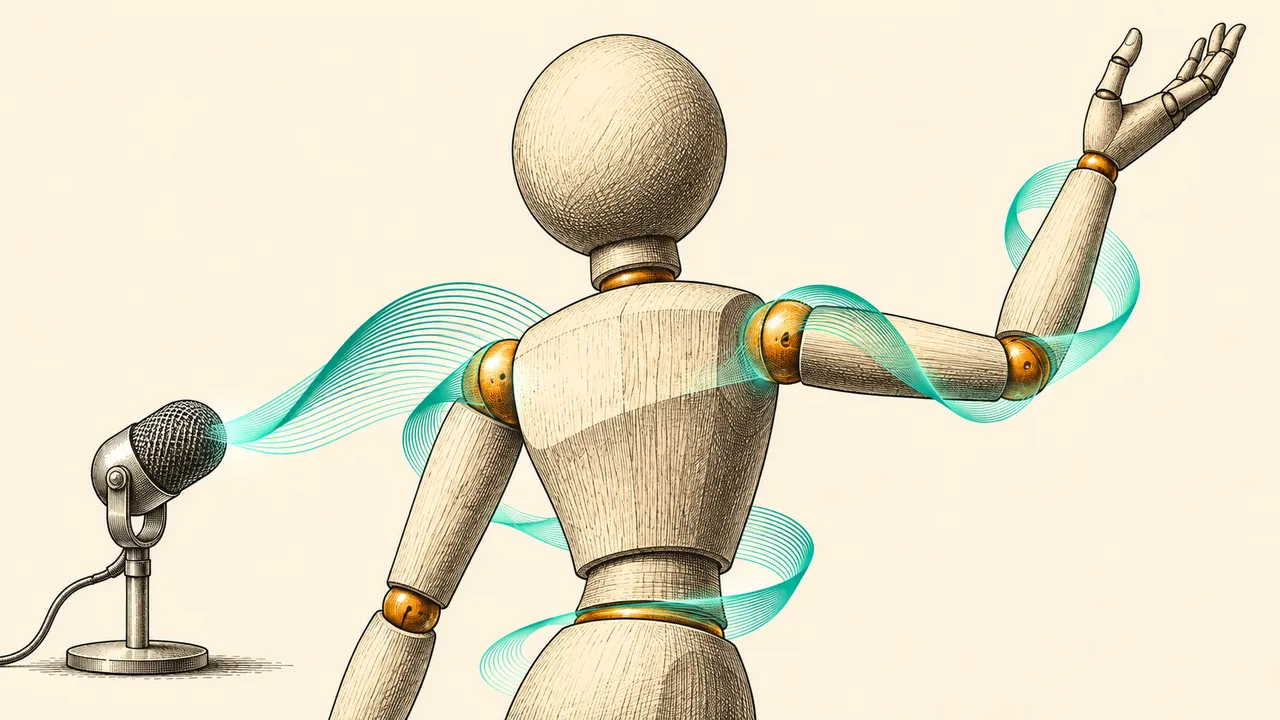
On 3 July 2026 Shengshu released Vidu S1, a real-time interactive video generation model that takes voice input during a video call and changes a character's expression, gestures and body movement in response.
On 9 June 2026 TRAE renamed its standalone SOLO agent as TRAE Work, an AI workspace for product managers, analysts, marketers and others. TRAE IDE stayed as the product for developers.
On 21 April 2026 OpenAI released gpt-image-2, an image model that generates and edits pictures from text and image inputs and appears in ChatGPT as ChatGPT Images 2.0. It replaced the GPT Image 1 line and was later revised as versions 2.5 and 2.6.
Midjourney released the V8 alpha on 17 March 2026, generating images about five times faster, with a native 2K --hd mode, improved text rendering, new prompt parameters and a Grid Mode interface. Point releases followed later that year.
PixVerse closed a Series C led by CDH Investments on 12 March 2026, saying the round made it a global AI unicorn and was Asia's largest in AI video generation. It reported more than 100 million users.
On 20 February 2026, ggml.ai — the founding team of llama.cpp — joined Hugging Face, which is to provide long-term resources while ggml and llama.cpp stay 100% open source and community-run.
On 5 February 2026 OpenAI released GPT-5.3-Codex for its Codex coding agent, describing it as the most capable agentic coding model to date and saying it had helped build itself. A faster research preview, GPT-5.3-Codex-Spark, followed a week later.