Google releases Gemini 3.8 Flash and 3.8 Flash Cyber
On 2 September 2026 Google released Gemini 3.8 Flash and Gemini 3.8 Flash Cyber, a security-focused variant limited to vetted defenders, three weeks after Gemini 3.7 Flash.
Total 351 · Clear filters
On 2 September 2026 Google released Gemini 3.8 Flash and Gemini 3.8 Flash Cyber, a security-focused variant limited to vetted defenders, three weeks after Gemini 3.7 Flash.
On 1 September 2026, Manus announced that it had formally resumed independent operations, with its founding team continuing to lead the company as an independent agent lab advancing general AI agents.
Zhipu released GLM-5.3 on 14 August 2026, a post-training upgrade built on the same base model as GLM-5.2, with large gains on coding and cybersecurity benchmarks; NIST's CAISI later called it the most advanced open-weight model in cybersecurity.
On 12 August 2026 xAI released Grok 4.6, a month after Grok 4.5, aimed at long-running agents. Pricing stayed the same, and the model launched across Cursor, Grok Build and the API.
On 11 August 2026 Manus published a note saying it would soon operate as an independent company again, setting out when some users' data would be deleted and when access would return.
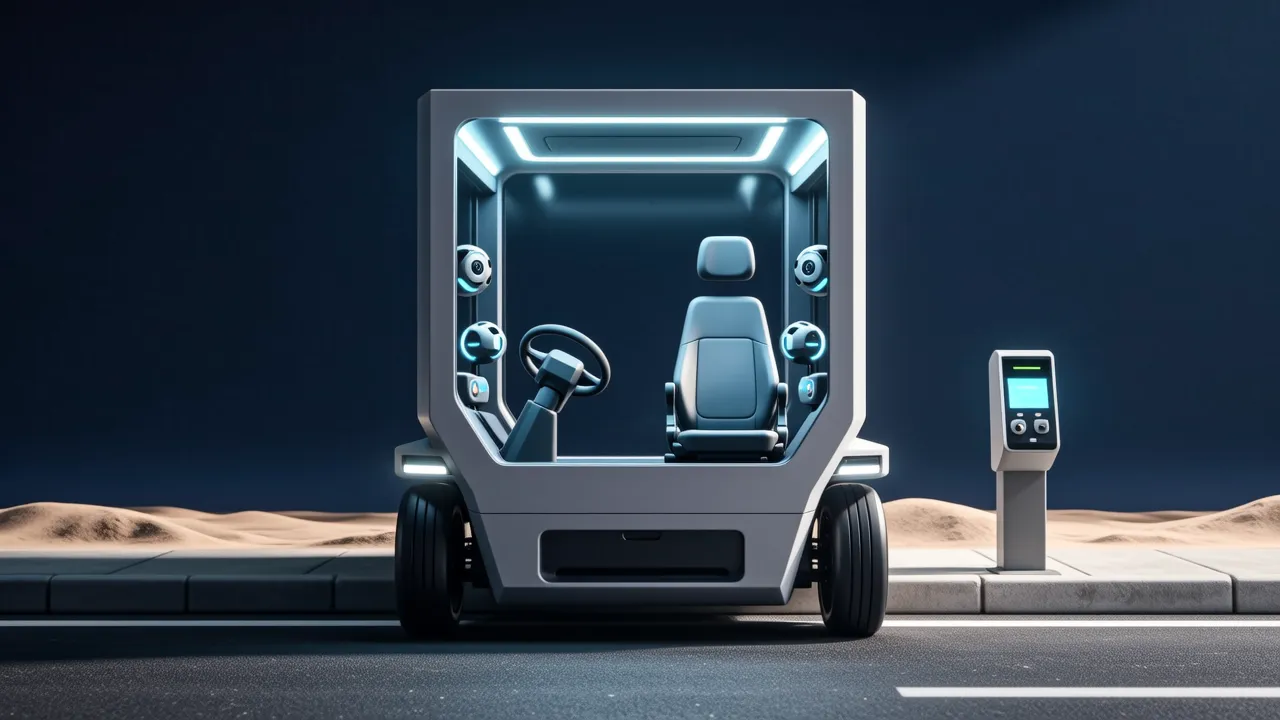
Zoox received the first commercial exemption NHTSA has ever granted for a purpose-built robotaxi, letting the company charge fares for driverless rides and start collecting them in Las Vegas.
On 30 July 2026 Moonshot AI closed a round at a US$35 billion valuation, raising about US$3.5 billion two weeks after releasing Kimi K3 — the latest step in a climb from a US$3.8 billion pre-money valuation in October 2025.
On 28 July 2026 the Model Context Protocol project published a specification built on a stateless core, turning MCP into a request/response protocol whose requests any instance behind a plain round-robin load balancer can serve.
On 24 July 2026 Anthropic released Claude Opus 5 at $5 and $25 per million tokens. Anthropic said it came close to Claude Fable 5's frontier intelligence at half the price.
On 16 July 2026 xAI released Grok 4.5, co-trained with Cursor, and made it the default model in Grok Build. xAI also published its coding benchmark results.
On 9 July 2026 Meta released Muse Spark 1.1, an upgrade built for agentic tasks, with a 1-million-token context and access for developers through the Meta Model API in public preview.
On 8 July 2026 OpenAI launched GPT-Live, a generation of full-duplex voice models for ChatGPT that can listen and speak at the same time; the smaller model became ChatGPT's default voice model.
On 30 June 2026 Anthropic released Claude Sonnet 5, its most agentic Sonnet model, at an introductory $2 and $10 per million tokens. On 10 August that price became permanent.
On 29 June 2026 the Council of the EU gave final approval to a regulation streamlining the bloc's AI rules, carried in the Omnibus VII package; the amendments entered into force on 27 July 2026.
On 23 June 2026 ByteDance Seed announced Seed2.1 for Doubao and Volcano Engine users. It has Pro and Turbo models for productivity work and builds on Seed2.0.
On 8 June 2026, at WWDC, Apple introduced AFM 3, its third generation of foundation models, and Siri AI, a more personal assistant for iOS 27. Developer testing began the same day, and the launch was limited in the EU and China.
On 2 June 2026 Mustafa Suleyman announced seven new in-house MAI models at Microsoft Build, led by the reasoning model MAI-Thinking-1. The group also included coding, image, transcription and voice models, and a healthcare collaboration with Mayo Clinic.
On 28 May 2026 Anthropic released Claude Opus 4.8, a modest improvement on Opus 4.7 at the same price. Fast mode became three times cheaper, and Claude Code gained dynamic workflows that run hundreds of parallel subagents.
On 28 May 2026 Mistral merged Le Chat into Vibe: one agent and one licence spanning work and code, adding Work Mode and sandboxed Code Mode, four tiers, and the retirement of the old Chat mode.
At I/O on 19 May 2026 Google announced the Gemini 3.5 family, led by Gemini 3.5 Flash, made it the default in the Gemini app and Search's AI Mode, and introduced Gemini Spark and Antigravity 2.0.
At Google I/O on 19 May 2026, Google introduced Gemini Spark, a personal AI agent built on Gemini 3.5 Flash that runs around the clock and acts on the user's behalf under their direction. It launched first with trusted testers and US Google AI Ultra subscribers.