Thinking Machines Lab releases Inkling, an open-weight 975B model
On 15 July 2026 Thinking Machines Lab released Inkling, an open-weight mixture-of-experts model with 975 billion total parameters. A smaller version followed on 31 July 2026.
Total 1,098
On 15 July 2026 Thinking Machines Lab released Inkling, an open-weight mixture-of-experts model with 975 billion total parameters. A smaller version followed on 31 July 2026.
On 9 July 2026 OpenAI released GPT-5.6, a three-model family named Sol, Terra and Luna, together with ChatGPT Work for enterprise teams, and merged its Codex app into the ChatGPT desktop app.
On 9 July 2026 Meta released Muse Spark 1.1, an upgrade built for agentic tasks, with a 1-million-token context and access for developers through the Meta Model API in public preview.
Momenta began trading on the Hong Kong Stock Exchange's main board on 8 July 2026, opening more than 6 percent above its issue price and passing a market value of 70 billion Hong Kong dollars on its first day.
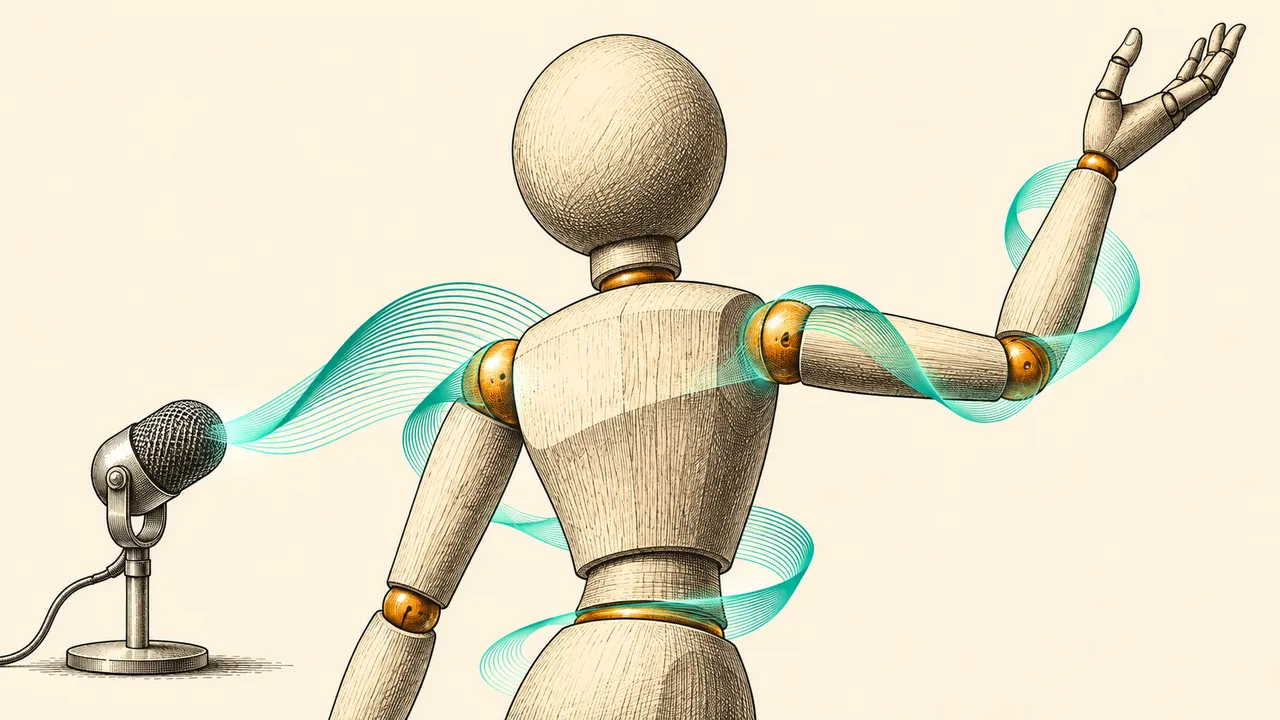
On 8 July 2026 OpenAI launched GPT-Live, a generation of full-duplex voice models for ChatGPT that can listen and speak at the same time; the smaller model became ChatGPT's default voice model.
On 8 July 2026 Mistral AI introduced Robostral Navigate, an 8-billion-parameter model that steers robots from camera images and spoken-style instructions, trained entirely in simulation and scoring 76.6% on a standard navigation benchmark.
On 7 July 2026 Meta Superintelligence Labs introduced Muse Image and Muse Video, its first media generation models. Muse Image launched in Meta's apps, while Muse Video entered early preview.
On 6 July 2026 Tencent launched Hy3, a fast-and-slow-thinking reasoning model released under Apache 2.0 and integrated across its WorkBuddy, Yuanbao and ima products.
On 3 July 2026 Shengshu released Vidu S1, a real-time interactive video generation model that takes voice input during a video call and changes a character's expression, gestures and body movement in response.
On 30 June 2026 Anthropic released Claude Sonnet 5, its most agentic Sonnet model, at an introductory $2 and $10 per million tokens. On 10 August that price became permanent.
On 29 June 2026 the Council of the EU gave final approval to a regulation streamlining the bloc's AI rules, carried in the Omnibus VII package; the amendments entered into force on 27 July 2026.
On 23 June 2026 ByteDance Seed announced Seed2.1 for Doubao and Volcano Engine users. It has Pro and Turbo models for productivity work and builds on Seed2.0.
On 16 June 2026 Zhipu released GLM-5.2 under the MIT License, expanding its context window to 1M tokens. The release reported gains over GLM-5.1 on reasoning and coding benchmarks.
On 9 June 2026 TRAE renamed its standalone SOLO agent as TRAE Work, an AI workspace for product managers, analysts, marketers and others. TRAE IDE stayed as the product for developers.
On 9 June 2026 Anthropic released Claude Fable 5, its first Mythos-class model for general use, and Claude Mythos 5, the same model with some safeguards lifted for vetted partners. Both were priced at $10 and $50 per million tokens.
On 8 June 2026 OpenAI confirmed it had filed confidentially for an IPO with the US SEC, against a 2025 operating loss of $20.92 billion and annualised revenue above $20 billion. The listing was later pushed to 2027.
On 8 June 2026, at WWDC, Apple introduced AFM 3, its third generation of foundation models, and Siri AI, a more personal assistant for iOS 27. Developer testing began the same day, and the launch was limited in the EU and China.
On 4 June 2026 NVIDIA released Nemotron 3 Ultra, the largest model in its Nemotron 3 family, with 550 billion total parameters and 55 billion active per token.
Suno announced on 3 June 2026 that it had raised more than $400 million in Series D funding, valuing the AI music company at $5.4 billion post-money, with Bond Capital leading the round.
On 2 June 2026 Mustafa Suleyman announced seven new in-house MAI models at Microsoft Build, led by the reasoning model MAI-Thinking-1. The group also included coding, image, transcription and voice models, and a healthcare collaboration with Mayo Clinic.
In June 2026 MiniMax released M3, a natively multimodal model with about 428 billion total parameters, 1-million-token context and a new attention method, MiniMax Sparse Attention. MiniMax reported 9 times faster prefill and 15 times faster decoding than M2 at full context.